Key Takeaways
- The goal isn’t children who need us forever. The goal is children who can think for themselves.
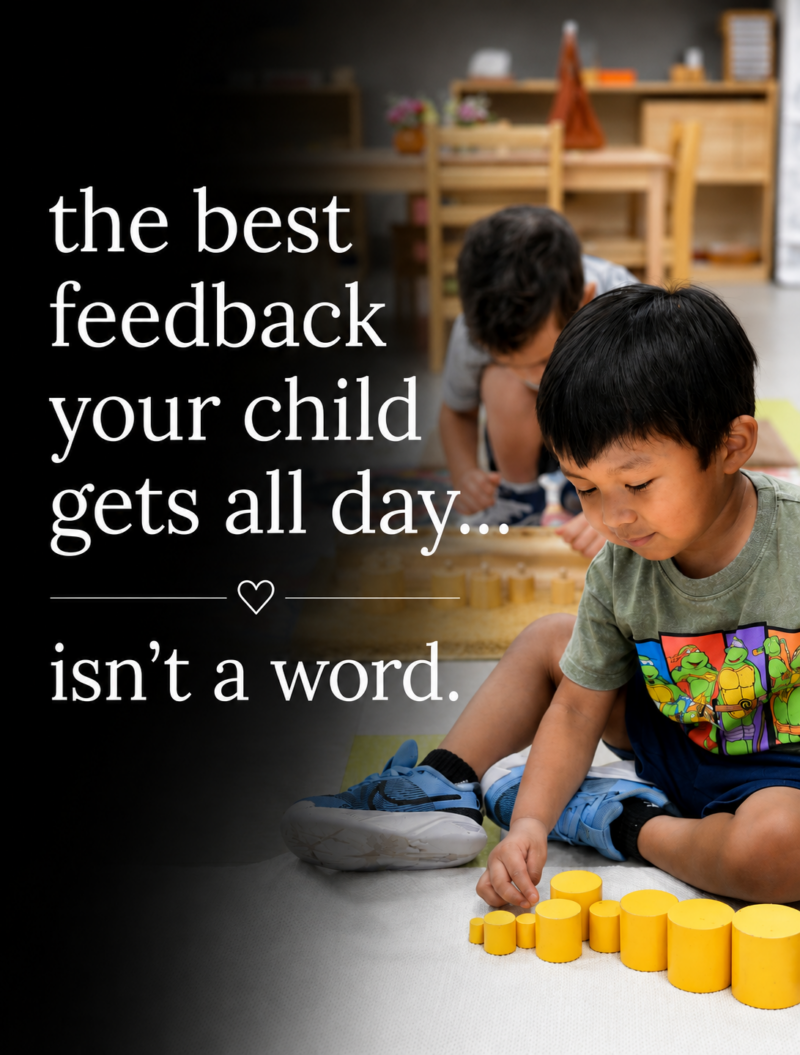
- Most schools focus on answers. Independence-building schools focus on questions. Why? How? What happens if…?
- Every time a child solves a problem on their own, they become a little more confident — and need us a little less. That’s not a side effect. That’s the point.
- Independence is built in the moments parents are most tempted to take over: the spilled milk, the stuck zipper, the unsolved puzzle. The rescue is what blocks the wiring.
- Most children forget what they were taught. They never forget how to think.
- The future belongs to problem-solvers, not memorizers. The work of preschool is to build the first one.
I’m going to start with something I almost never say to a parent on a tour, because it sounds harsh out of context.
But it’s the truest sentence I know about my job, so I’m going to say it here:
My goal isn’t to raise children who need us forever. My goal is to raise children who can think for themselves.
If I do my job well, by the time a child leaves our classroom, they need their teachers less than when they arrived. They ask their parents fewer questions. They figure things out on their own.
They become — slowly, in small increments, across hundreds of tiny moments — independent.
That’s the entire goal. Everything else flows from it. The reading, the math, the social skills, the readiness for kindergarten. A child who can think for themselves can learn anything. A child who can’t will struggle no matter what we put in front of them.
And here’s what I’ve learned watching this happen for twenty-five years: the parents who most want independent children are often the parents who unintentionally block it.
Not because they don’t care. Because they care so much that they can’t bear to watch their child struggle. So they zip the coat. They pour the milk. They answer the question before the child has a chance to wonder about it. And the wiring that would have built independence stays unbuilt.
If you’ve been wondering how to raise independent children — how to actually do it, not just believe in it — this is what I want to tell you.
The Goal: Children Who Can Think for Themselves
Most schools — and most parents, without realizing it — are organized around a different goal. The goal of knowledge transfer. We say a word; the child says it back. We show how a problem is solved; the child does it the same way. We give the answer; the child memorizes it for later.
That model works in a world that no longer exists. A world where the adult knew the answers and the child needed to be filled with them. A world where memorization was a competitive advantage.
The world your child is growing into is different. They will not be rewarded for knowing things. They will be rewarded for figuring things out.
The information they need will be a search away. The rare skill will be the ability to ask the right question, evaluate the answer, and decide what to do with it.
The future belongs to problem-solvers, not memorizers. The work of preschool, done well, is to build the first one.
Most Schools Focus on Answers. We Focus on Questions.
Walk into a typical preschool and listen to what the teacher is doing. Most of what you’ll hear is a series of statements. This is a circle. The color is red. We’re going to count to ten now. Say “thank you.”
Walk into ours and listen for the questions instead. What do you notice? Why do you think that happened? What would happen if you tried it the other way? How could we find out?
That difference is everything. Statements close a thought. Questions open one.
A child who hears a hundred questions a day is being trained to think a hundred times a day. A child who hears a hundred statements a day is being trained to receive — and that’s a different skill entirely.
This is the core of what we call inquiry-based learning — the curriculum we built specifically for this. The teacher’s job isn’t to deliver knowledge. The teacher’s job is to provoke the question in the child’s mind, and then get out of the way while the child works the answer out themselves.
Sometimes the child gets the answer right. Sometimes they get it spectacularly wrong, in interesting and revealing ways. Either way, what’s being built is the same: the wiring for independent thought.
Listen for the sound of curiosity in your own home. It sounds like why? how? what happens if?
Every time you hear those three sounds, your child is doing the cognitive work that builds independence. Every time. The rule, then, is simple: protect those sounds. Don’t rush to answer. Don’t fill the silence with information they didn’t ask for. Let the question hang. Let them sit with not-knowing for a beat longer than is comfortable. That beat is where the thinking happens.
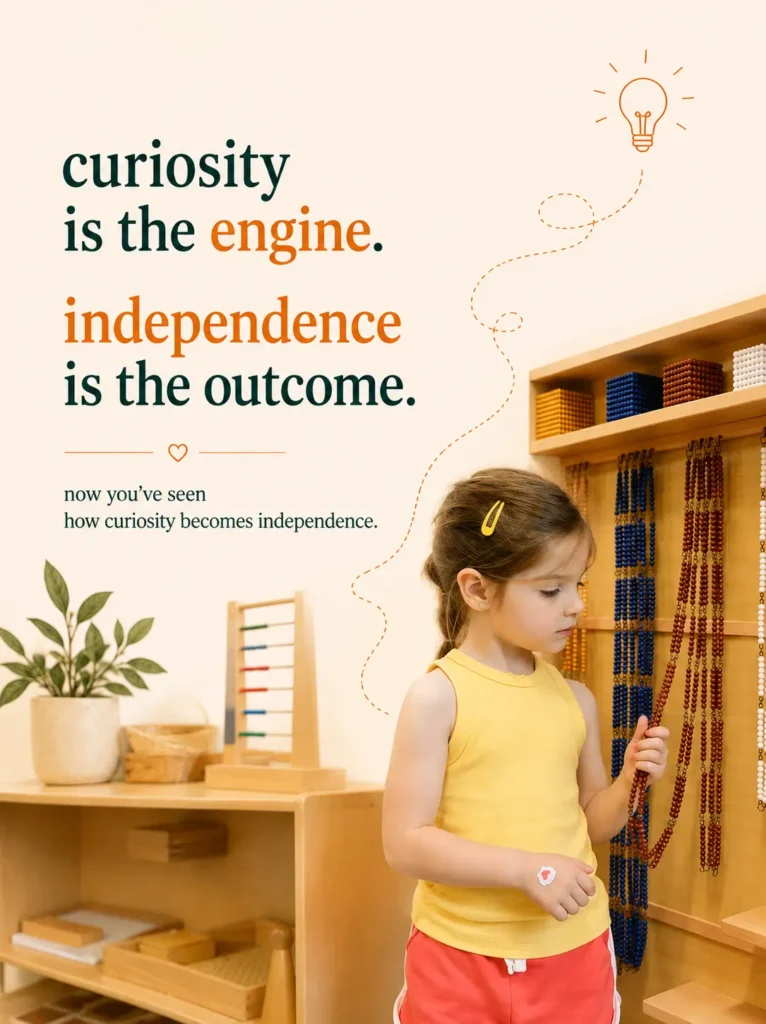
curiosity is the engine. independence is the outcome. by Edquisitive MontessoriThe Rescue Is What Blocks the Wiring
Independence is built in the moments parents are most tempted to take over.
Your three-year-old is trying to put on their shoes. They have one on the wrong foot. They’re working at it slowly. You are running late. Every cell in your body wants to kneel down, swap the shoes, and get out the door.
If you swap the shoes, the day moves faster. The lesson the child learns is that shoes are a thing adults do.
If you wait — even thirty more seconds — the lesson is something else entirely: I can figure this out. The shoe goes on. I am someone who can put on my own shoes.
That second lesson, repeated across a thousand small moments — the spilled milk, the stuck zipper, the unsolved puzzle, the missing toy somewhere in the house — is what independence actually is.
It’s not a personality trait some children are born with. It’s a wiring pattern that gets built one slow, frustrating, beautiful moment at a time.
And the rescue — the well-intentioned, loving, time-saving rescue — is what blocks it.
A national poll from C.S. Mott Children’s Hospital found that most parents believe they give their children more independence than they actually do. Three out of four parents say they make a point of having their child do things themselves — but when researchers asked about specific tasks (preparing their own snack, talking with the doctor, deciding how to spend allowance money), fewer than half of children were actually doing them. The gap between what parents intend and what they do is enormous. And it’s the gap that quietly costs children their independence.
I’m not saying never help. There are real moments when a child needs help and asking for it is the right answer.
What I’m saying is: notice the difference between the child needs me and I want to help. Those two things feel identical from inside a parent’s body. They produce very different outcomes for the child.
How to Raise Independent Children: Five Everyday Practices
Here’s what to actually do. None of this requires a Montessori classroom. It requires noticing the moments when the wiring is being built — and protecting them.
1. Wait three seconds before you help.
When your child is working at something and you feel the urge to step in, count to three first.
Most of the time, in those three seconds, one of two things happens. Either the child figures it out — and you’ve just witnessed a brain build itself — or the child asks for help, which means they’ve actually evaluated the problem and decided they need you.
Either outcome is better than the rescue.
Last week, one of our three-year-olds spent nearly four minutes trying to button his jacket. One of our teachers could have done it in five seconds. She didn’t.
On the fifth attempt, he smiled and quietly said, to no one in particular, “I did it.”
That moment — the four minutes of struggle, the small private smile, the words said to himself — is the whole job. He didn’t learn how to button a jacket. He learned that he is someone who can figure things out. And the next time he encounters something difficult, that felt memory is what he’ll draw on.
2. Give real jobs, not pretend ones.
A child knows the difference between a job that matters and a job invented to keep them busy.
Real jobs build real wiring because the child knows the outcome counts. Pour your own water. Set the table. Carry your own bag. Make your own bed, badly. Wash a window — actually wash it, with a real cloth and real spray.
The child’s body and brain register the seriousness, and they rise to it.
3. Let frustration be a teacher.
The puzzle piece doesn’t fit. The block tower keeps falling. The shoe won’t go on.
Every parent’s instinct is to relieve the frustration as quickly as possible. But frustration is one of the most useful emotions in a child’s life — it’s the signal the brain uses to say I need a different strategy.
If you remove the frustration, you remove the trigger that builds cognitive flexibility.
Sit with your child while they’re frustrated. Stay close, stay warm, but don’t fix it. Say something like, that’s hard. I wonder what else you could try. Then wait.
4. Replace statements with questions.
This is the single most powerful change you can make in how you talk to your preschooler.
Instead of “that’s a robin,” ask “what do you notice about that bird?” Instead of “the water is too hot,” ask “what do you think will happen if you put your finger in?” Instead of “you can’t have ice cream before dinner,” ask “why do you think we eat ice cream after dinner instead of before?”
Some of the time the child will give a smart answer. Some of the time they won’t. It doesn’t matter. The thinking is the point.
5. Let them try things that might fail.
The carry-the-glass-of-milk moment. The pour-the-juice moment. The walk-down-the-stairs-with-the-laundry-basket moment.
Every parent’s brain rings the danger alarm. But these are the moments — the borderline-competent ones — where independence is actually built.
If the glass breaks, you clean it up together. If the juice spills, you wipe it up together. The lesson the child takes from the spill isn’t I’m not capable. It’s mistakes happen. I clean them up. I try again.
That lesson, learned at age four, is what an independent twelve-year-old looks like. And an independent twenty-five-year-old. The wiring is the same. We just keep adding to it.
Most children forget what they were taught. They never forget how to think.
What Independence Actually Sounds Like
You’ll know it’s working when the language shifts.
A child whose independence is being built starts saying things like “I can do it.” Not always confidently — sometimes haltingly, sometimes after a long pause where they were deciding whether to ask for help.
“I’ll try.” A child who says this isn’t necessarily a child who succeeds. They’re a child who has internalized that attempting is the point, not winning.
“Let me figure it out.” This is the one that breaks a parent’s heart in the best way. The child is saying — out loud — that they want to try without you. They’re not rejecting you. They’re claiming the work of thinking as their own.
When you start hearing those three sentences in your kitchen, in your car, in your living room — pay attention. That’s independence building itself in real time.
The job at that moment is simple. Don’t argue with it. Don’t override it. Don’t say “here, let me help” when the child has just said “let me figure it out.”
Just nod. Stay close. Let them figure it out.
Curiosity Studios and the Edquisitive Approach
What I’ve described here — the questions instead of statements, the waiting before helping, the real jobs, the trusted frustration — is the everyday practice of our classrooms. It’s the curriculum we built and named Curiosity Studios.
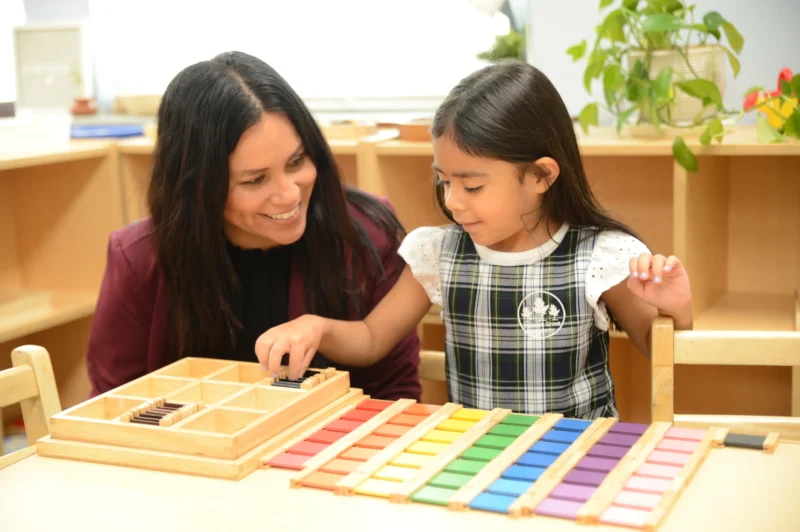
The Montessori materials are part of it — the wooden cylinders, the binomial cube, the red rods, the dressing frames — but the materials alone aren’t what builds independence. What builds independence is the way a Montessori teacher uses those materials.
The teacher doesn’t demonstrate and quiz. The teacher presents, steps back, and watches. The child encounters the material. The child wonders. The child tries. The child gets it wrong, tries again, gets it more right, refines, completes — and looks up at no one, smiles to themselves, and puts the material back on the shelf.
That moment is the whole job.
The child has just demonstrated, to themselves, that they are someone who can figure things out. They don’t need our praise to know it. They felt it. And the next time they encounter a problem — at four, at fourteen, at forty — that felt memory is what they’ll draw on.
Every Preschool Promises Kindergarten Readiness
Every preschool promises kindergarten readiness.
We ask a different question.
Who is your child becoming?
Not who will they be when they’re eighteen. Who are they becoming, right now, today, in the four minutes they spend buttoning their own jacket. In the way they look at a problem. In the small private smile when they figure something out and say to themselves, I did it.
If that’s the question you’ve been asking too, we’d love to meet you.
We have four campuses across San Antonio: Spanish Grove Academy, Fair Oaks, NW Military, and Medical Center. Each one runs Curiosity Studios. Each one is built around the same simple premise: curiosity is the engine, independence is the outcome.
Schedule a tour at the campus closest to you. Watch what happens when a child is given a real material, real time, and a teacher who knows when to ask the question and when to stay out of the way.
You’ll see what I see. A small person, head down over a piece of wood, thinking.
Stop stopping them.
Melissa Zamora is the Head of Schools at Edquisitive Montessori and the host of Conversations for the Beginning Years — a podcast and video series for parents and educators navigating the years that shape everything. Follow the series on Instagram @conversationsbeginningyears. More resources at the Parent Curiosity Hub.
Frequently Asked Questions
How do I raise an independent child?
Independence is built in everyday moments — the spilled milk, the stuck zipper, the unsolved puzzle — when you wait instead of rescuing. The five core practices are: wait three seconds before you help; give your child real jobs, not pretend ones; let frustration be a teacher; replace statements with questions; and let them try things that might fail. None of this requires a special curriculum at home. It requires noticing the moments when the wiring is being built and protecting them from the well-intentioned rescue.
At what age should I start fostering independence?
Independence-building starts as soon as a child can attempt a task on their own — often as young as eighteen months. A two-year-old can carry a bag, put away toys, and choose between two outfits. A three-year-old can pour water, set out shoes, and follow a two-step instruction. A four-year-old can put on their own clothes, complete a multi-step task, and clean up a spill. The window when this matters most is birth to age five, when roughly 90% of the brain architecture that runs self-regulation and independent thinking is built.
Am I doing too much for my child?
A useful test: when you do something for your child, ask whether you’re doing it because the child genuinely needs help, or because it’s faster, neater, or less stressful for you. Both reasons are real, but the second one — your convenience — is the one to watch. A national poll from C.S. Mott Children’s Hospital found that three out of four parents say they make a point of having their child do things themselves, but fewer than half of children regularly do those things in practice. The gap between intention and action is where independence is quietly lost.
What is the difference between independence and stubbornness in children?
They often look the same from the outside, and that’s not an accident. A toddler insisting on putting on her own shoes is being stubborn and independent — the two impulses are the same impulse at this age. The job of an autonomy-supportive parent is to recognize that the stubbornness is the early form of the trait you want her to have at twenty-five. If you crush it in toddlerhood, you don’t get a more compliant child — you get a less capable adult. The goal is to channel the stubbornness toward real tasks, not to remove it.
How does Montessori build independence?
The Montessori method is built around a single structural choice: the child works on their own, with materials specifically designed to demand their full attention and reveal their own mistakes. The teacher demonstrates a material once, then steps back. The child uses it, often imperfectly, often for a long time. The teacher resists the urge to correct, intervene, or praise. What gets built — over months and years — is the wiring for independent work and independent thought. The classroom is mixed-age, which means younger children watch older ones working independently and absorb the expectation. By the time a child leaves a Montessori preschool, working alone for an extended period is normal.
Can independence be taught, or is it a personality trait?
Independence is a wiring pattern, not a personality trait. Some children are temperamentally more inclined toward it — they reach for autonomy earlier and more insistently — but every child has the capacity to develop it. Research on autonomy-supportive parenting, drawn from self-determination theory, consistently shows that children whose parents support their growing competence develop stronger problem-solving skills, higher self-confidence, and better mental health outcomes than children whose parents do everything for them. The window for building the foundational wiring is early childhood, but the trait can be developed at any age.
Want to See This in a Real Classroom?
If you’ve read this far and you’re wondering what this would look like for your child, the best thing you can do is come watch.
Not a tour where someone walks you through a brochure. A real visit to a real classroom, during the work cycle, where you can see a small child sit with a piece of wood and figure something out — not because anyone told them to, but because the curiosity got them there.
Schedule a Tour
Follow @edquisitivemontessori on Instagram
Explore the Parent Curiosity Hub
Related Reading
Executive Function in Preschoolers: The Skill That Matters Most | Your Child’s Birthday Matters More Than Their IQ: The Texas Kindergarten Problem | Benefits of Montessori Education for Young Children | The Courage Conversation