Start with what matters most to you
Everything San Antonio parents need to compare schools, ask the right questions, and feel confident about their choice.
Already know what you’re looking for? Schedule a tour at one of our 4 campuses →
More Guides for Your Search
Daycare, preschool, Montessori, nanny — the terminology can be confusing. These guides help you think through the big questions before you start touring.
Find Daycare by Location
Looking in a specific area? These guides cover what’s available in each neighborhood.
Frequently Asked Questions
Quick answers to the most common questions San Antonio parents ask.
How much does daycare cost in San Antonio?
San Antonio daycare costs range from $150–$400 per week depending on your child’s age, location, and program type.
Average costs by age: Infants (6 weeks–18 months) $250–$350/week · Toddlers (18 months–3 years) $200–$300/week · Preschool (3–5 years) $180–$300/week
Neighborhood variations: Stone Oak/North Central runs $220–$400/week for premium programs, Medical Center area $200–$350/week, Boerne/Fair Oaks Ranch $200–$380/week, and Southside/Westside $150–$250/week.
Many families qualify for Child Care Services (CCS) subsidies that can reduce costs by 50–80%. See complete cost breakdown by neighborhood →
What’s the difference between daycare, preschool, and childcare?
Daycare: Full-day care (typically 6:30am–6:30pm), serves multiple age groups, focus on safe supervision and basic developmental activities. Best for working parents who need extended hours.
Preschool: Structured educational program for 3–5 year olds, part-day or full-day options, focus on school readiness and early academics. May follow school calendar (9 months).
Childcare: Umbrella term covering all types of care (daycare, preschool, nanny, family care).
What most parents actually need: A program that combines both — full-day care with preschool curriculum. Many centers (including Edquisitive Montessori) offer this hybrid model. Read the complete breakdown →
How do I know if a San Antonio daycare is safe and licensed?
All Texas daycares must be licensed by the Department of Family and Protective Services (DFPS).
Step 1: Check licensing status at Texas Child Care Licensing Search to review inspection reports and violation history.
Step 2: Verify required ratios — Texas mandates: Infants 1:4, Toddlers 1:9, 3-year-olds 1:11, 4–5 year olds 1:15. Better programs often exceed these minimums.
Step 3: Look for accreditation beyond basic licensing — NAEYC, Cognia, AMS/AMI (Montessori), or Texas Rising Star 3–4 star rating.
Red flags: Multiple serious violations in past 2 years, unwilling to let you tour during class time, teachers who seem disengaged, dirty bathrooms or strong odors, high teacher turnover. Download our complete tour checklist →
When should I start looking for daycare?
Start your search 3–6 months before you need care.
For infant care: Quality programs often have waitlists of 3–12 months due to strict ratio requirements (1:4). If you’re pregnant, start touring in your second trimester.
For toddler/preschool care: Most programs have openings within 1–3 months, but popular schools (especially Montessori) fill up for fall enrollment.
San Antonio enrollment patterns: Peak season is March–May for fall start dates. Most availability is January–February and summer months. Least availability is August–September.
Pro tip: Tour 4–6 programs even if you’re not ready to enroll. Get on waitlists early (often free or $25–$50). You can always decline later.
What should I look for on a daycare tour?
Use the “3 T’s” framework: Teachers, Time, and Talking.
1. TEACHERS (Most Important): Watch how teachers interact — are they at eye level, using warm tones, engaged and making eye contact? Red flag: Standing over kids, directing from above, looking at phone.
2. TIME (Schedule): Ask to see a daily schedule. Look for balance of active play, quiet time, outdoor time. Look for 45–60 minute uninterrupted play blocks. Red flag: TV time exceeding 30 minutes.
3. TALKING (Communication): How will they keep you informed? Daily reports, photos/videos, parent-teacher conferences? How do they handle behavior issues or injuries?
Bonus: Check bathrooms (clean, child-sized), kitchen/meal area, outdoor space (safe, shaded), and emergency plans. Get our complete list of 20+ questions →
Is Montessori daycare better than traditional daycare?
Neither is universally “better” — it depends on your child and the program’s quality.
What makes Montessori different: Child-led learning, mixed-age classrooms (3–6 together), hands-on self-correcting materials, 2–3 hour uninterrupted work periods, strong independence focus.
Research-backed benefits: Montessori students score significantly higher in executive function (planning, self-control, focus), are 6–12 months ahead in reading by kindergarten, and show better collaboration and conflict resolution.
Montessori might be better if: Your child is independent (“I do it myself!”), focuses deeply on self-chosen activities, gets frustrated when interrupted.
Traditional might be better if: Your child thrives with explicit direction, prefers group activities over solo work, gets overwhelmed by too many choices.
The real key: Look for authentic Montessori (AMI or AMS-certified teachers, real materials, 3-hour work periods) not just “Montessori-inspired.” Read our complete comparison →
What questions should I ask about curriculum and learning?
“What curriculum do you follow?” — Look for a named curriculum (Creative Curriculum, HighScope, Montessori). Red flag: “We make it up as we go.”
“How do you assess children’s progress?” — Look for observations, portfolios, developmental checklists, parent conferences. Red flag: Only standardized tests or no assessment.
“How much screen time do children have?” — Acceptable: Minimal, occasional educational video. Red flag: Daily TV time or tablets for behavior management.
“What does outdoor time look like?” — Aim for 60+ minutes daily. Red flag: “We go out if weather is nice.”
How do San Antonio daycares handle potty training?
Most daycares require children to be potty trained by age 3 for preschool rooms, but policies vary.
Typical age cutoffs: Infant rooms — diapers expected. Toddler rooms — diapers OK, many start potty training. Preschool rooms (3+) — most require potty trained or actively training.
What “potty trained” means: Daytime accidents are rare (1–2 per week OK), child can communicate need to go, wipes and washes hands with minimal help.
Red flags: Refusing to help with potty training, shaming children for accidents, strict “must be trained by X date or leave” policies.
Pro tip: Many Montessori programs (including Edquisitive) start potty awareness early with child-sized toilets, making the transition smoother.
Do San Antonio daycares offer part-time or drop-in care?
Part-time enrollment is available at many daycares, but less common and often more expensive per day than full-time.
Common part-time options: 2–3 days per week (e.g., Monday-Wednesday-Friday), half-day programs (e.g., 9am–1pm), school-year only (9 months vs 12).
Cost structure: Part-time typically costs 60–75% of full-time weekly rate. Example: Full-time $250/week → Part-time 3 days $175–$190/week.
Drop-in care: Rare in quality centers due to ratio requirements and continuity concerns. When available, expect $50–$75 per day with advance reservation.
What subsidies and financial assistance are available?
1. Child Care Services (CCS) Program — Most common option. Eligibility: Texas families working or attending school with income below 85% of state median (~$60,000 for family of 4). Can cover 50–80% of costs. Apply through Texas Workforce Commission.
2. Pre-K 4 SA — Free full-day pre-K for eligible 4-year-olds (low-income, military, ELL, foster care). Apply at prek4sa.com (lottery system).
3. Military Child Care — Active duty, reserves, DoD civilians. Subsidized rates $50–$150/week depending on rank.
4. Employer Benefits — Dependent Care FSA (pre-tax savings up to $5,000/year). Ask HR about childcare benefits.
5. Federal Tax Credits — Child and Dependent Care Credit: Up to $3,000 per child (IRS Form 2441).
Pro tip: Apply for CCS early (processing takes 4–6 weeks). You can combine CCS with tax credits.
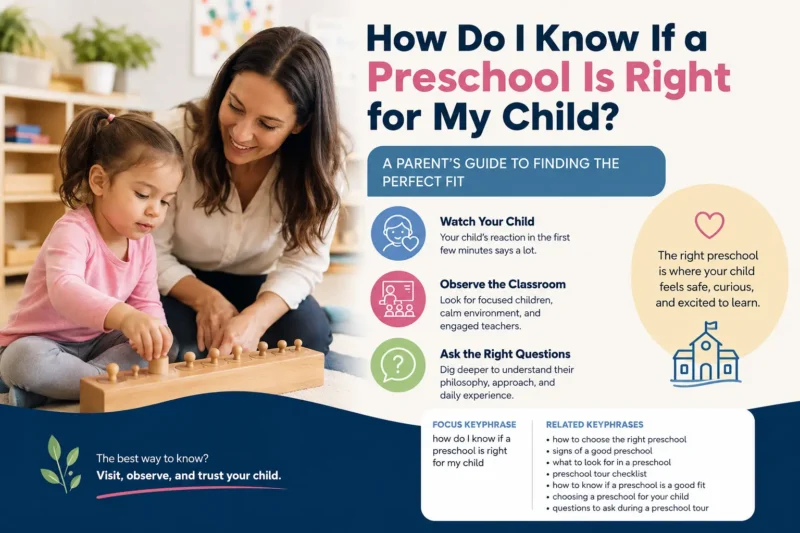
“We see this consistently — parents come in overwhelmed by options, but once they understand what to look for in teacher interactions and classroom environment, the right choice becomes clear. The best programs welcome your questions and let you observe during actual class time.”
Melissa Zamora · Head of Schools, Edquisitive Montessori · 25+ years in Montessori education
Ready to See a School in Person?
Reading can only tell you so much. Schedule a free tour to see the classrooms, meet the teachers, and ask your questions face to face.
Schedule a Free TourAbout Edquisitive Montessori
Edquisitive Montessori is San Antonio’s leading authentic Montessori program, serving families across four campuses: Stone Oak (Spanish Grove Academy), Fair Oaks/Boerne, Northwest Military, and Medical Center (Little Red Caboose). Led by Head of Schools Melissa Zamora with 25+ years as a Montessori educator, our AMI and AMS-certified teachers deliver the proprietary edScription® curriculum combining Montessori methodology with Spanish immersion and inquiry-based learning.
Why Montessori works for modern parents →
Helpful External Links
Texas Childcare Licensing Search · SA CCS Program · Pre-K 4 SA · Early Matters TX · Cognia · NAEYC · Childcare Aware