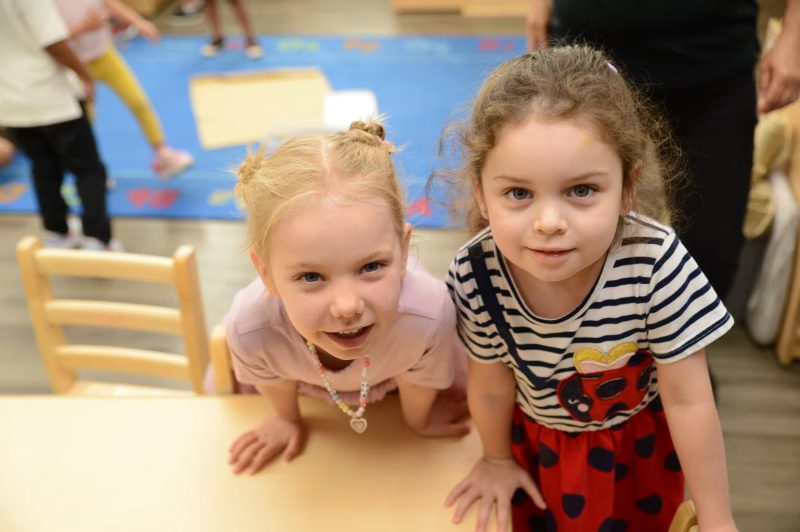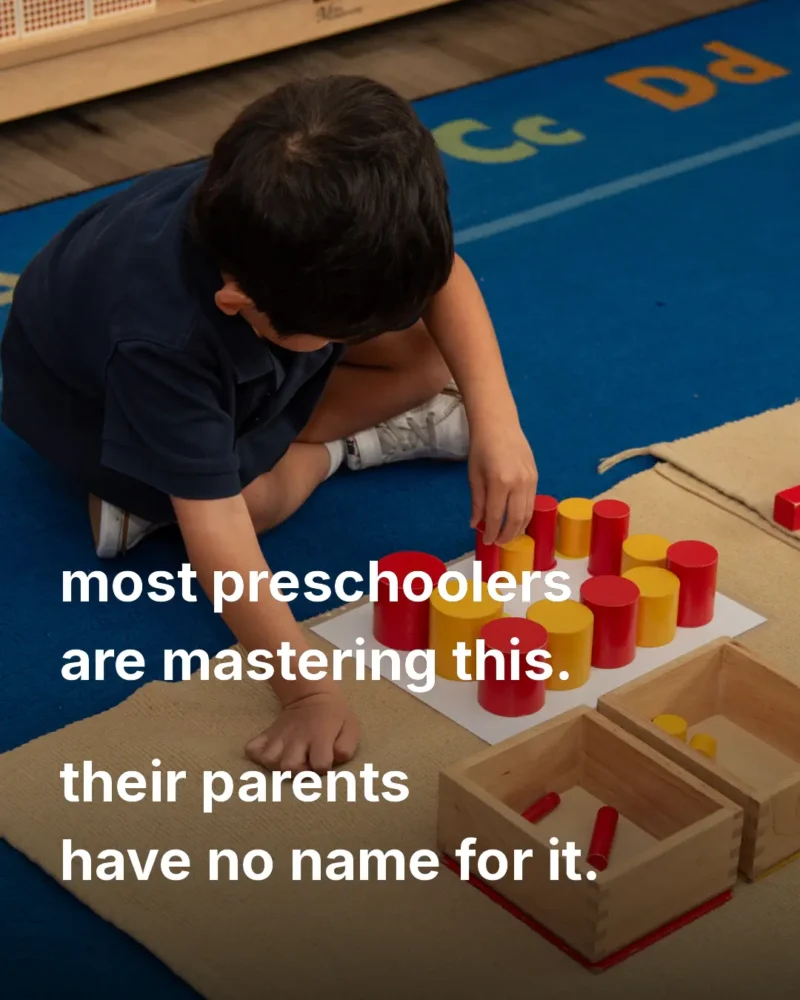
You have two children. Same name, same face. One of them goes to school and the other one gets in your car at five o’clock. Both are real, and neither of you is wrong about the one you know.
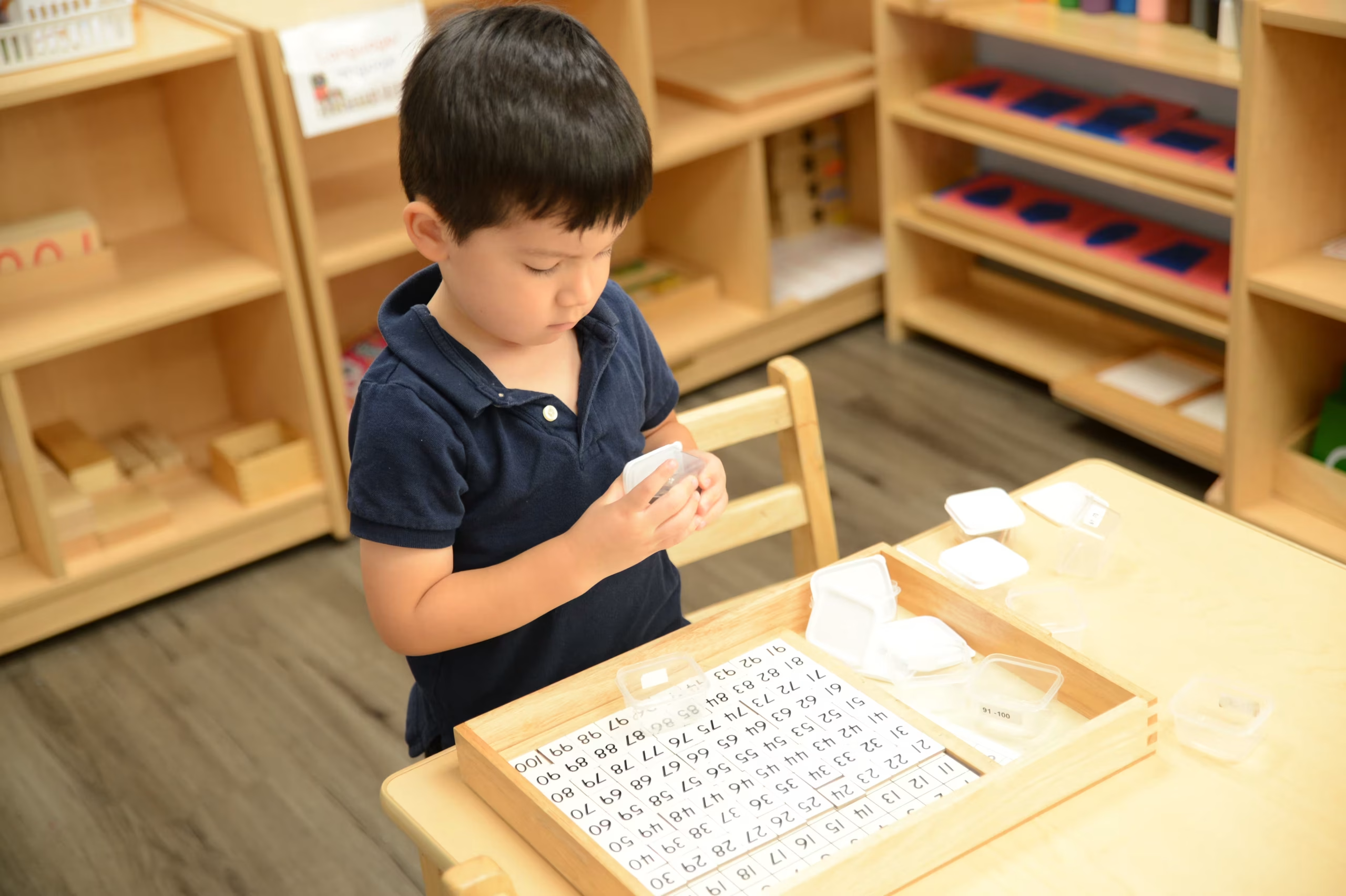
Your child behaves differently at school and at home. Sometimes so differently that you wonder whether the teacher is describing somebody else’s child.
“She puts her things away and waits for her turn.”
And you are thinking about the child who cried this morning because you opened the car door instead of letting her do it.
Sometimes it runs the other way.
“He’s having a hard time joining the group.”
And you are thinking about the boy who talks through dinner, plays happily with his sister, and tells you every detail of a day you weren’t there for.
Same name. Same face. Two completely different accounts.
And a conversation that starts to feel like one of us has to be wrong.
“My Child Doesn’t Do That at Home.” We Believe You.
Let us say that first, because it is the part that usually goes unsaid.
When you tell us the child we just described is not the child you live with, you are not being defensive and you are not missing something. You are handing us information we do not have.
You know the child who wakes up in your house, picks the bedtime story, and climbs into your lap. We see a child managing a group, sharing materials she would rather not share, and moving through six hours of a day you cannot watch.
Both of those are your child. They belong in the same conversation.
Why Does My Child Behave Differently at School and at Home?
The short answer is that she is not being inconsistent. She is reading two different rooms, and she is reading them correctly.
Young children are far better at reading a setting than we give them credit for. Long before a three-year-old can explain a rule, she can feel what a room expects: how fast things move, what happens when something goes wrong, whether anyone is going to come and rescue her, and how much is negotiable.
School and home give her very different answers to all four. So she behaves differently in each.
She isn’t two children. She’s one child reading two rooms, and she’s reading them correctly.
What follows covers both directions. The first half is the version most parents describe to us, where a child holds it together all day and comes apart at home. The second half runs the other way. If that is your child, the sections further down are written for you, so keep going.
At School, the Routine Does Some of the Reminding
Walk into a preschool classroom mid-morning and the first thing you notice is how little anybody is being told what to do.
That is not because the children here are unusually obedient. It is because the room is doing a lot of the work an adult would otherwise have to do out loud.
Think about a sequence your child has run two hundred times. Wash hands, sit down, snack. The sink is where it always is. The other children are already moving toward the table. A teacher gestures at what comes next without saying anything at all.
Some of the independence you hear about has support behind it.
That is worth knowing, because it explains why “she does it herself at school” does not automatically survive a rushed Tuesday morning in your hallway. The skill is real. So is the scaffolding underneath it.
Three things are usually holding it up.
The sequence never changes. A child who can predict the next ten minutes has far less to argue about.
Ten other children are doing the same thing. At three and four, watching other people is not a distraction from learning. It is most of how it happens.
There is nobody to negotiate with. This one is the most likely to be misread, so plainly: at school there is no adult whose love she can reasonably test. The routine is just the routine. At home there is you, and you love her, and so there is always, reasonably, a chance.

You can borrow a piece of that without rebuilding your house around it. Shoes live in one place. The same three steps happen before you leave, in the same order, every time. Ask your child’s teacher which cue she actually responds to, and use that one.
Your mornings have their own constraints, a second child, a commute, a job that starts when it starts. Borrow the thing that fits those. Not all of it.
Why It Comes Apart After Pickup
Regulating yourself for six hours is work, and a four-year-old only has so much of it.
It works. It is also expensive.
By pickup she is hungry, she is tired, and she has spent the whole day being the version of herself who follows a sequence. Then she sees you, and three things happen at once. The demand drops. The person she is surest of is standing right there. And the rules, immovable since eight in the morning, become slightly movable again.
Meanwhile you have missed her, you want to hear about the day, and you also need to get home, start dinner, and deal with whatever is waiting there.
So the two of you meet at the exact moment you both have the least left.
Don’t Stop at “She Saved It for You”
You have probably heard the comforting version of this. Children fall apart with the person they trust most. She held it together all day because school was not safe enough to fall apart in, and she let go with you because you are.
There is something in that, and on a hard evening it is worth holding onto.
But it is not an explanation of Tuesday.
It tells you something about your relationship. It tells you nothing about what actually happened, and if you stop there, you stop before the useful part. She may have been exhausted. She may not have eaten since eleven. She may have found one specific transition hard, the same one, four days running.
Those have answers. “She trusts you” does not.
You are allowed to have a strong relationship with your child and still want the five o’clock hour to be less awful. Both things at once.
What Helps in the First Twenty Minutes After Pickup
The hardest hour of the day is the one right after you collect her, so the most useful thing you can do with it is ask less of it.
Start with a warm hello and nothing attached to it. “I’m so glad to see you.” Not a question.
| Instead of | Try |
|---|---|
| “How was your day?” in the car | “I’m so glad to see you.” Then nothing. |
| An errand on the way home | Bag down, hands washed, snack and water, sit |
| A different afternoon every day | The same few things in the same order |
| “Why can’t you behave like you do at school?” | “What happened right before?” |
If she wants to talk, listen. If your questions seem to be adding weight rather than lifting it, save them for bath time.
None of this means dropping the things that are not optional. You can hold a limit and offer help in the same sentence: “We need to buckle up before we go. I’ll help you.”
Give it two weeks before deciding whether it works. Predictability is the active ingredient, and predictability takes repetition before it is predictable.
Sometimes School Is the Harder Room
Now the other direction, which gets written about far less and is just as common.
Some children are easy at home and have a genuinely hard time at school. Their parents hear about it at pickup and drive home confused, because the child they know is funny and gentle and perfectly able to wait for things.
That child is reading the room correctly too. Look at what we are actually asking.
At home there is one adult, or two, and they are hers. When she needs a lap, there is a lap. When she needs the day to slow down, it mostly slows down.
School is hours of noise, of waiting, of other people’s needs arriving before her own, and of sharing one adult with a dozen children who also want that adult. There is nowhere to retreat to. For a child who is sensitive to noise, or slow to warm to a group, or simply younger than her birthday suggests, that is not a small ask. It is the hardest thing she does all week.
What looks like difficult behaviour in a classroom is very often a child at the end of her capacity, in exactly the way the first child was at five o’clock. Only the room is different.
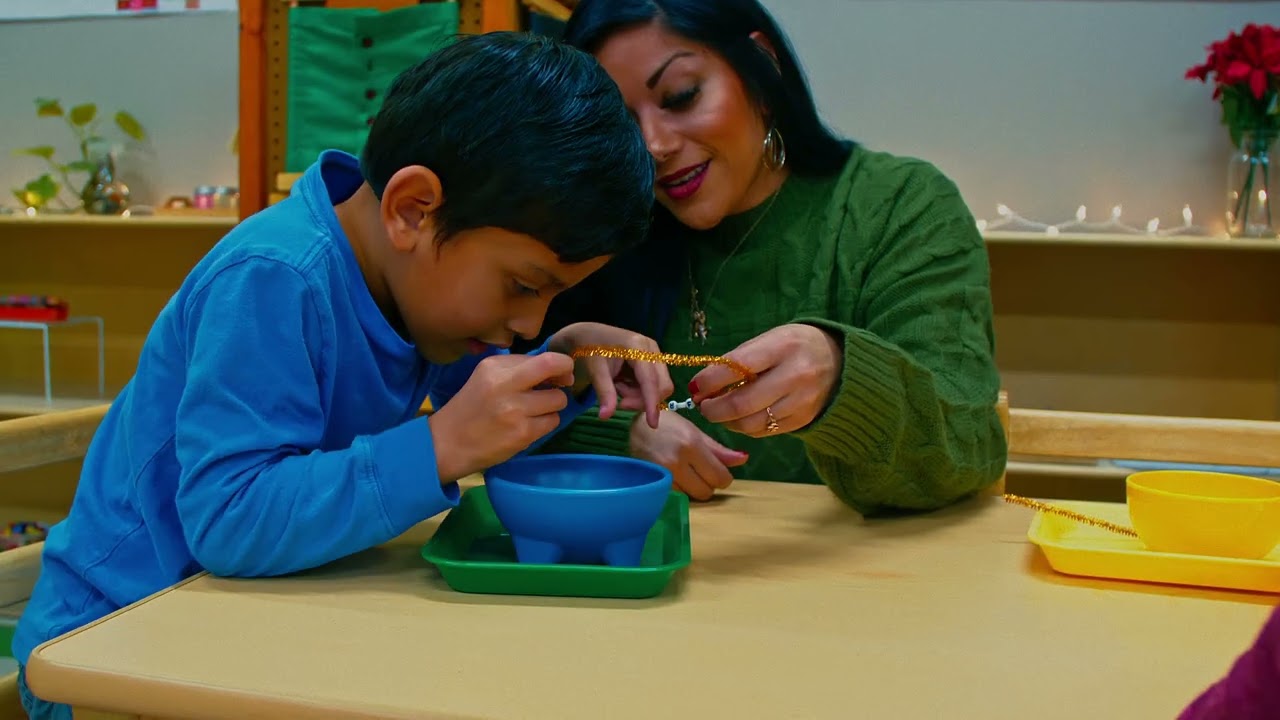
The answer is usually to make school smaller, and that is something a school can actually do. A quieter corner she may use without asking. A smaller group for the part of the morning that is hardest. One adult who is reliably hers at arrival, so the first ten minutes have a known shape. A job that is hers, which gives her a reason to be somewhere and something to do with her hands.
None of that requires a diagnosis or a formal meeting. It requires us knowing, which means it requires you telling us.
Ask Us for a Smaller Example
Here is something you are entitled to ask for, and should.
“He struggles with the group” is not a useful sentence. It describes a verdict, not a moment, and there is nothing in it you can act on.
“He covers his ears when everyone starts singing” is a completely different piece of information. Now there is a time, a trigger and a response, and all three can be worked with.
So ask us to be that specific. And when it runs the other way, we will ask you for the same thing, because “she’s fine at home” tells us just as little.
Compare One Hard Moment
Whichever way the gap runs at your house, the conversation that helps is the same one, and it is not the conversation most of us have.
The unhelpful version compares an entire school day with an entire evening and ends in two verdicts. Nobody learns anything and somebody leaves feeling judged.
The useful version is much smaller. Pick one situation, the same one, and take it apart together.
⭐ When does it get hard? Not generally. Arriving, waiting, cleaning up, leaving.
⭐ What happens just before? A request, a change of activity, a crowded room. This is the question that finds the answer more often than not.
⭐ What helps? A warning, a demonstration, a quieter spot, an adult nearby.
It sounds like this from your side:
“Cleanup is hard at home. What do you say before it starts here?”
And like this from ours:
“Joining the group is hard here. What helps him join something at home?”
Then pick one adjustment, agree when to check back, and decide in advance what a change would look like. An easier goodbye. Fewer reminders. Accepting help sooner. Something you could describe to someone else.
When to Bring in Someone Else
Most of what is described here is ordinary, and it settles with time, food, sleep and a predictable afternoon.
Some of it needs more than a school and a parent comparing notes. If the distress is frequent or intense rather than occasional, if it is keeping your child out of things she would otherwise want to do, if it is not shifting after you and the teachers have genuinely tried something together, or if there is any concern about safety, bring your pediatrician into it alongside us.
That is not an escalation and it is not a verdict on anybody. It is one more person looking at the same child.
Same Child. Both Rooms.
You should never have to defend your experience at home in order to be taken seriously. And a hard moment at school deserves attention even when nothing like it has ever happened in your living room.
The gap between the two children you have is not evidence that something has gone wrong. It is evidence that your child can tell two places apart and respond to each. That is a real capability, and at three or four it is a fairly new one.
Bring us one example. We will bring one too.
We have met them both. We like them both.
Melissa Zamora is Head of Schools at Edquisitive Montessori and co-host of the podcast Conversations for the Beginning Years.
Curious which child you would meet in our classrooms? Come and see.
Frequently Asked Questions
Why does my child behave differently at school and at home?
Because the two settings ask different things, and young children are very good at reading a setting. School offers a routine that never changes, a dozen other children modelling what to do, and almost nothing to negotiate. Home offers your full attention, somewhere to retreat to, and rules that bend a little because you love her. She behaves differently in each because she is reading each correctly, not because she is being inconsistent.
Why does my child melt down right after pickup?
Regulating yourself for six hours is real work and a preschooler only has so much of it. By pickup she is usually hungry, tired and finished. Seeing you drops the demand and brings her to the person she is surest of. That she feels safe with you is part of it, but it is not the whole answer, and it is worth looking at the practical causes too: when she last ate, how she slept, and whether one particular transition is hard the same way several days running.
Is it normal for a child to behave better at school than at home?
Yes, and it is one of the most common conversations we have with parents. It usually says more about the two settings than about the child or the parenting. A predictable routine, visible peers and non-negotiable expectations make self-regulation easier at school. Safety, attention and a little flexibility make home the place where a child can finally stop performing.
What should I do in the first twenty minutes after pickup?
Ask as little of it as you can. Lead with a warm hello and no question attached, skip the errand, and offer a snack, water and a few quiet minutes. Then keep the afternoon the same shape every day: the same few things in the same order. You can still hold the limits that are not optional, and offer help in the same breath: “We need to buckle up before we go. I’ll help you.” Give it about two weeks before judging whether it works.
My child is fine at home but struggles at school. What does that mean?
Usually that school is the harder room for her. Home is quiet, the adults are hers, and the pace bends. School is hours of noise, waiting, shared adults and other people’s needs arriving first. The answer is generally to make school smaller for a while: a quieter corner she can use without asking, a smaller group at the hardest part of the morning, one adult who is reliably hers at arrival. Ask her teacher for a specific example rather than a general one, and tell them what works at home.
When should I talk to someone beyond the school?
Bring your pediatrician in alongside the school if the distress is frequent or intense rather than occasional, if it is keeping your child out of things she would otherwise want to do, if it has not shifted after you and the teachers have genuinely tried an adjustment together, or if there is any concern about safety. That is not an escalation or a verdict on anyone. It is one more person looking at the same child.