The open-ended questions we ask preschoolers, and the silence we leave after them, shape a child’s thinking more than most of what sits on the shelves.
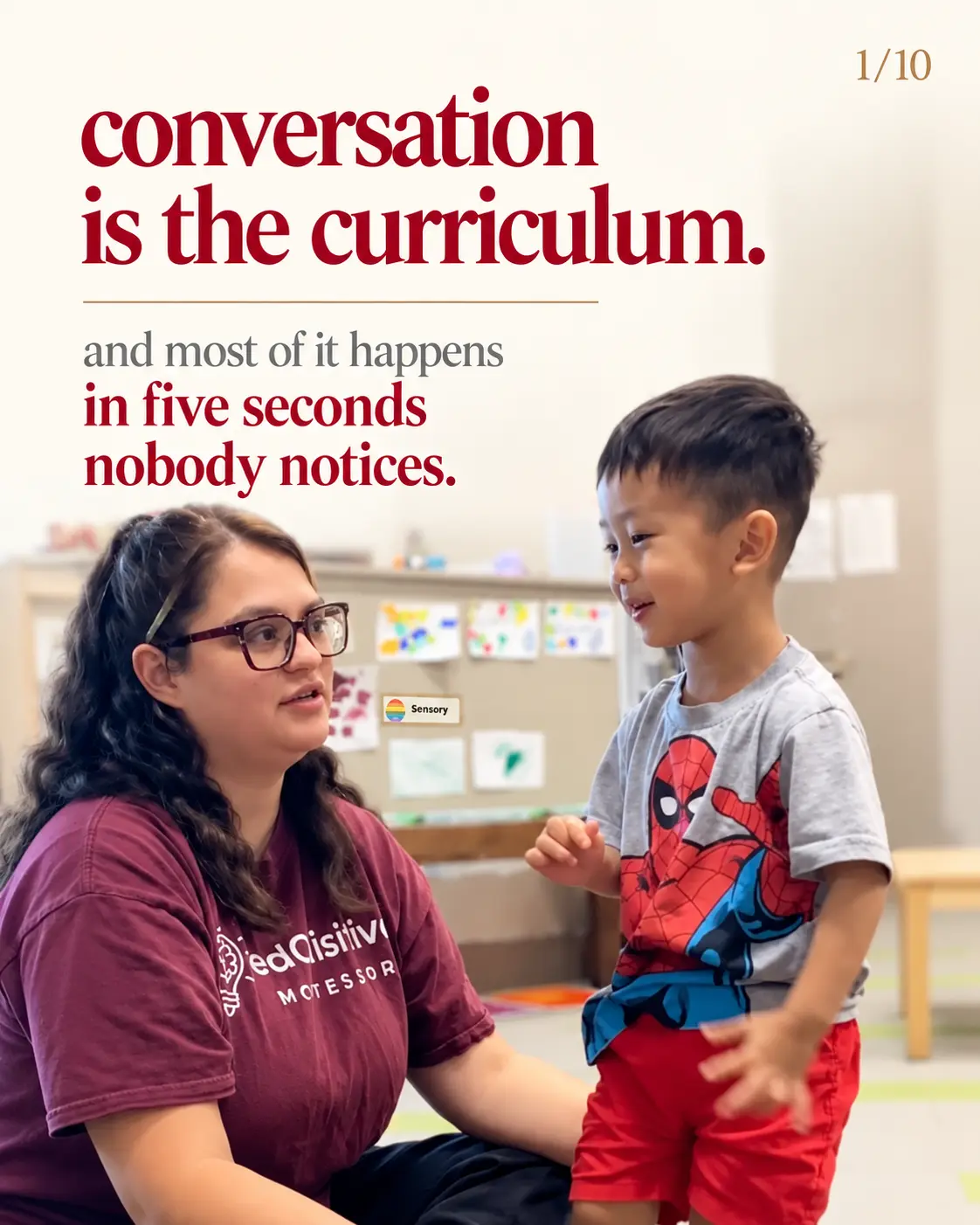
Some of the most important learning in a preschool classroom happens in the five seconds when an adult says nothing.
A child is trying to explain something.
He knows what he wants to say. Or at least he thinks he does.
He starts a sentence. Stops. Searches for the word.
The adult knows the word.
It would be incredibly easy to give it to him.
Instead, she waits.
One second.
Two.
Three.
Maybe five.
And then the child finds it.
It doesn’t look much like teaching.
There is no worksheet. No carefully presented material. No obvious lesson taking place.
But think about what the child just had to do.
He had to remember. Search his vocabulary. Organize a thought. Find the confidence to keep trying. Put an idea into language. And experience the satisfaction of getting there himself.
All because an adult resisted the urge to answer for him.
Conversation is the curriculum.
And much of it happens in moments so ordinary that we barely notice them.
We Look for Curriculum in the Wrong Places
When parents tour preschools, curriculum is usually something they expect to be able to see.
We look at the materials on the shelves.
We ask about phonics and mathematics.
We notice the art projects hanging on the walls.
We hear words like Montessori, Reggio Emilia, inquiry-based learning, STEM and kindergarten readiness.
Those things matter.
But there is another part of the curriculum happening constantly that rarely appears on a tour checklist: the conversations between children and adults.
Listen to a classroom for a few minutes and you can learn a tremendous amount about what children are being asked to do with their minds.
A child says: “I don’t know.”
One adult responds: “It’s a caterpillar.”
Another responds: “What do you think it could be?”
The child gives an incorrect answer.
One adult says: “No, that’s not right.”
Another asks: “What makes you think that?”
A child struggles to explain an idea.
One adult finishes the sentence.
Another waits.
These differences seem tiny.
But each response gives the child’s brain a very different job.
Why “I Don’t Know” Is the Start of Learning
Adults are extraordinarily good at answering children’s questions.
Sometimes we’re too good at it.
A child asks what something is, and we tell them.
They can’t open something, and we open it.
They can’t remember a word, and we supply it.
They make an incorrect observation, and we correct it.
Usually we’re trying to help.
But helping a child learn doesn’t always mean making the answer arrive faster.
Imagine a child says: “I don’t know.”
There is an enormous difference between responding with the answer and responding: “What do you think?”
Now the child has something to do.
Look again. Remember. Compare. Guess. Explain. Maybe change the answer.
The conversation has moved from retrieving an adult’s knowledge to developing the child’s thinking.
That doesn’t mean adults should never answer questions. Of course we should.
It means we should recognize that sometimes the question is more useful than the answer.
The Hard Part: Waiting Five Seconds
Asking a good question is only half of it.
The next part can be surprisingly difficult.
You have to wait.
Adults process language faster than young children. We know where the conversation is going. We can often anticipate the word a child is searching for before they find it.
So we fill the silence.
Try noticing how often we do this.
A child starts: “Yesterday we went to the…”
And we say: “Park?”
Maybe they were going to say grocery store.
Or they point toward something and struggle to remember its name. We give them the word.
Or we ask a question and, after a second without an answer, ask another question.
The silence feels uncomfortable to us.
But the child may not be stuck at all.
They may be thinking.
Those few seconds give a young child time to process the question, search memory, organize language and decide what they want to say.
Sometimes good teaching isn’t knowing what to say next. It’s knowing what not to say yet.
What to Do When the Answer Is Wrong
This may be where conversation becomes even more interesting.
A child confidently tells you something that isn’t correct.
Our instinct is immediate: “No, actually…”
Sometimes correction is necessary.
But sometimes there is a more interesting question: “What makes you think that?”
Suddenly, instead of simply discovering whether the child knows the correct answer, we get to discover how the child arrived at the incorrect one.
And that can tell us much more.
Maybe they noticed something we didn’t realize they noticed.
Maybe they connected two ideas in an unexpected way.
Maybe they understood part of the concept but not all of it.
Maybe their explanation leads to another question entirely.
An incorrect answer doesn’t always have to end a conversation.
Sometimes it can begin one.
It Sounds Like Talking. Look Underneath It.
Imagine a teacher and a four-year-old talking about something the child discovered outside.
To someone walking past, they’re simply having a conversation.
But underneath that conversation, the child may be practicing language, listening, memory, reasoning, sequencing, vocabulary, confidence and problem-solving. The ability to explain an idea. The ability to listen to another person’s idea. The ability to change their mind when new information appears.
None of those requires a worksheet.
And none of them is separate from academic learning.
They are part of what eventually allows a child to participate in academic learning successfully.
A child learning to read needs letters and sounds. But that same child also needs language.
A child learning mathematics needs numbers and quantities. But that child also needs to be able to reason, notice patterns, explain an idea and stay with a problem.
Development doesn’t happen in separate little boxes.
Language, thinking, confidence, concentration and academics grow alongside one another.
Researchers at Harvard’s Center on the Developing Child call this back-and-forth serve and return. The child offers something, the adult returns it, and the child offers again. It is one of the most studied features of early development, and it costs nothing.
Who Is Doing Most of the Talking?
There is another revealing thing parents can listen for in a preschool classroom.
Who is doing most of the talking?
A classroom can be full of language while still giving children relatively little opportunity to produce their own.
Adults can explain. Direct. Correct. Remind. Ask questions with predetermined answers. And talk some more.
A quieter adult can sometimes create a richer conversation.
“What did you notice?”
“What happened?”
“Why do you think that happened?”
“What could you try?”
“Tell me about this.”
“What makes you think that?”
And perhaps the most underrated teaching technique of all: silence.
The goal isn’t for teachers to stop teaching.
It is for teachers to become intentional about when their voice moves learning forward and when their voice takes over something the child could have done.
Open-Ended Questions for Preschoolers You Can Use at Home
None of this requires special training or special materials.
In fact, some of the best opportunities happen during completely ordinary parts of family life.
| Instead of | Try |
|---|---|
| “It’s a caterpillar.” | “What do you think it could be?” |
| “No, that’s not right.” | “What makes you think that?” |
| “Here, let me open it.” | “What could you try?” |
| Finishing the sentence | Waiting five seconds |
| Five questions in a row | “Tell me more.” |
Your child can’t get a container open. Before opening it, ask: “What could you try?”
They tell you something happened at school. Instead of immediately asking five questions, try: “Tell me more.”
They make an observation that seems strange. Instead of correcting it: “What makes you think that?”
They’re searching for a word. Wait a few seconds before supplying it.
They’re trying to explain something and the story is taking forever.
Let it take forever.
You don’t need to turn every interaction into a lesson. That would be exhausting for everyone.
Just experiment with one small change:
Ask one more question.
Finish one fewer sentence.
Then see what your child does with the space.
What to Listen for in a Preschool Classroom
When visiting a preschool, don’t only look at what is on the shelves.
Listen.
Listen to how adults respond when children ask questions.
Listen to whether teachers immediately provide answers or sometimes return a question.
Listen to whether children have opportunities to explain their thinking.
Listen to what happens when a child is wrong.
Listen for conversations that aren’t simply instructions.
And notice whether teachers seem comfortable with a child taking a little time to answer.
You can even ask: “What do your teachers do when a child says, ‘I don’t know’?”
It’s a deceptively simple question.
The answer can tell you a great deal about how that school sees children and learning.
Our founder has written more about why the curriculum label tells you less than you think, and what to watch instead.
The Five Seconds Nobody Notices
Early childhood education is full of things adults can see.
Beautiful classrooms. Materials. Books. Projects. Lessons. Curriculum guides.
But childhood is also shaped by hundreds of tiny interactions that will never appear in a brochure.
A question.
A pause.
A wrong answer.
Another question.
A teacher waiting just a little longer.
A child suddenly saying: “I know!”
Those moments are easy to miss because they don’t look impressive.
But perhaps that is exactly why we should pay more attention to them.
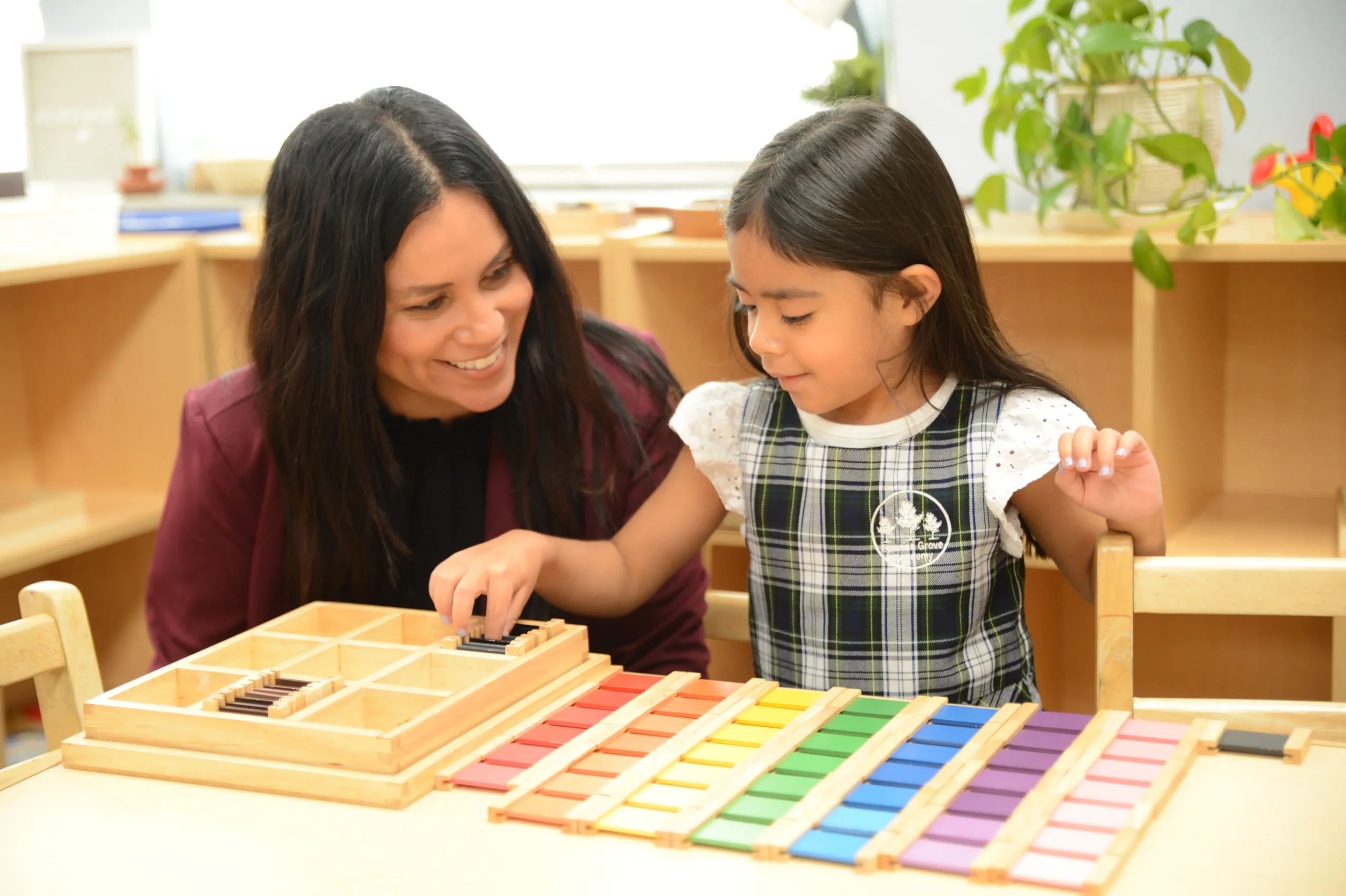
The next time a child pauses while trying to tell you something, resist the instinct to fill the silence immediately.
Give them another second.
Maybe two.
Maybe five.
See what happens.
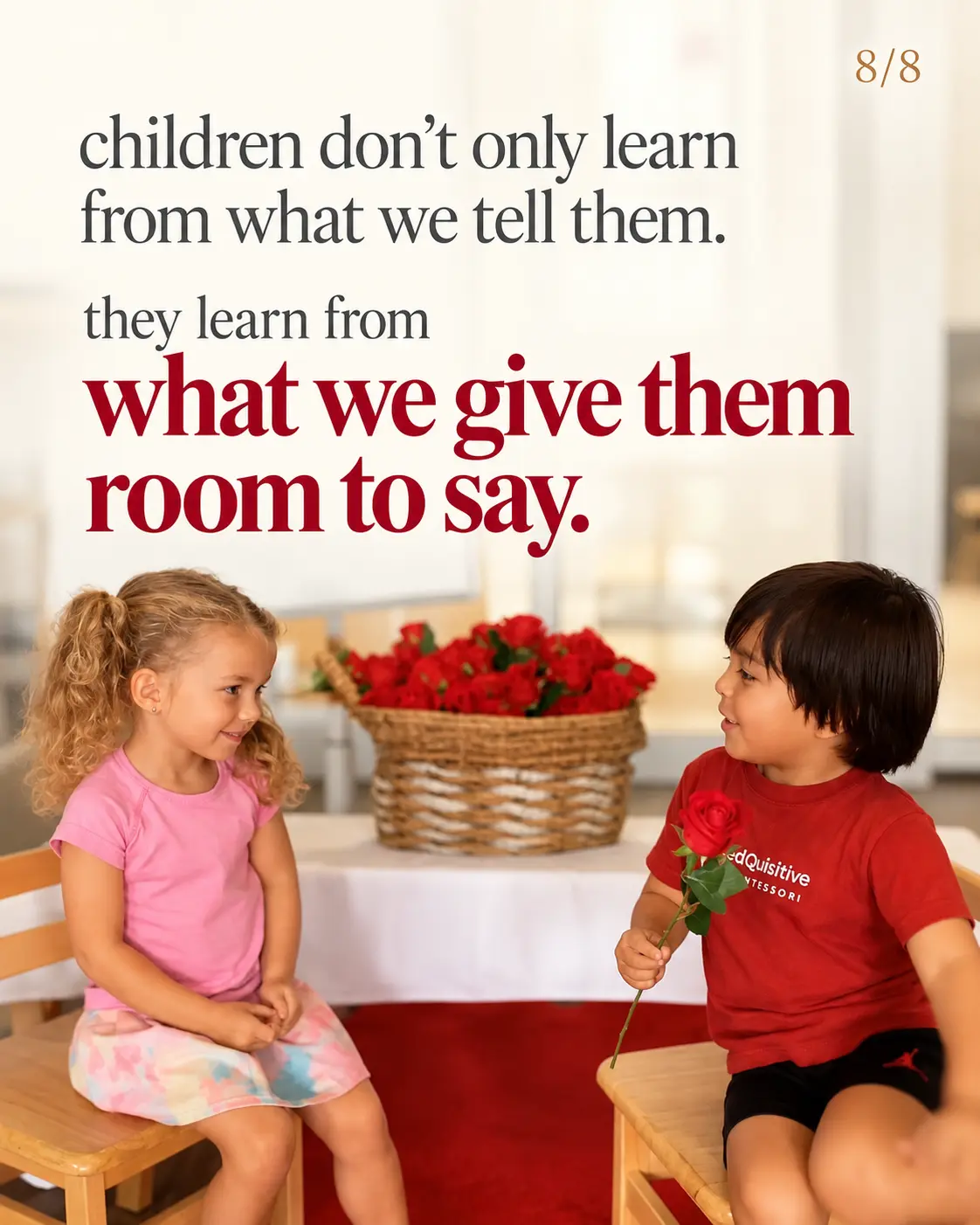
Because children don’t only learn from what we tell them.
They learn from what we give them room to say.
Melissa Zamora is Head of Schools at Edquisitive Montessori and co-host of the podcast Conversations for the Beginning Years.
Want to hear what this sounds like in a real classroom? Come listen.
Frequently Asked Questions
What are open-ended questions for preschoolers?
Open-ended questions are questions with no single correct answer, so the child has to think rather than recall. “What do you think it could be?” is open-ended; “Is it a caterpillar?” is not. The difference matters because an open-ended question gives the child’s brain a job: look again, remember, compare, guess, explain, and sometimes change their mind.
What are some examples of open-ended questions to ask a preschooler?
Six that work in almost any situation: “What did you notice?” “What happened?” “Why do you think that happened?” “What could you try?” “Tell me about this.” And “What makes you think that?” Each one hands the thinking back to the child instead of handing them an answer.
How long should I wait for a preschooler to answer?
About five seconds, which will feel much longer to you than it does to the child. Adults process language faster than young children and often anticipate the word a child is reaching for, so the instinct is to fill the silence. Those few seconds give a child time to process the question, search memory, organize language and decide what they want to say.
Should I correct a preschooler when they are wrong?
Sometimes correction is necessary. But before correcting, try asking “What makes you think that?” Instead of finding out whether the child knows the right answer, you find out how they arrived at the wrong one, which usually tells you more. They may have noticed something you missed, connected two ideas in an unexpected way, or understood part of the concept but not all of it.
What is serve and return?
Serve and return is the term researchers at Harvard’s Center on the Developing Child use for the back-and-forth between a young child and an adult. The child offers something, the adult returns it, and the child offers again. It is one of the most studied features of early development, it requires no materials, and what makes it work is often what the adult chooses not to say.