Last updated: July 2026 · Reviewed by Melissa Zamora, Head of Schools at Edquisitive Montessori, with 25 years of AMI and AMS Montessori experience in early childhood education.
If you have looked into Montessori, you have probably pictured it: a quiet room, each child working alone on a little mat, nobody talking. It is the most common image people carry, and it raises a fair question. If children spend the day on independent work, will they actually learn to share, cooperate, make friends, and handle conflict? Will a Montessori child be socially behind?
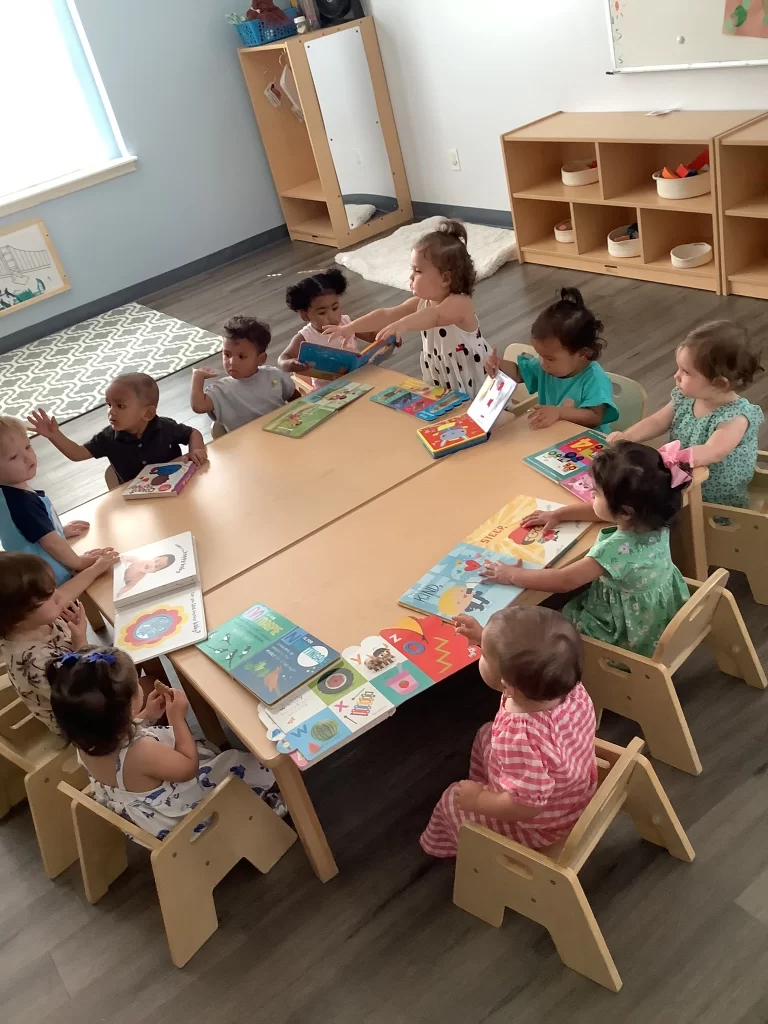
It is a reasonable thing to wonder, and you are smart to ask it before choosing a program. But the silent-solitary image is a myth. In a real Montessori classroom, social interaction is not an afterthought squeezed in around the “real” work. Montessori social skills are built into the design of the room, the age structure, and the daily rhythm. This guide walks through exactly how that works, what the research shows about Montessori socialization, and what you will actually see during a classroom tour.
The Short Answer
Montessori children are not isolated. Mixed-age classrooms, collaborative materials, and daily grace-and-courtesy lessons mean children are constantly negotiating, mentoring, and problem-solving with peers. Research has linked Montessori education to stronger social problem-solving and a greater sense of fairness than conventional settings. The independence is real, but it happens inside a community, not instead of one.
Where the “Montessori Is Antisocial” Myth Comes From
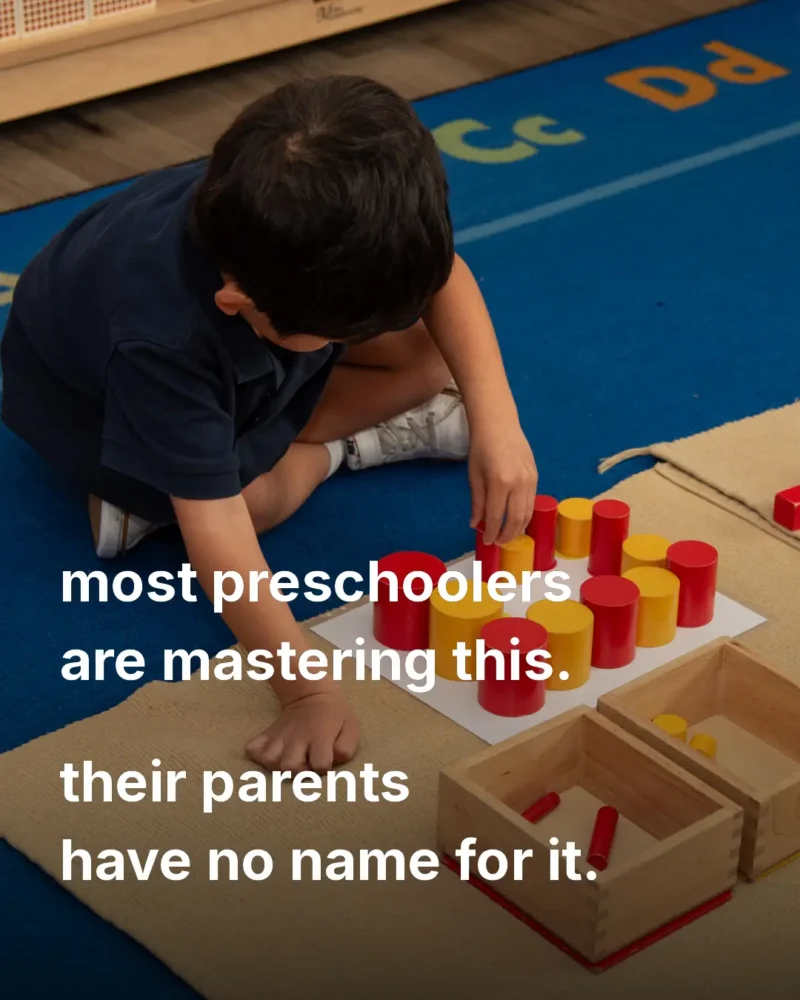
The myth is not invented out of nothing. Montessori classrooms genuinely do protect long periods of focused, self-chosen work, and children are free to work alone when they want to. A visitor who glances in during a quiet work cycle might see several children absorbed in individual tasks and conclude the room is solitary by design.
What that snapshot misses is everything around it: the child who pulls a friend over to build a map together, the older student showing a younger one how to pour without spilling, the two children at the peace table working out who had the material first. Independence and interaction are not opposites in Montessori. Children choose when to work alone and when to work together, which is exactly the social judgment we want them building.
Social Interaction: Traditional Preschool vs Montessori
The clearest way to see the difference is side by side. It is not that traditional preschools ignore social skills. It is that in Montessori, social interaction is woven through the entire day rather than scheduled into blocks.
| Traditional Preschool | Montessori |
|---|---|
| Same-age classrooms | Mixed-age classrooms (3-year spans) |
| Teacher leads most activities | Children choose their own work |
| Social time during scheduled group activities | Social interaction throughout the day |
| Teacher resolves most conflicts | Children learn to resolve conflicts themselves |
| Same-age dynamics, competition can occur | Mentoring across ages, collaboration is built in |
| Friendships form mostly among same-age peers | Friendships form across ages and interests |
Will My Child Make Friends in Montessori?
Yes. This is the question underneath all the others, so let us answer it directly: children make real friendships in Montessori, and the mixed-age classroom actually gives them more ways to connect, not fewer.
In a same-age classroom, a child essentially has one pool of potential friends: other children at exactly their stage. In a Montessori room spanning three years, a shy three-year-old might first bond with a gentle five-year-old who takes them under their wing, long before they are ready to navigate friendships with same-age peers. A child with an intense interest in maps or animals can find the one other child who shares it, regardless of age. Friendship in Montessori is built around shared work and genuine connection rather than just who happens to be the same age.
And because the classroom teaches the mechanics of connection directly, through grace and courtesy lessons on how to greet someone, how to ask to join an activity, how to include a child standing on the edge, children who might otherwise struggle socially get explicit tools rather than being left to sink or swim. Teachers observe closely and gently help a hesitant child find their way in. The friendships that form tend to be genuine, because they grow out of real collaboration rather than forced grouping.
By the time children leave a Montessori program, most have years of practice starting conversations, joining groups, working through disagreements, and caring for younger friends. Those are the exact building blocks of friendship, practiced daily.
How the Montessori Classroom Is Built for Interaction
Social skill in Montessori is not left to chance or recess. It is engineered into five features of the environment.
Mixed-age classrooms
Imagine your three-year-old walking into a classroom where older children naturally show them where the materials belong, help zip a stubborn jacket, or invite them to join an activity already underway. A year later, your child is the one offering that same help to a newcomer. That is the quiet engine of the mixed-age classroom: over three years, every child experiences being both the cared-for and the caregiver. It builds empathy and leadership in a way same-age grouping simply cannot, because the roles are real and they rotate.
Collaborative materials and teamwork
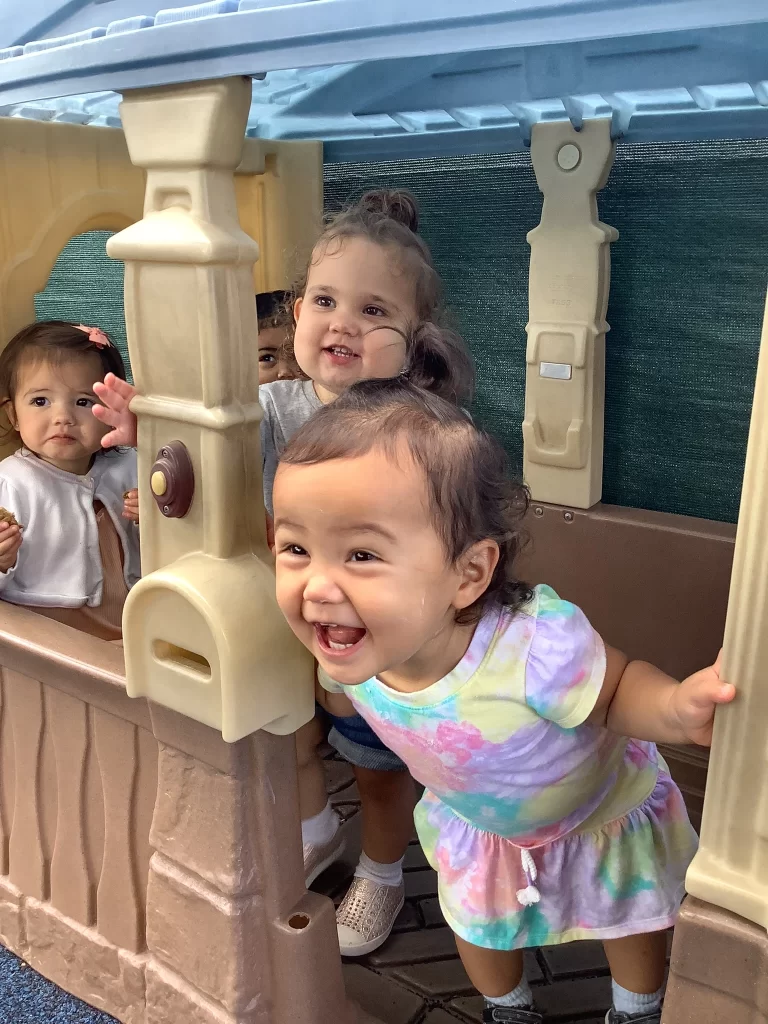
Many Montessori materials are designed to be used together, and there is typically only one of each material in the classroom. That scarcity is intentional. It means children must negotiate turns, wait, ask, and coordinate. Teamwork and turn-taking are real social skills, and here they are practiced dozens of times a day rather than lectured about once.
Grace and courtesy lessons
Montessori classrooms teach the mechanics of social interaction explicitly through short lessons called grace and courtesy: how to greet someone, how to interrupt politely, how to ask to join an activity, how to observe a peer’s work without disturbing it. Most schooling assumes children absorb these skills on their own. Montessori teaches them directly, then gives children all day to practice.
Practical life activities
Everyday tasks like preparing a snack for the group, cleaning a shared table, or caring for a class plant require coordination and communication. These practical life activities give children authentic reasons to work together toward a shared goal, which is how cooperation is actually learned.
The peace corner and conflict resolution
Rather than sending disputes to a teacher to settle, Montessori classrooms give children tools to resolve conflict themselves. A designated peace corner, often with a peace rose or similar object, gives two children a structured way to take turns speaking, name their feelings, and reach a resolution. Over time children internalize a process for disagreeing without it becoming a fight, one of the most valuable social skills any adult carries.
What This Looks Like in Practice
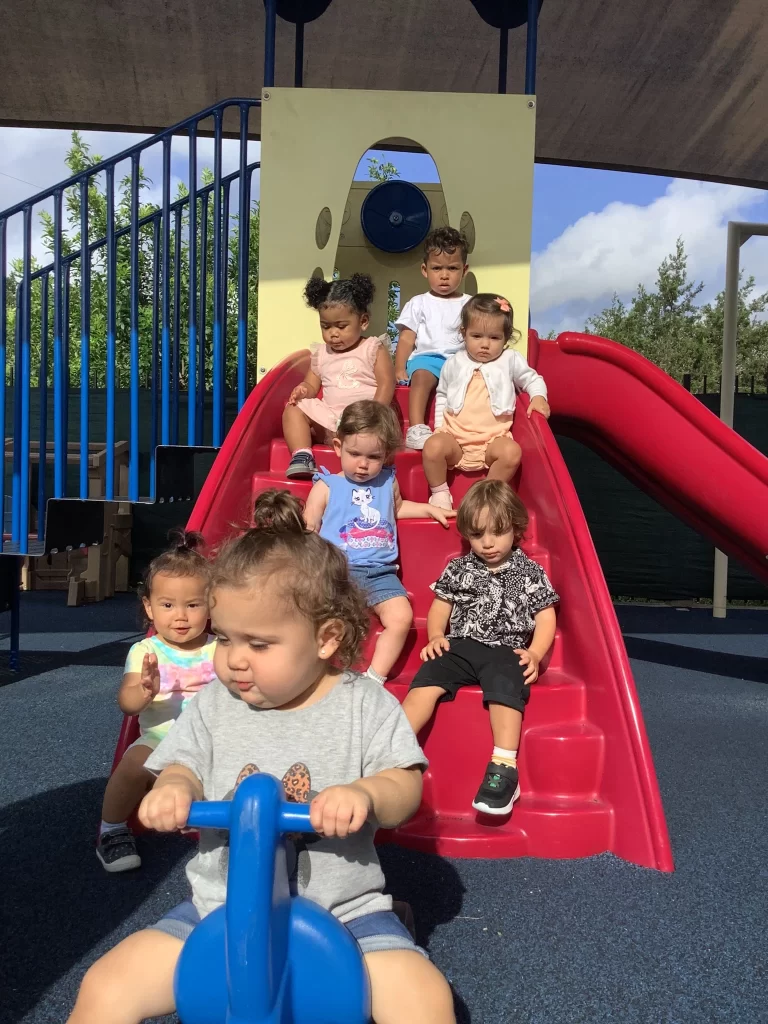
A typical moment in one of our Primary classrooms looks like this: a four-year-old notices a younger child struggling to carry a tray across the room. Without being asked, she walks over, quietly shows him how to balance it with two hands, walks alongside him to his table, and then steps away once he has it. No teacher prompted her. No reward followed. She simply saw a need and met it, because that is the water she swims in every day. Multiply that small moment by dozens a day, across three years, and you understand how Montessori builds social skill.
How Montessori Helps Different Personalities
Parents often ask how their specific child will fare. Here is an honest look at three common temperaments.
The shy or reserved child
A quieter child is never pushed to perform socially in front of a group. The mixed-age setting lets them connect one-on-one, often first with a nurturing older child, and warm up to the community at their own pace. Grace and courtesy lessons give them a script for the moments that feel hardest, like joining a group already at play.
The very outgoing child
A highly social child has constant, real outlets for connection: mentoring younger children, collaborating on projects, leading practical life work. The structure channels that energy into meaningful interaction rather than leaving them to dominate a group, and teaches the harder social skill of listening as well as leading.
The strong-willed child
A determined, independent child thrives on the freedom to choose their own work, which reduces power struggles. At the same time, shared materials and the peace corner give them daily practice negotiating and compromising, skills a strong-willed child benefits from most.
What the Research Actually Shows
The social case for Montessori is not just philosophy. A frequently cited 2006 study published in Science by Angeline Lillard and Nicole Else-Quest compared children in a public Montessori program with peers in other schools and found the Montessori children showed stronger social problem-solving and a greater concern for fairness and justice in how they treated others.
A broader 2023 systematic review in Campbell Systematic Reviews (32 studies, 204 effect sizes) found Montessori education has modest but meaningful positive effects on both academic and nonacademic outcomes, including social and behavioral measures, with the strongest results in authentic, high-fidelity programs staffed by trained guides. The same self-directed work that builds these social gains also strengthens executive function, the focus and self-regulation that underpin both learning and getting along with others. The recurring theme across the research is that the benefits show up most clearly where the method is implemented faithfully, which is why teacher training and program authenticity matter so much when you evaluate a school.
The Long-Term Social Payoff
The social skills a child builds in a Montessori classroom are not just for the classroom. They compound into the qualities that matter for the rest of a child’s life:
- Clear communication. Children learn to express themselves and to actually listen, not just wait for their turn to talk.
- Empathy and perspective. Daily practice considering others, across a range of ages, builds a genuine ability to see a situation from someone else’s point of view.
- Leadership and responsibility. Mentoring younger children gives every child real experience being counted on.
- Conflict resolution. A child who can name a feeling and work toward a solution at age four carries that capacity into every relationship that follows.
These are the same skills kindergarten teachers say matter most. For more on how the early years set children up for that transition, see our guide to kindergarten readiness.
Is Montessori the Right Choice for Every Child?
Honestly, not always, and any school that claims otherwise is selling rather than helping. Montessori works beautifully for many children, especially those who benefit from hands-on learning, independence, and a mixed-age community. Families who prefer a highly structured, teacher-directed classroom may find a traditional preschool aligns better with their expectations. If you are weighing the two approaches in depth, our guide to Montessori vs traditional preschool lays them side by side. The best way to decide is the same for every family: watch both kinds of classrooms and see where your child lights up.
The Fastest Way to Answer This Is to Watch It
The fastest way to answer the friendship question is to spend twenty minutes in a Montessori classroom. Watch children greet each other, solve disagreements, help younger classmates, and work independently, all before lunch. Most parents walk in picturing quiet, solitary mats and leave with a completely different understanding of how social these rooms really are.
Four campuses across San Antonio and Boerne: Fair Oaks, Stone Oak, NW Military, and Medical Center.
Frequently Asked Questions
Do Montessori children learn to socialize?
Yes. Montessori classrooms are designed around social interaction through mixed-age grouping, shared materials that require negotiation, explicit grace and courtesy lessons, and daily collaborative work. Children choose when to work independently and when to work together, which builds the judgment to know the difference. Research has linked Montessori education to stronger social problem-solving than conventional settings.
Will my child make friends in Montessori?
Yes, and the mixed-age classroom gives children more ways to connect, not fewer. Friendships form around shared work and genuine interest rather than just matching ages, and grace and courtesy lessons give children direct tools for greeting others, joining activities, and including peers. Most children leave a Montessori program with years of daily practice at the exact skills friendship is built on.
Isn’t Montessori too focused on independent work?
Montessori protects periods of focused, self-chosen work, and children may work alone during them. But independence and interaction are not opposites. Throughout the day children mentor peers, share materials, resolve conflicts at the peace table, and complete practical life tasks together. The independence happens inside a community, not instead of one.
How do mixed-age classrooms help social development?
Mixed-age classrooms (typically three-year spans like 3 to 6) let older children mentor younger ones, which builds empathy, patience, and leadership, while younger children learn from peers just ahead of them. Because the roles rotate over three years, every child experiences being both helped and helper, which is powerful for social growth.
How does Montessori handle conflict between children?
Rather than having a teacher settle every dispute, Montessori gives children tools to resolve conflict themselves. A designated peace corner, often with a peace rose, gives children a structured way to take turns speaking, name their feelings, and reach a resolution. Over time they internalize a process for disagreeing productively.
Will a Montessori child adjust socially to a traditional school later?
Most do, and often with an advantage. The communication, empathy, and conflict-resolution skills built in Montessori transfer directly to any setting. Children who have spent years negotiating, mentoring, and cooperating tend to move into new social environments with confidence.
Keep Exploring
- Montessori vs Traditional Preschool — a full comparison of the two approaches
- Montessori Practical Life — how everyday tasks build focus and cooperation
- Executive Function in Preschoolers — the focus and self-regulation behind social skill
- Kindergarten Readiness — the six domains that matter most
- Tuition & Programs — what is included at each campus