A toddler meltdown in a store aisle feels like a parenting defeat. But learning to move through frustration, with a calm adult nearby, is part of how young children begin building resilience.
It usually happens near the checkout.
A two-year-old has spent twenty minutes riding contentedly in a Target cart, a box of Goldfish crackers clutched like a trophy. Then she spots a sparkly water bottle. Her mother says no. Within seconds the child has gone boneless on the floor of aisle seven, back arched, voice at full volume, while other shoppers steer carefully around the scene and pretend not to notice.
The mother abandons the half-full cart beside the paper towels. On the drive home, with her daughter asleep and tear-streaked in the car seat, she replays the whole thing and asks the question nearly every parent asks after a moment like that: What did I do wrong?
After more than 20 years in early childhood education, I have come to believe it is the wrong question. The more useful one is what that moment was building. Very little went wrong in that aisle. A child was practicing one of the most important skills she will ever learn, and it simply happened to be loud.
What’s Really Behind a Toddler Meltdown
A young child’s brain develops from the bottom up. The feelings come first: fear, frustration, wanting. The part of the brain that helps us wait, stop, and calm down comes much later, and it keeps developing well into a person’s twenties.
Place a tired, hungry two-year-old in a bright, noisy store full of things she cannot have, and it is not hard to see how the afternoon goes sideways. What looks like defiance is often something much simpler: a young child taking in more frustration than she knows how to manage. It says very little about her parents.
What happens next is what matters. Before children can calm themselves, they borrow calm from us. A parent who kneels down, keeps her voice low, and waits it out is not giving in. She is walking her child through the full arc of falling apart and coming back together. The meltdown is the repetition. The recovery is the muscle.
Researchers at Harvard’s Center on the Developing Child put it this way: small, short bursts of stress, like hearing no at the checkout or watching a tower fall, are a normal part of growing up, especially when a loving adult is close by. It’s the big, long-lasting kind of stress, faced alone, that does harm. A toddler’s disappointment in aisle seven is not that.
The parent learns something too. Perhaps that late afternoon is no time for errands, or that the checkout lane was designed by someone who has never met a toddler. Next time, the trip happens in the morning, with a snack in the bag, and it usually goes a little better.
Why High Achievers Can Struggle With Setbacks
In 2024, NVIDIA founder and CEO Jensen Huang gave a room full of Stanford students advice you don’t usually hear at a graduation. He observed that “people with very high expectations have very low resilience,” because they are not accustomed to, or prepared for, failure. He admitted he did not know how to teach resilience directly, and closed with an unusual wish: “I wish upon you ample doses of pain and suffering.”
Huang was talking to accomplished young adults. But his observation raises a fair question for parents: What if we didn’t wait until the stakes were high to let children experience failure? At two, three, and four, the failures are usually small. The tower falls. The button won’t cooperate. Mom says no to the water bottle. And, with an adult nearby, life moves on.
Those early setbacks are practice for the bigger ones that come later, and a child who has had plenty of them has at least some experience getting through.
Why a Good Teacher Sometimes Does Nothing
More than a century ago, Maria Montessori built a whole way of teaching around this idea. In The Absorbent Mind, she urged adults to cultivate “a friendly feeling towards error.” In other words, stop treating mistakes like the enemy. They are part of how children learn.
That philosophy sits in plain view on the shelves of a Montessori classroom. A three-year-old carries a small glass pitcher of water to her table. The glass is deliberate; real objects teach care in a way plastic cannot. She pours, and some of the water lands on the tray. No adult rushes over. Beside the pitcher sits a sponge sized for her hand, and she already knows what it is for.
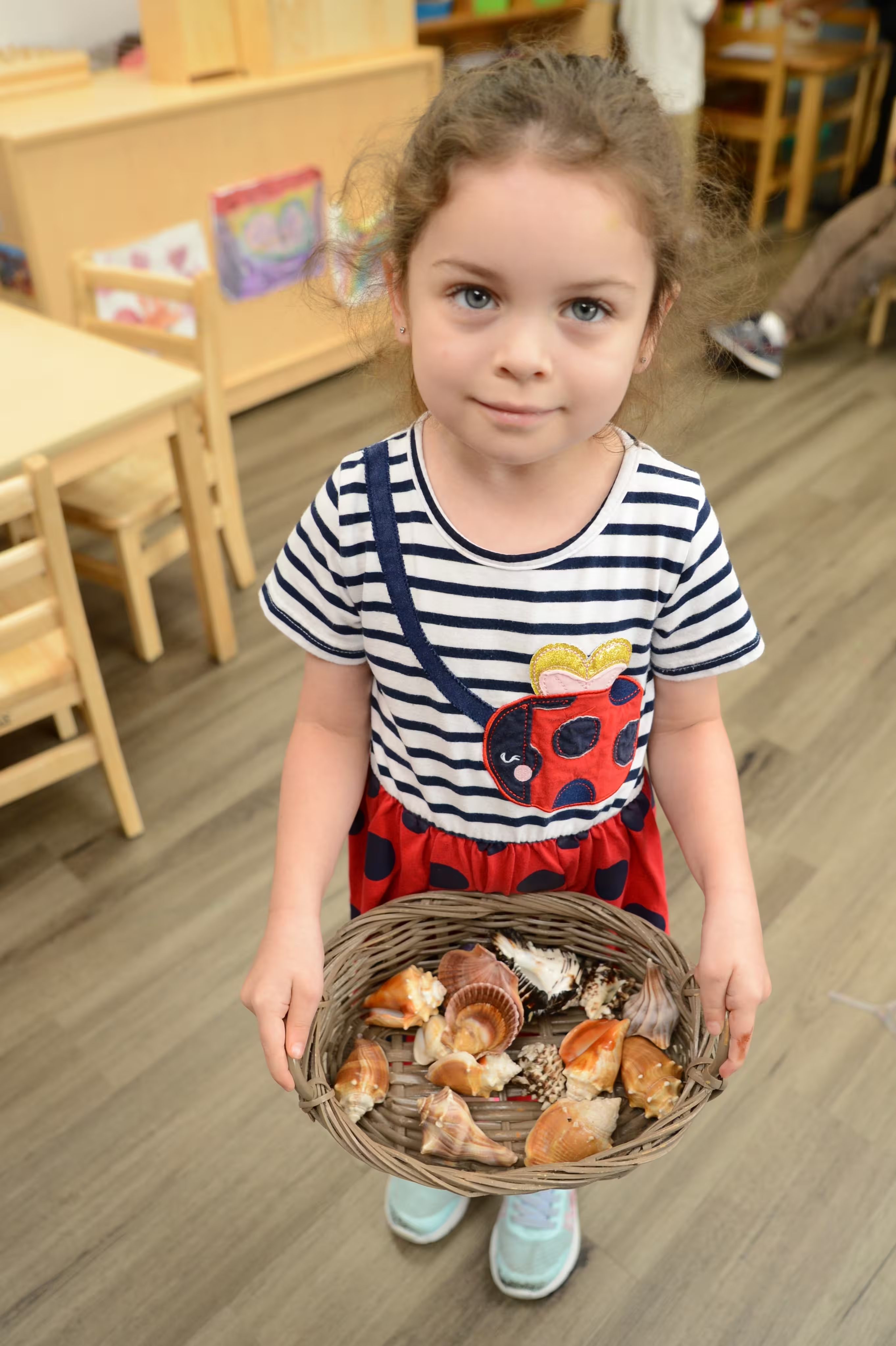
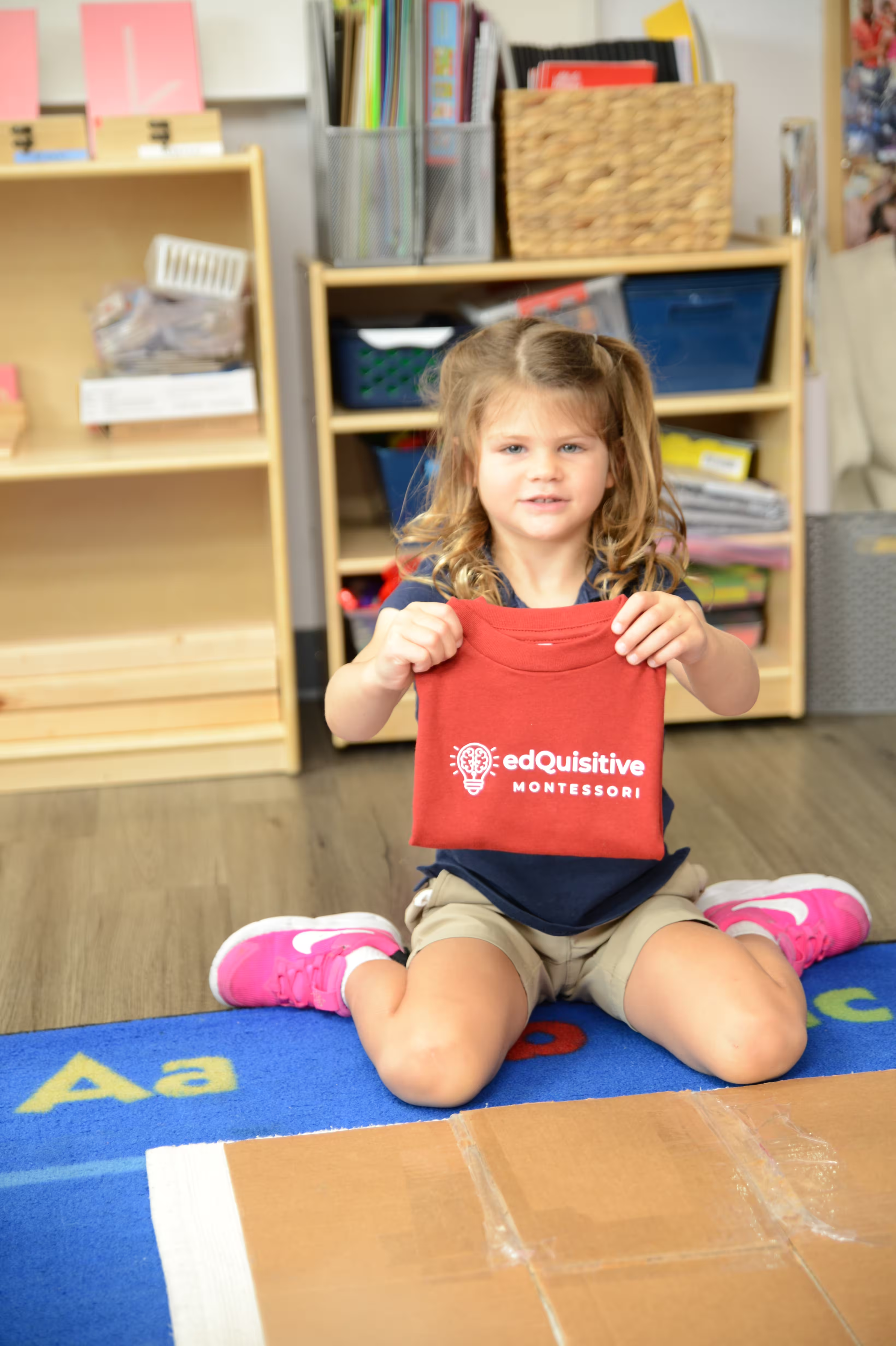
Carrying a basket of real shells across the room. Folding and presenting her own shirt. Small tasks with real consequences teach care, and the freedom to get them a little wrong is part of the lesson.
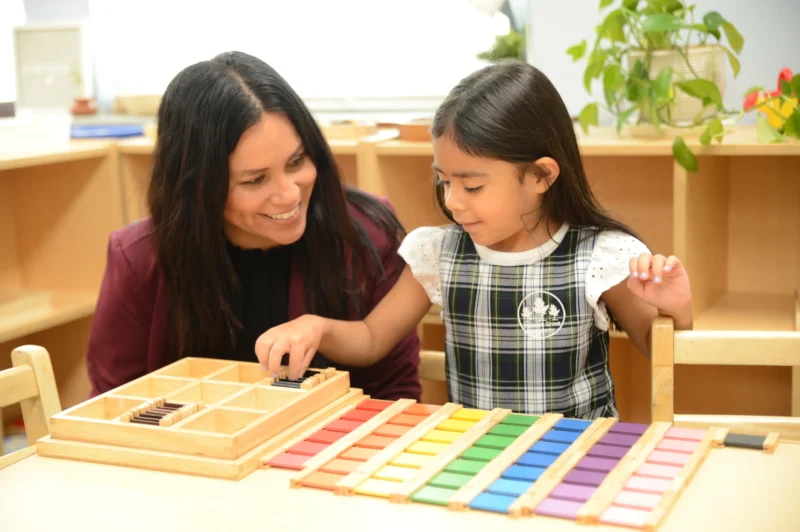
Montessori called this the control of error. The materials are designed so a child can detect her own mistake without an adult pointing it out. The pink tower wobbles when the cubes are out of sequence. A wooden cylinder is left over because another landed in the wrong socket. The child pauses, looks, and tries again. The feedback comes from the work, not from an adult’s verdict.
In our Curiosity Studios, the hardest part of a teacher’s job isn’t helping. It’s knowing when not to: watching a button go into the wrong hole and keeping their hands still. Every time an adult rescues a child from a small, safe difficulty, the child hears a quiet message: you can’t. Every time the adult waits, the message changes: I believe you can.
What to Say When It All Falls Apart
None of this requires a Montessori classroom. It requires a few deliberate shifts in the moments when things go wrong, at home or in the middle of Target.
Start with the feeling before the fix. Before correcting the behavior, help her feel understood. “You really wanted that water bottle, and you’re so disappointed.” It won’t stop every tantrum, but it often takes some of the heat out of the moment.
Describe the effort rather than judge the outcome. Once the storm passes, try: “You tried so hard, even though it didn’t work this time.” Heard often enough, that sentence teaches a child that effort is worth giving, a lesson that follows her well into adulthood.
Separate the child from the moment. A tantrum is something a child had, not something a child is.
Then point forward. With a toddler, it can be as simple as “Next time, we’ll bring a snack.” With an older child, ask, “What could we try next time?” It turns the conversation toward what happens next.
| Instead of | Try |
|---|---|
| “Stop crying.” | “You’re really upset. I’m right here.” |
| “You’re being bad.” | “That was a hard moment.” |
| “Here, let me do it.” | “What could you try next?” |
| “Good job.” | “You kept going when it got hard.” |
The Long Game
The child who spills at three pours cleanly at four. The child who collapses on a store floor at two looks up at five and says, “I’m so frustrated right now.” The child whose tower falls learns it can be rebuilt, perhaps with a wider base.
Many of us grew up believing mistakes were something to hide, and many still feel a knot in the stomach before trying something new. Children who learn early that a mistake is simply information grow into adults who raise their hands, attempt the unfamiliar, and start over without shame. That is the kind of resilience Huang was talking about, and it starts a lot earlier than college.
So the next time it happens, and it will, take a breath in aisle seven. The strangers will forget before they reach the parking lot. Your child will not remember the water bottle. But over hundreds of moments like this one, she will remember something larger: that when she fell apart, someone stayed close, stayed calm, and helped her find her way back.
The success was never leaving the store without tears. It was learning to come back together.
Sarit Kapur is the founder of Edquisitive Montessori, serving families across the Boerne and San Antonio area, and host of the podcast Conversations for the Beginning Years. He has worked in education for more than 20 years and is the father of two daughters.
Curious what this looks like in a real classroom? Come see it.
Frequently Asked Questions
Why does my toddler have meltdowns in stores?
Stores are bright, noisy, and full of things a toddler wants but can’t have. Add being tired or hungry, and a young child can take in more frustration than she knows how to manage. The part of the brain that helps with waiting and calming down is still developing, so what looks like defiance is often simply overload.
Should I give in to stop a tantrum?
You don’t need to give in, and you don’t need to be harsh either. Hold the limit calmly, stay close, and name the feeling: “You really wanted that, and you’re disappointed.” Staying steady while your child falls apart and recovers is how children learn to calm themselves over time.
How can I help my toddler build resilience?
Let small, safe struggles happen instead of fixing everything right away. Acknowledge feelings first, describe effort rather than judging results, and talk about what to try next time. Children build resilience by recovering from small setbacks, over and over, with a caring adult nearby.
What is “control of error” in Montessori?
Control of error means Montessori materials are designed so a child can spot her own mistake without an adult pointing it out. A tower wobbles when the blocks are out of order, or a piece is left over when something went in the wrong place. The child notices, adjusts, and tries again, which builds independence and confidence.