I’ve spent twenty-five years in Montessori classrooms, and the one thing I tell every parent on a tour is this: your child’s brain is doing something before age six that it will never do again. It’s absorbing language. Not learning it the way you and I might learn French in night school — absorbing it, the way they absorb their first one.
You can see it if you know what to look for. A two-year-old in our toddler community hears a teacher say “vamos a lavarnos las manos” and walks to the sink. Nobody translated it for him. Nobody made him repeat it. He understood, because his brain is built to understand right now. By Pre-K, the same child will choose which language to greet a teacher in, depending on which teacher he sees. He won’t know he’s making a decision. He’s just speaking the language that matches the person.
That’s the window we work inside. And it’s the reason bilingual Montessori isn’t an enrichment program — it’s the method doing what it was always built to do, in two languages instead of one.
What Bilingual Montessori Children Actually Look Like
Forget the research literature for a minute. Here’s what we’ve watched over twenty-five years of bilingual classrooms.
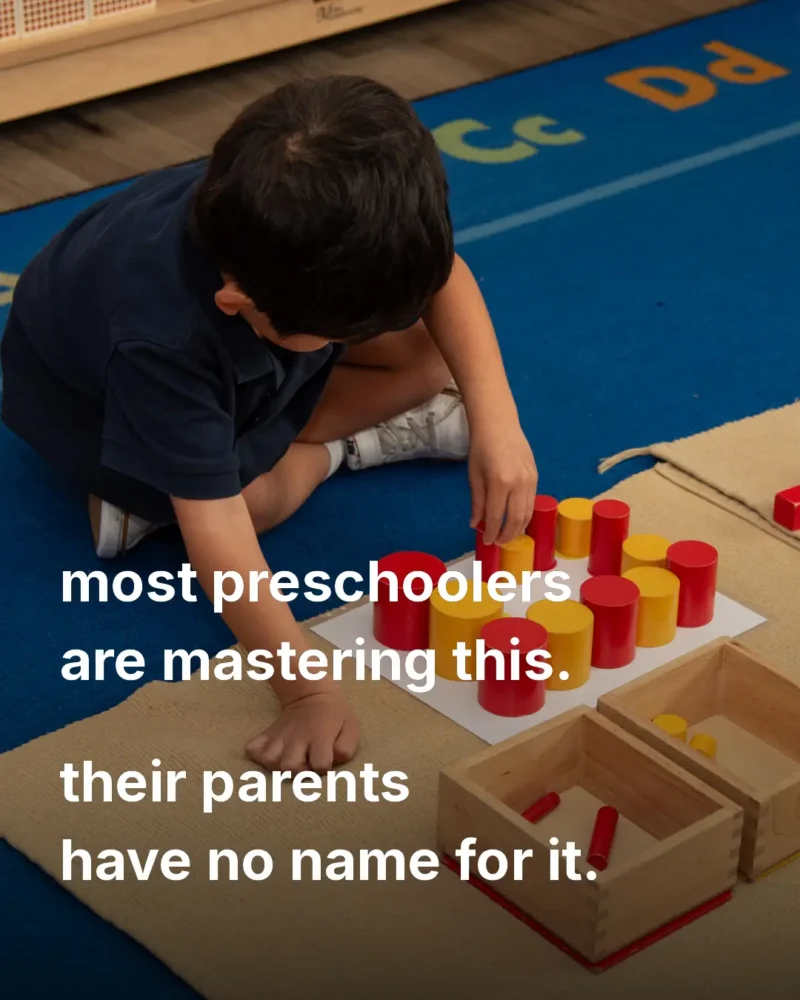
They focus differently. Children who hold two language systems at once develop a kind of mental muscle for switching attention. You see it before they can read. A bilingual three-year-old can be working with the pink tower, hear a teacher speak Spanish across the room, register it without being distracted, and return to her work. Monolingual children that age usually can’t. It’s not a personality difference. It’s the brain practicing something every day.
They speak both languages like locals. If a child starts before about age seven, you can’t hear the seam. Their Spanish sounds like Spanish. Their English sounds like English. After age twelve, almost no one gets that. The mouth and the ear are still flexible right now. That’s not a metaphor — it’s anatomy.
They think more flexibly. A bilingual four-year-old will solve a problem one way, watch it not work, and try a different way. Without prompting. Without frustration. Children who grow up between two language systems learn early that there’s more than one way to say something — and that habit transfers to almost everything else.
They notice culture as something real. When a teacher reads a story in Spanish during Día de los Niños, the bilingual five-year-olds don’t think “the teacher is doing the Spanish thing.” They think “this is a story.” The language doesn’t separate them from the experience — it’s part of it. That’s worth more than any vocabulary list.
The Montessori Method: What It Actually Is
Maria Montessori spent her life watching children. What she figured out, over decades, was that children learn best when the environment around them is prepared to support the work their brains are already trying to do. Four principles, in plain language:
- Child-Centered Learning. Children choose what to work on, when, and for how long. It looks unstructured to a visitor. It isn’t.
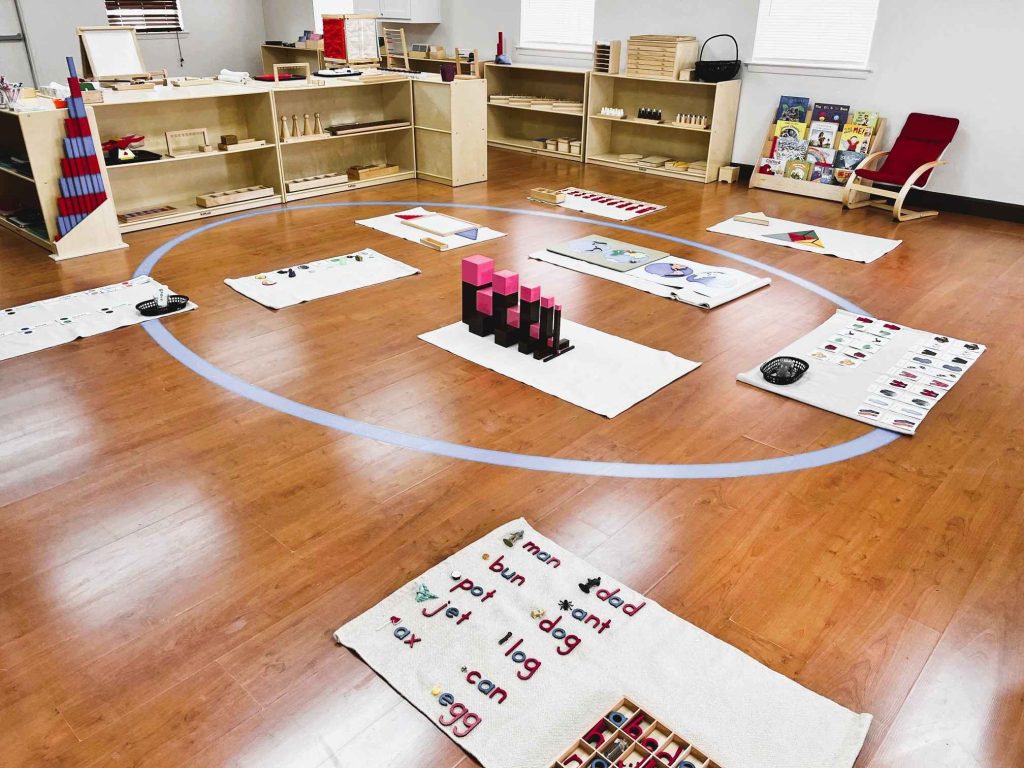
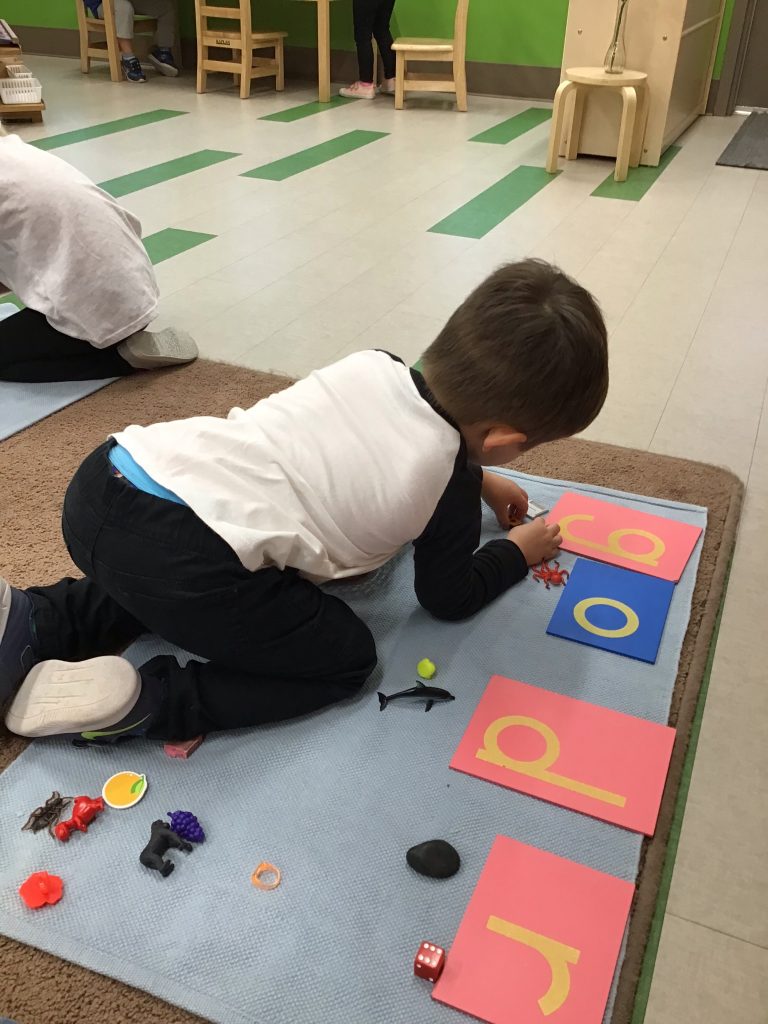
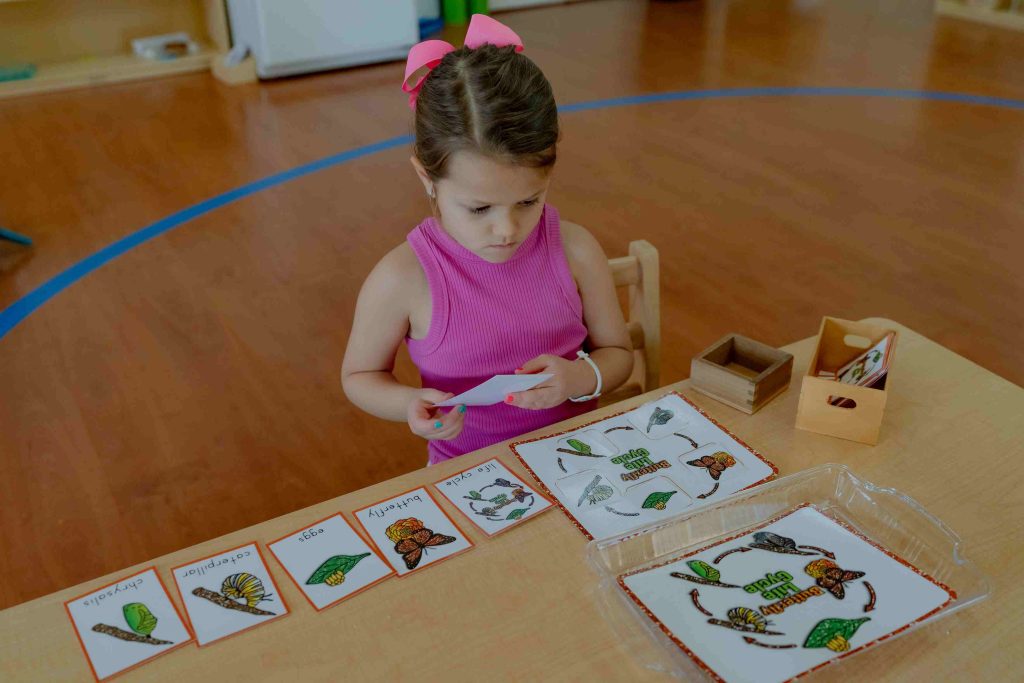
- Hands-On Activities. Real materials, not worksheets. Children learn math by holding numbers, learn geography by tracing continents, learn language by hearing it and using it.
- Independence and Responsibility. Children pour their own water, choose their own work, clean up after themselves. By three, most of them prefer it that way.
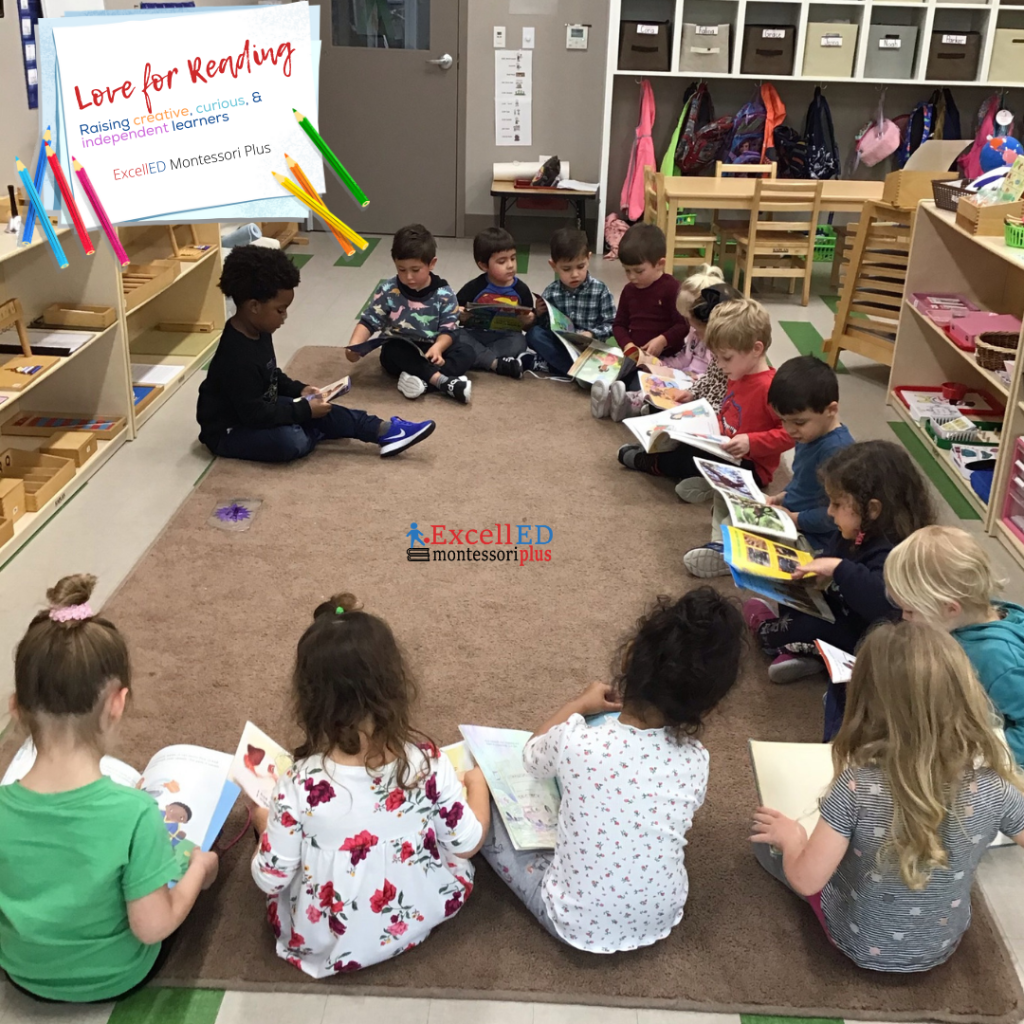
- Mixed-Age Classrooms. Three-, four-, and five-year-olds work together. The older ones teach. The younger ones reach up. We watch this happen every day and it still surprises us.
Why Two Languages Now, Not Later
Parents sometimes ask me whether their child should master English first and add Spanish later. I understand the instinct. But here’s what I’ve learned from watching it both ways: the brain doesn’t work like that.
Children who add a second language after age six can absolutely learn it. They can become functional, even fluent. But they almost always carry an accent for the rest of their lives, and they have to study Spanish the way you and I had to. The window for absorption — the window where Spanish becomes theirs rather than a subject they’re learning — is open right now, and then it closes.
So when families ask what bilingual children actually gain, my honest answer is four things:
- Sharper thinking. They’re working two cognitive systems at once. The kindergarten teachers who get our graduates tell us this every year — bilingual children focus longer, switch tasks more easily, and solve problems with more flexibility.
- Stronger academic foundations. Bilingual children often do better in math, science, and reading once they hit elementary school. They’ve spent four or five years training their brain to hold patterns, and patterns are what those subjects are made of.
- Real empathy. Growing up with two languages means growing up with two ways of seeing the world. Children who do this start kindergarten knowing — without being told — that not everyone thinks the way they do.
- Better communication overall. Bilingual children become more careful listeners. They develop a sense of how language works, not just what the words mean. That serves them their whole lives.
Maria Montessori had a name for what we’re tapping into. She called it the Absorbent Mind — the period when a child takes in everything around them, including the languages they hear, and weaves it into who they’re becoming.
“What is clear is that when the child is born, he has neither hearing nor speech. So what exists? Nothing, yet all is ready to appear.”
Dr. Maria Montessori
She also identified what she called sensitive periods — narrow windows when a child is uniquely ready for a particular kind of learning. The sensitive period for language runs from birth to about age six. That’s not a guideline. That’s biology. After it closes, the same learning is possible but never quite the same.
If You’re Already Past the “Why”
Some families come to us with the question half-answered. They already know they want two languages for their child — they just need to figure out the how. If that’s you, here’s where to read next:
- What is Bilingualism? — The foundation. Start here if “two languages from birth” still feels unfamiliar.
- Spanish Immersion Model — How a full immersion classroom works, and which families it fits best.
- Dual Language Model — A different approach where both languages share the day equally.
- Immersion vs. Dual Language — Which One? — Read this when you’re ready to choose.
How a Montessori Classroom Actually Teaches Two Languages
Most parents I talk with imagine Spanish class — a teacher at the front, vocabulary on flashcards, children repeating words. That’s not what happens in our rooms. Here’s what does:
1. The environment carries the language. Walk into one of our bilingual classrooms and you’ll see materials labeled in both languages. You’ll hear teachers moving naturally between Spanish and English depending on what they’re doing and who they’re with. Children pick up Spanish the same way they picked up English — by living inside it, not by studying it.
2. Each child moves at her own pace. Some children start producing Spanish words at three. Others wait until four. Both are normal, and the Montessori approach doesn’t push. We let children listen and absorb until they’re ready to speak. When they start speaking, it comes out in full sentences.
3. Older children teach younger ones. In a mixed-age classroom, a five-year-old who’s fluent in Spanish naturally helps a three-year-old who’s still figuring it out. The teaching isn’t formal — it’s a five-year-old saying “mira” and pointing. The three-year-old learns. The five-year-old solidifies what she already knows. Both of them grow.
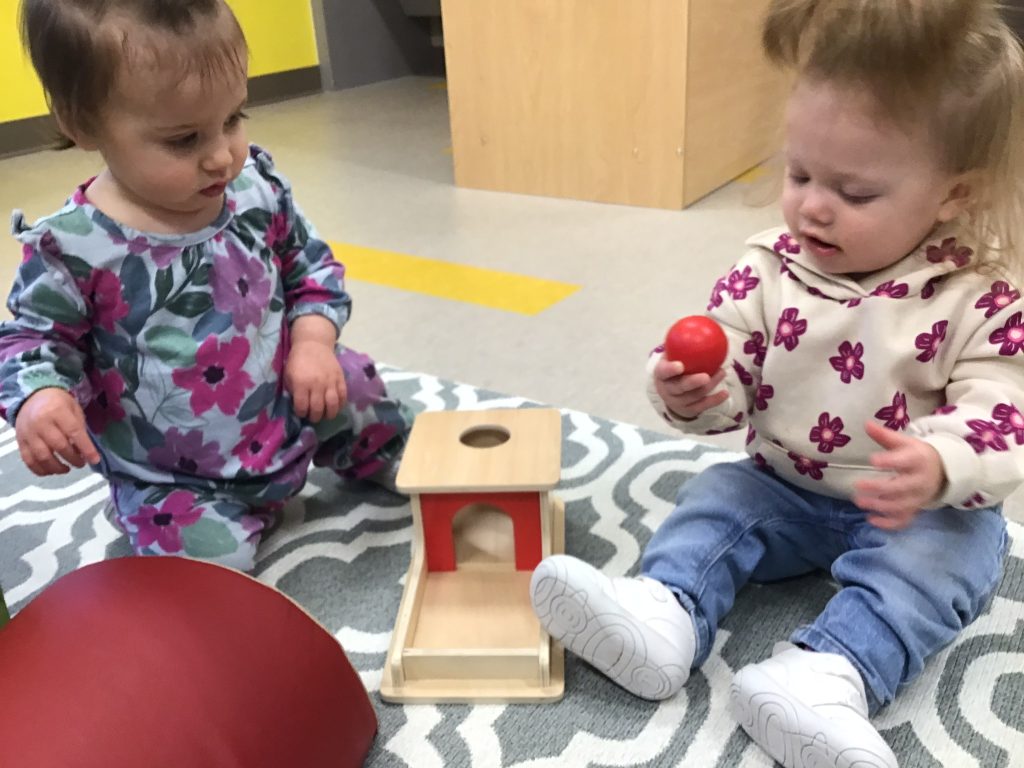
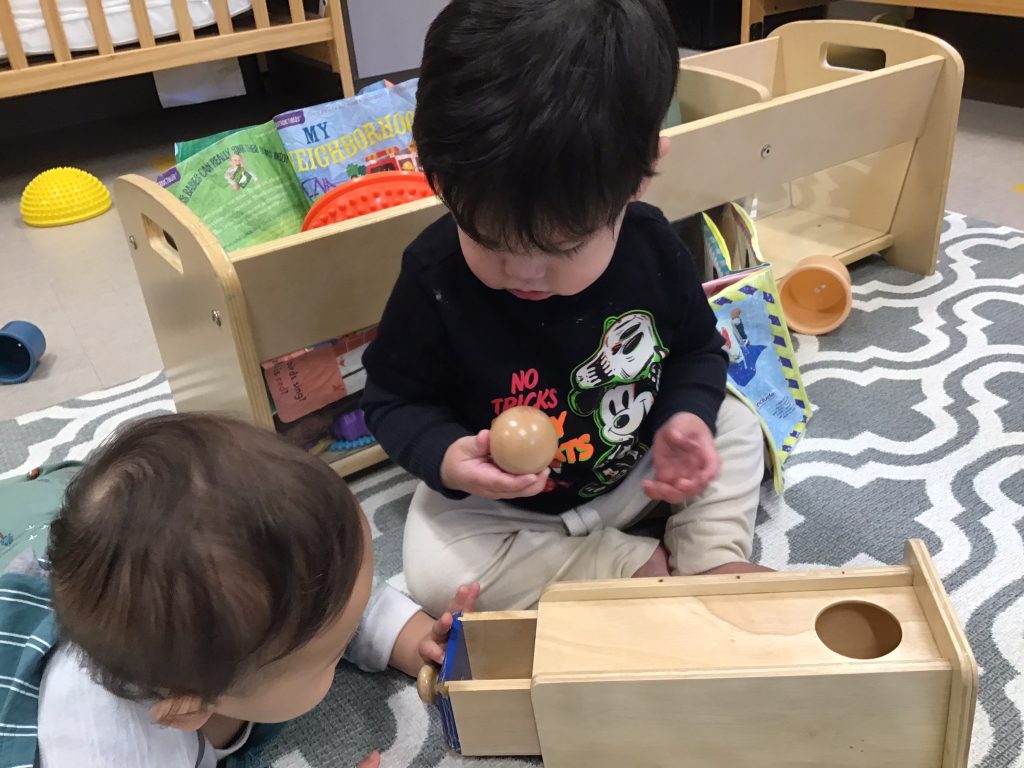
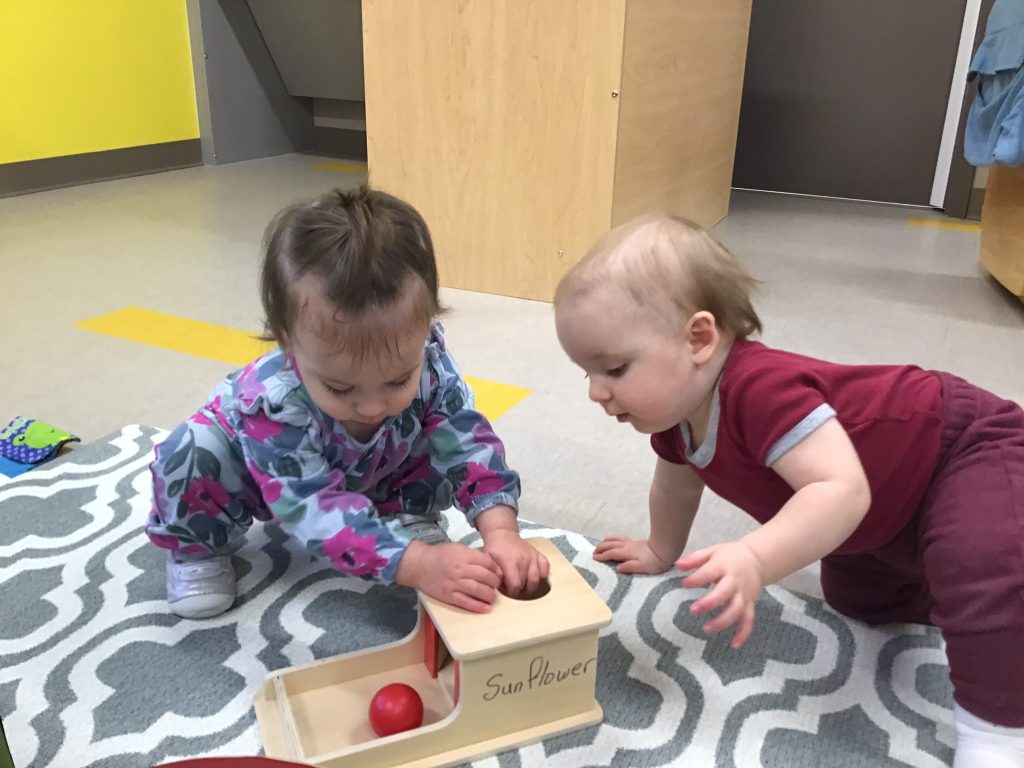
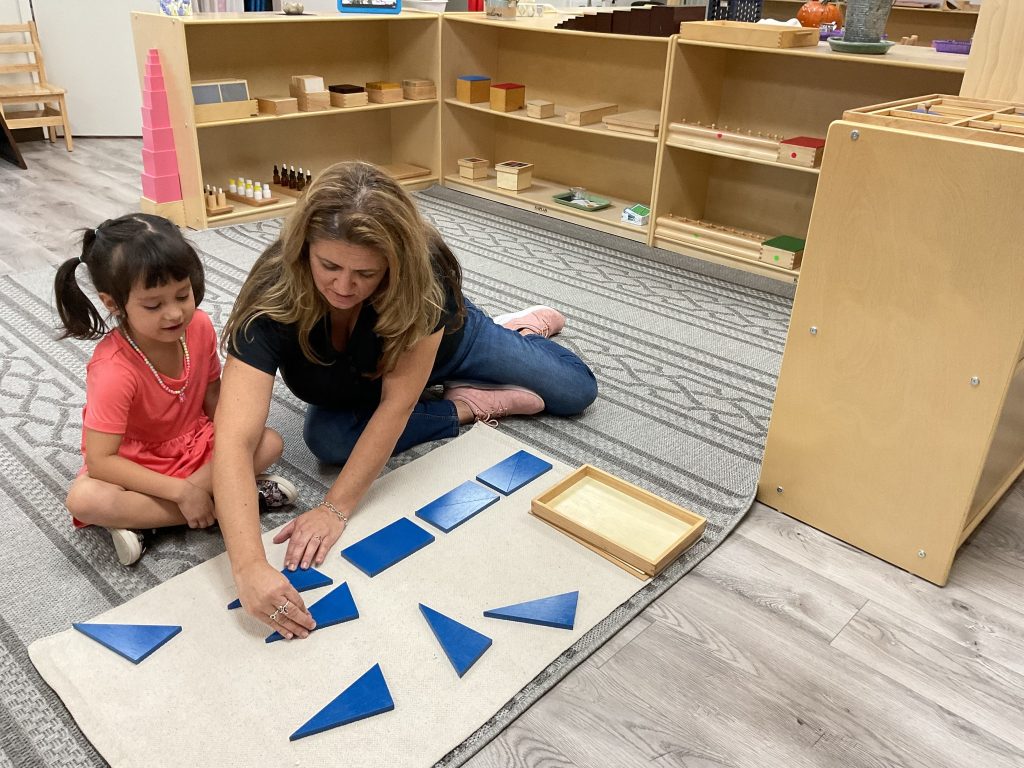
4. The materials do the teaching. A child holding a smooth wooden apple while a teacher says manzana isn’t just memorizing a word. She’s building a connection between her hand, her eyes, the sound, and the meaning. That connection sticks in a way flashcards can’t reach.
5. Culture comes with the language. When we celebrate Día de los Niños or sing children’s songs from Argentina, the language isn’t separated from the people who speak it. Children learn that Spanish belongs to real families, real foods, real holidays. That makes the language feel like something worth knowing.
6. Children use both languages on their own terms. The thing I most love watching: a four-year-old greets one teacher in English, turns, and greets another in Spanish. Nobody told her to. She’s just speaking the language each person speaks. That’s bilingualism. Not vocabulary, but instinct.
What You Can Do at Home
If your child is in one of our bilingual classrooms — or even if she isn’t yet — these practices reinforce what we’re doing during the day. None of them require you to be bilingual yourself. They work because they mirror how the absorbent mind actually picks up language: real exposure, in real context, from people who matter.
- One language per person, consistently. If you speak Spanish and your partner speaks English, keep that boundary. Children sort it out naturally. What confuses them isn’t two languages — it’s switching mid-sentence. Speak your strongest language. Your child needs accurate input, not effortful input.
- Build a bilingual bookshelf. Look for picture books written in the second language by authors from that culture, not just English books translated. The texture of an original Spanish-language children’s book carries something a translation can’t.
- Label your home. Tape small labels to common objects — mirror / espejo, door / puerta. Use a different color for each language. Your child sees the pattern long before she can read it.
- Speak fully, not simply. Don’t use baby-talk in the second language to “help.” Your child’s brain doesn’t need simpler input. It needs accurate input. Talk to her the way you’d talk to a friend.
- Get down to her level. Make eye contact. She learns pronunciation by watching your mouth — especially for sounds that don’t exist in English (the rolled r, the soft Spanish d). Without seeing your mouth, she’ll struggle to make them.
- Play music and stories in both languages. Each language has its own rhythm. Songs, lullabies, audiobook stories — your child’s ear tunes itself to both melodies. Later, when she speaks, it comes out musical too.
- Real reasons to write the second language. A thank-you note to a Spanish-speaking grandma. A birthday card to an aunt in Mexico. Real audience, real purpose. That’s what makes writing in a second language stick.
Spanish Grove Academy: Where We Do This Every Day
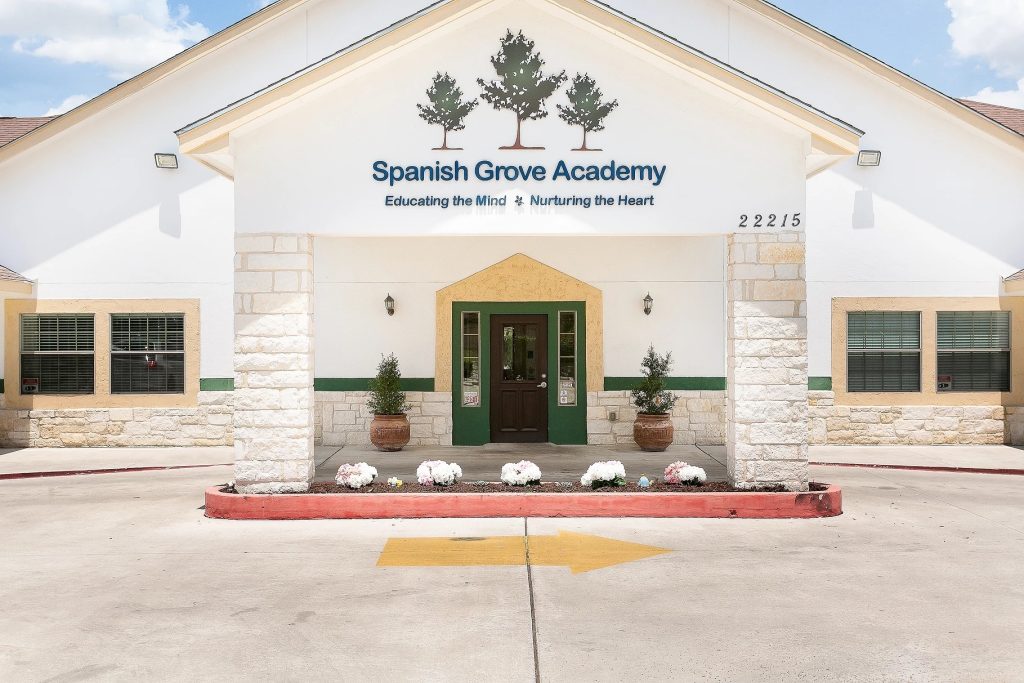
Spanish Grove Academy, our flagship bilingual campus in Stone Oak, has been doing this work since 2010. It was one of the first dedicated dual-language Montessori preschools in San Antonio, and it remains the only Montessori program in Stone Oak built ground-up for two languages — not Spanish added on top of an English curriculum, but Spanish woven through the day from the beginning.
Children at Spanish Grove from 10 weeks through Pre-K experience:
- Daily exposure to English and Spanish from native-speaking teachers in each language
- Authentic Montessori materials and inquiry-based learning, not worksheets
- Mixed-age classrooms where children teach each other in both languages
- Cultural context — songs, stories, food, holidays — built into the day
- All of it included in tuition. No extra fees for the bilingual program.
Our Spanish Grove graduates regularly enter NEISD dual-language elementary programs already bilingual — with native pronunciation in both languages and the kind of focus and flexibility that kindergarten teachers tell us they wish all their incoming children had.
Questions Parents Bring to Me on Tours
Will learning two languages confuse my child?
Parents ask me this on almost every tour. I’ll tell you what I tell them: no. In twenty-five years I’ve never seen a bilingual child stay confused. What looks like confusion to a parent — your two-year-old saying “more agua, please” — is actually her brain handling both languages at once. Bilingual children do this for a while, then they sort it out. By four, almost always, they speak each language cleanly. Your child won’t be the exception.
When is the best age to start?
As early as you can. Infants are not too young. The earlier within the absorbent-mind window your child begins, the more native her pronunciation and fluency will be. We’ve had children start at 10 weeks in our infant rooms, and by the time they’re three, you’d never know they were anything but bilingual. After age six, children can still learn — but it gets harder, and the accent usually stays.
What if I don’t speak Spanish at home?
Most of the families in our bilingual program don’t. One parent speaks Spanish, or neither does. That’s normal, and it doesn’t slow your child down. The classroom provides enough daily exposure to develop fluency on its own. Anything you do at home accelerates it — but it’s not a prerequisite. We’ve had children become bilingual whose parents only speak English. They go home and teach their parents words.
Is bilingual Montessori the same as Spanish immersion?
Related, but not identical. Spanish immersion means most of your child’s day is conducted in Spanish — she absorbs English from her broader environment. Dual-language Montessori means both languages share the day more evenly. Both work. Which one fits your family depends on what you want — and the best way to decide is to read this decision guide, or come tour and watch each one in action.
Will my child still be ready for kindergarten?
Yes, and often more ready than her monolingual classmates. Kindergarten teachers don’t actually care whether your child knows the alphabet on day one — they care whether your child can focus, listen, follow multi-step directions, and handle frustration. Bilingual children consistently arrive with stronger executive function in all those areas. Our Spanish Grove graduates have walked into NEISD, NISD, BISD, and area private kindergartens reading, writing their names, and switching languages at the lunch table.
Does bilingual Montessori cost more than regular Montessori?
At Edquisitive, no. Spanish immersion at Spanish Grove Academy is part of standard tuition. A lot of programs in San Antonio charge extra for bilingual instruction — ours doesn’t. The same tuition covers yoga, music, STEM, and freshly prepared meals. See current tuition details.
If You’d Rather See It Than Read About It
I’ve written quite a bit here, but I’ll tell you what I tell every parent who calls: the best way to know whether bilingual Montessori is right for your child is to come watch our classrooms for thirty minutes. You’ll hear it. You’ll see the children switching between English and Spanish without effort. You’ll meet the teachers. And you’ll know, in a way that no article can quite capture, whether this is the place where your child gets to do what her brain is asking to do.
Subscribe to Newsletter
Programs offered at Edquisitive Montessori include:
✔️Infants (10 Weeks – 18 Months)
✔️Toddlers (18 – 36 Months)
✔️Primary (3-6 Years)
✔️Kindergarten
✔️Mother’s Day Out
✔️Spanish Immersion / Dual Language
✔️After School Programs and Summer Camp (6 – 12 Years)
Music, Spanish, and Yoga are other programs included as part of the tuition.
Learn more about Inquiry-based Learning