
Choosing a preschool is one of the most important decisions you’ll make as a parent. In San Antonio, where you have dozens of options across Stone Oak, Medical Center, Fair Oaks, and beyond, knowing what to ask can mean the difference between finding the perfect fit and settling for “fine.”
You’re not just looking for bright walls and friendly staff. You’re looking for a place where your child will spend 8 hours a day, five days a week. You need more than a tour script—you need real answers.
These are the questions to ask on a preschool tour, including the tough ones that reveal what a school is really like behind the brochure. Yes, even the uncomfortable questions we secretly wish you’d ask.
The Non-Negotiable Questions Every Parent Should Ask
If a school can’t answer these clearly and confidently, keep looking.
What does a typical daily schedule look like? You need to know how much time is spent on structured learning versus free play, outdoor time, meals, and rest. In Montessori programs, you should see large blocks of uninterrupted work time (typically 2-3 hours) where children choose their activities.
What’s the student-to-teacher ratio by age group? Texas requires 1:11 for 18 months to 2 years, 1:13 for 2-year-olds, 1:15 for 3-year-olds, and 1:18 for 4-year-olds. But minimum isn’t optimal. Better programs maintain lower ratios, especially for younger children.
How do teachers handle conflict, redirection, or behavior issues? Listen for specific language about positive guidance, natural consequences, and teaching conflict resolution skills. Red flags include punitive approaches, time-outs as default, or vague “we handle each situation differently” non-answers.
What kind of training and certifications do teachers have? Ask about early childhood education degrees, Montessori certifications (AMI or AMS), CPR/First Aid, and ongoing professional development. Teacher qualifications directly impact your child’s experience.
What’s included in tuition? What costs extra? Some schools nickel-and-dime you with registration fees, supply fees, field trip charges, and activity costs. Get the full picture upfront so there are no surprises.
📋 Want to bring these questions with you? Download our free printable checklist — all 20 questions plus a side-by-side comparison worksheet.
Questions That Reveal the School’s Real Culture
These go deeper than marketing materials. They tell you how the school actually operates day-to-day.
How long do teachers typically stay at your school? High turnover is a massive red flag. It disrupts children’s attachment and continuity. Look for schools where lead teachers stay 3+ years. If they dodge this question, that tells you something.
What do you do when a child doesn’t adjust well? Every school gets children who struggle initially. What matters is their support system—do they work with families, bring in specialists, adjust schedules, or do they suggest the child “isn’t ready” after two weeks?
How do you handle transitions—new students, potty training, classroom moves? Transitions are stressful for young children. Strong programs have specific protocols, communication systems, and adjustment periods built in.
Can I see a recent state inspection report? This is public information. Any hesitation here is a problem. Look for consistent compliance, quick resolution of any violations, and evidence of going above minimum standards (like Texas Rising Star 4-star ratings).
How do you keep families informed about their child’s day? Daily communication matters. Ask about apps, daily reports, photos, parent-teacher conferences, and how accessible teachers are for questions.
Montessori-Specific Questions (If You’re Touring a Montessori School)
Montessori is more than a buzzword. If a school claims the philosophy, they should be able to answer these in detail.
How do you implement Montessori philosophy authentically? Look for mentions of: mixed-age classrooms, self-directed learning, prepared environments, Montessori materials (not just toys), observation-based guidance, and fostering independence.
Are your teachers Montessori certified? Through which organization? AMI (Association Montessori Internationale) and AMS (American Montessori Society) are the two main certifying bodies. Certification means teachers have been trained in Montessori methods specifically—not just early childhood education.
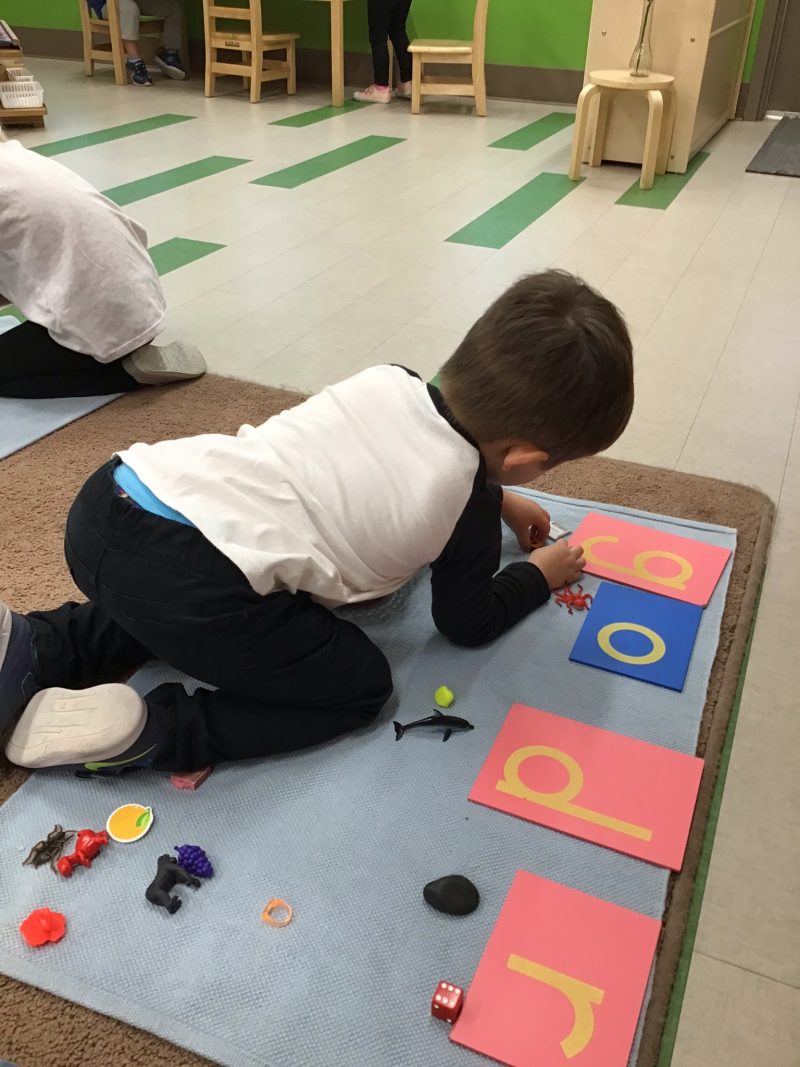
What Montessori materials and curriculum do you use? They should be able to walk you through the materials in each area: Practical Life, Sensorial, Language, Math, and Cultural Studies. Real Montessori materials are beautiful, purposeful, and carefully sequenced.
How does the three-year age grouping work? Montessori classrooms group children in 3-year spans (0-3, 3-6, 6-9). Ask how they support different developmental stages within one room and the benefits older children gain from helping younger ones.
How do you measure progress without traditional grades or tests? Montessori uses observation, documentation, and developmental milestones rather than standardized testing. Teachers should explain their assessment methods clearly.
The Questions We Wish You Would Ask (But Most Parents Don’t)
These are the tough ones. The ones that separate marketing from reality. We respect parents who ask them—they show you’re serious about finding the right fit.
How do you support teachers so they don’t burn out? Teacher wellbeing directly affects your child. Ask about: planning time, professional development, competitive pay, reasonable workloads, and mental health support.
What’s your contingency plan if a lead teacher suddenly leaves? Life happens. Teachers get sick, have family emergencies, or move. What’s the backup plan? How do they maintain continuity for the children?
What kind of families tend to thrive in your school? Every school has a culture. Some families want strict academics. Others prioritize play-based learning. Ask directly—it’s not about judgment, it’s about fit.
What do you expect families to support at home? If a school emphasizes independence but you do everything for your child at home, there will be disconnect. Understand their expectations for partnership.
How do you handle diversity, inclusion, and different family structures? Look at the curriculum, the books on shelves, the way staff talks about families. Do you see your family reflected in this community?
What happens to tuition if we need to withdraw mid-year? Financial policies matter. Understand cancellation terms, refund policies, and whether you’re locked into contracts before you commit.
What to Observe During Your Tour (Beyond What They Tell You)
Trust your eyes and gut. Even if no one says it out loud, you’ll learn volumes by watching.
Teacher demeanor and engagement
- Are teachers at child-level, making eye contact, speaking calmly?
- Do they seem rushed, stressed, or disengaged?
- Are they on their phones or talking amongst themselves?
How children are working
- In Montessori: Are children choosing work freely? Are they concentrated and engaged?
- Are kids moving purposefully or wandering aimlessly?
- Do children seem happy but focused—not controlled or chaotic?
The physical environment
- Is it clean and organized, but not sterile?
- Are materials accessible to children or all on high shelves?
- Can you see evidence of recent learning (projects, work displayed)?
- Is there functional outdoor space with nature elements?
How your questions are answered
- Does the director answer confidently without being defensive?
- Do they dodge difficult questions or welcome them?
- Are they transparent about challenges and how they handle them?

Taking notes? We made it easier.
Questions That Sound Important But Aren’t Always
Some parents focus on the wrong things. Here’s what doesn’t matter as much as you think:
“Do you teach reading/writing/math to 3-year-olds?” In quality preschools, especially Montessori, children learn through experience and exploration—not flashcards and worksheets. A 3-year-old who can recite the alphabet means nothing if they hate learning.
“What’s your curriculum?” Curriculum matters less than teaching approach. A mediocre curriculum taught by passionate, skilled teachers beats an excellent curriculum delivered poorly.
“Do you have iPads/coding/Mandarin for toddlers?” These are often marketing tools. Young children need movement, nature, social interaction, and hands-on learning more than screen time or advanced academics.
Red Flags to Watch For During Your Tour
Leave immediately if you see or hear:
- Children looking bored, upset, or scared during the tour
- Teachers yelling, using harsh tones, or ignoring children
- Dirty bathrooms, strong odors, or obvious safety hazards
- Defensive or evasive answers to basic questions
- Pressure to “decide today” or “limited spots” manipulation
- No clear answer about teacher qualifications or turnover
After the Tour: Questions to Ask Yourself
Once you’re home, reflect on these:
- Did I feel welcomed and respected, or like an inconvenience?
- Could I picture my child happy here every day?
- Did the school’s values align with our family’s values?
- Was I able to see actual classrooms during learning time?
- Did children seem genuinely engaged and content?
- Would I feel comfortable bringing concerns to this director?
- Did my gut feel good about this place?
Why We Welcome Every Question on This List
At Edquisitive Montessori, we believe parents should be informed, empowered partners in their child’s education. That’s why we welcome every question on this list—even the uncomfortable ones.
Go ahead. Ask us about teacher retention. Ask us what happens when a child struggles. Ask us about our financial policies and what we do when teachers call in sick. Ask us how we’re different from the Montessori school down the street.
We’ll answer honestly because we have nothing to hide.
As a Cognia-accredited Montessori program with a Texas Rising Star 4-star rating, we’re proud of our authentic approach across all four San Antonio-area locations. Our teachers are experienced, stay with us for years (not months), and create environments where children develop independence, curiosity, and a genuine love of learning.
We offer Spanish immersion, dedicated STEM labs, yoga, and outdoor learning spaces because we know childhood isn’t just about academics—it’s about developing the whole child.
Ready to ask us the hard questions in person?
Schedule a tour at any of our four San Antonio locations:
- Stone Oak – 210-390-1470 – Serving Stone Oak, Sonterra, and surrounding areas
- Medical Center – 210-691-1050- Serving Medical Center, Northwest, and USAA areas
- Fair Oaks – 210-418-3288 – Serving Fair Oaks Ranch, Boerne, and Leon Springs
- NW Military – 210-446-1312 – Serving Castle Hills, Shavano Park, Alamo Heights, and Terrell Hills
Come with your questions. Come with your concerns. Come ready to see what Montessori education really looks like when it’s done right.