Key Takeaways
- Kindergarten teachers don’t lead with academics — they care about self-regulation, focus, and social skills
- The “hidden curriculum” (executive function, emotional regulation, independence) matters more than ABCs
- Academic gaps close quickly — but kids who can’t manage emotions or work independently struggle all year
- Montessori kids stand out — teachers can “always spot them” for their independence and problem-solving
- You’ve already done the work — inquiry-based learning builds exactly what kindergarten requires
The email from the elementary school arrived in March: “Kindergarten Registration is Now Open!”
If your child is approaching kindergarten age, you might be feeling a mix of excitement and anxiety. Is your child ready? Will they be able to sit still? Can they follow directions? Will they know their ABCs? Will they have trouble if they can’t read yet?
These are the questions that keep parents up at night. And they’re exactly the questions that reveal a fundamental misunderstanding of what “kindergarten ready” actually means.
What Kindergarten Readiness Really Means
Here’s what most parents assume kindergarten readiness means: academics. ABCs. Numbers. Knowing how to count to twenty. Being able to write their name.
Here’s what kindergarten teachers actually care about: Can your child manage themselves, regulate their emotions, work with others, and engage with challenges?
The academic content? Kids pick that up. Easily. By December, most kindergarteners who didn’t know a single letter are reading. The ones who came in knowing how to write their name are… also learning to write. Everyone catches up on the academics within a few months.
But the child who can’t sit still? The one who has a meltdown when something doesn’t go their way? The one who can’t focus without adult direction? The one who’s learned to depend on praise and rewards to be motivated? The one who quits at the first sign of difficulty?
Those are the challenges that affect kindergarten success — and they’re much harder to address in a classroom of 20+ students.
The Hidden Curriculum: What Teachers Actually Look For
If you visit a Montessori classroom and try to list the “curriculum,” you might be confused. You won’t see worksheets. You won’t see a detailed lesson plan being executed by the teacher. You won’t see children sitting in a circle learning phonics.
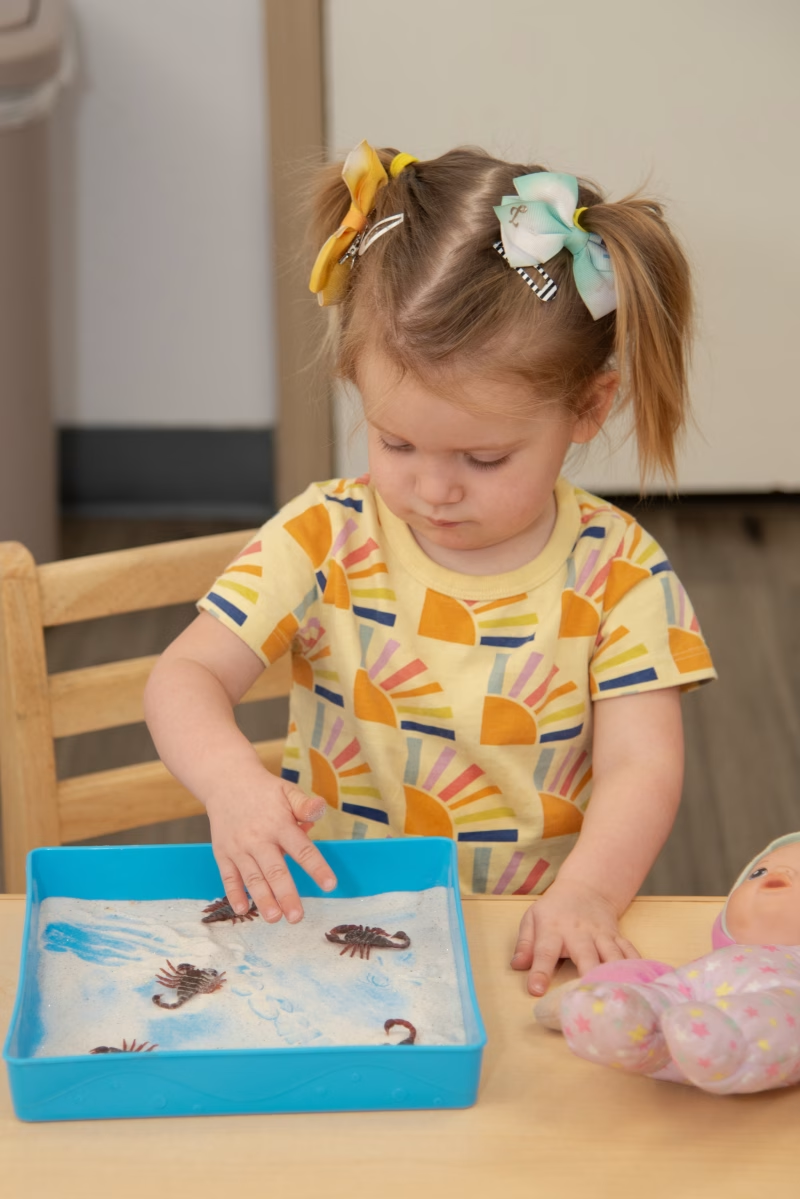
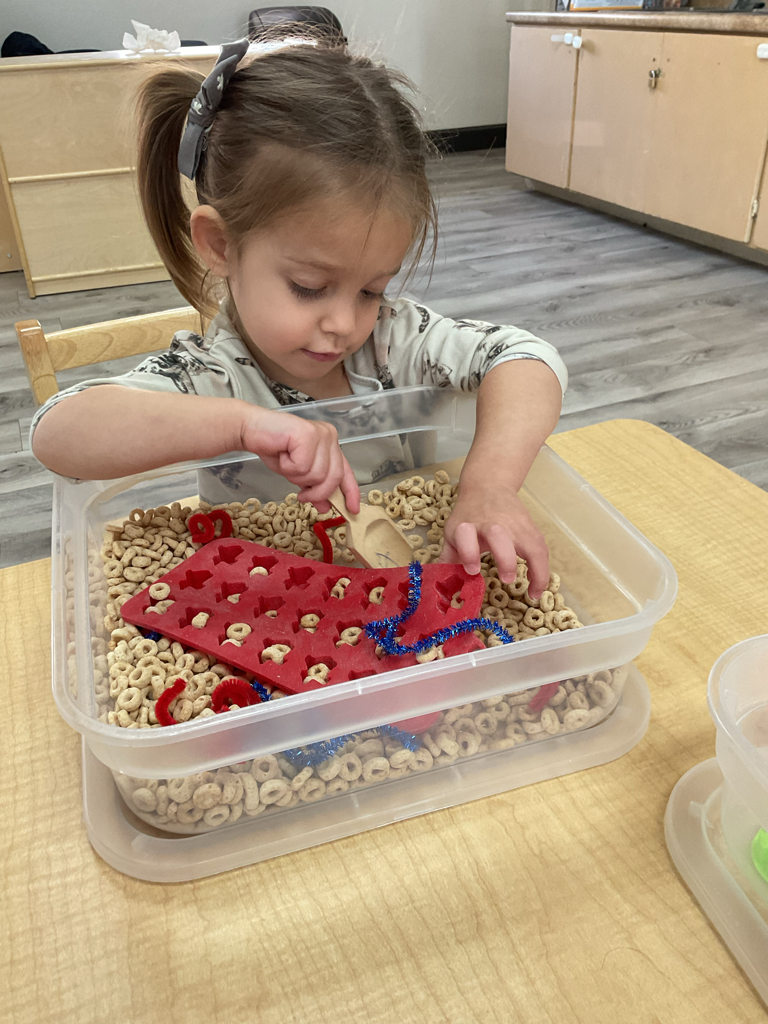
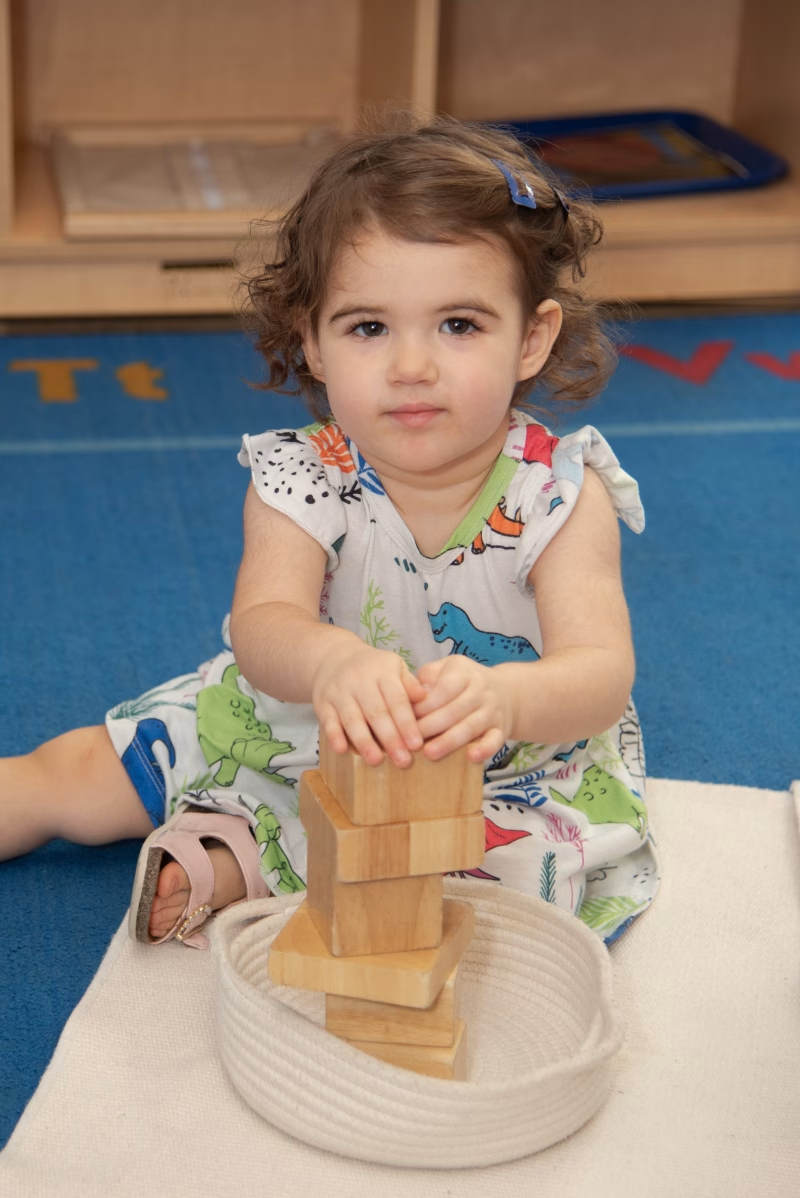
What you will see is children working independently with materials. A four-year-old carefully pouring water. A three-year-old building with blocks. Another child working with a puzzle. Some kids together, negotiating how to use a material. Others completely absorbed in solitary work.
So where’s the curriculum? It’s everywhere. And it’s invisible.
That child pouring water? That’s executive function development — planning the task, executing the plan, observing the result, self-correcting. It’s also fine motor skill development and spatial reasoning. And patience. And persistence.
The child with the puzzle? That’s problem-solving, spatial reasoning, fine motor control, frustration tolerance, and the willingness to persist through difficulty.
The children negotiating over materials? That’s social-emotional learning in real-time. They’re learning communication, compromise, and conflict resolution without an adult mediating every interaction.
The child absorbed in their own work? That’s developing the ability to self-direct, to focus without external motivation, to find learning inherently rewarding. That’s intrinsic motivation being built into their neurological wiring.
This is what we call the “hidden curriculum” — and it’s the most important curriculum in early childhood education. These are the competencies that kindergarten teachers are actually looking for.
What Kindergarten Teachers Notice
We’ve spoken with dozens of kindergarten teachers over the years, and there’s a consistent pattern they notice:
“I can always spot the Montessori kids.”
They say it with affection. Here’s what they mean:
Independent learners: When the teacher says, “Work on this activity,” Montessori kids don’t need constant redirection. They get started. They figure out how to do it. If they’re stuck, they ask for help. If they finish, they find their next task.
Problem-solvers: When something goes wrong — they drop their pencil, lose a piece, get stuck on a problem — they try to solve it themselves first. They don’t immediately raise their hand for help.
Emotionally regulated: When something doesn’t go their way (they didn’t get picked first, they made a mistake, another kid used the material they wanted), Montessori-trained kids handle it. They’re disappointed, sure, but they don’t have a meltdown. They adapt.
Collaborative: They’re used to working around peers, sharing materials, and respecting others’ work. They’re not waiting for the teacher to orchestrate every interaction.
Intrinsically motivated: They want to learn. They engage with challenges because the work itself is interesting, not because they’re getting a sticker or praise.
In a kindergarten classroom where the teacher is managing 20-25 kids, these skills are everything. The teacher cannot stop to help every child figure out how to hold a pencil. The teacher cannot mediate every social conflict. The teacher cannot provide individual motivation and praise for every piece of work.
Kindergarten success depends on children who can do some of these things independently.
The Anxiety About “Behind”
Here’s the fear that causes so many parents to push academic content in preschool: “What if my child is behind?”
We understand this. There’s real competitive pressure. You see other families bragging about how their three-year-old can write their name or recognize sight words, and it’s hard not to worry: Is my child falling behind?
Here’s What the Research Actually Shows:
By first grade, the academic differences between kids who learned academics in preschool and kids who played and explored in preschool have largely disappeared. A child who knew their letters at age three and a child who didn’t at age three are roughly at the same level by age six.
But the children who spent their preschool years in inquiry-based learning environments maintain their advantage in executive function, emotional regulation, motivation, and social skills. These gaps don’t close. They compound.
In other words: knowing your ABCs at age three doesn’t matter much. But being able to manage yourself, regulate your emotions, solve problems, and engage with learning independently — those skills, developed in preschool, predict success throughout your child’s entire education.
A Real Readiness Checklist
So what should you actually look for as your child approaches kindergarten? Here’s what matters:
Can they follow a multi-step direction?
“Put on your shoes, get your backpack, and meet me by the door” — without repeating each step?
Can they stay focused for 10-15 minutes?
Working on a puzzle or building with blocks without getting bored or asking for entertainment?
Can they handle disappointment?
Not getting the toy they wanted, or making a mistake — and recovering within a reasonable timeframe?
Can they ask for help appropriately?
Saying “I need help” instead of just shutting down or having a tantrum?
Can they work independently for a period of time?
Not needing you to entertain them or tell them what to do for 20-30 minutes?
Do they show curiosity about things?
Asking questions, wanting to explore, trying new things without needing adult prompting?
If your child can do these things — even if they don’t know their ABCs — they’re kindergarten ready.
For a comprehensive breakdown of all six readiness domains (including academics), see our full Kindergarten Readiness Guide for San Antonio Parents.
The Transition: Will There Be an Adjustment?
The shift from preschool to kindergarten can be a big one. Kindergarten classrooms are different: larger class sizes, more structure, more direct instruction, different expectations.
But the skills your child has developed through years of self-directed learning in a responsive environment? Those transfer. The ability to manage yourself, to handle frustration, to engage with challenges, to work independently — those don’t disappear in a new environment. They’re foundational capacities that your child now carries with them.
In fact, children with strong executive function and emotional regulation often adapt better to the more structured kindergarten environment than children who’ve been in highly adult-directed preschools. The Montessori-trained child has already practiced self-direction; they can adapt to more structure.
Will there be an adjustment? Of course. Kindergarten is different. But your child won’t be starting from zero. They’ll be starting with years of experience managing themselves, solving problems, and engaging with learning.
What to Do This Summer
If your child is starting kindergarten in the fall, here are a few things you can do to support their transition:
Practice independence: Let them do more for themselves. Open their own snack, zip their own jacket, pack their own backpack (with your guidance). These small moments build self-efficacy.
Visit the kindergarten classroom: Many schools offer summer tours. Go see the space. Help your child imagine themselves in that environment.
Read books about kindergarten: There are great children’s books about starting kindergarten. Reading them together opens conversation and normalizes the transition.
Talk about emotions: As the transition approaches, talk about feelings. “You might feel excited and nervous. Both of those feelings are okay.” Normalize the emotional experience.
Resist the urge to drill academics: You don’t need to do extra letter or number practice. Trust the work your child has done. Trust their readiness.
Focus on the hidden curriculum: If anything, play with them. Build with blocks. Do puzzles. Work on a project together. These activities strengthen executive function and problem-solving — the real skills kindergarten teachers care about.
You’ve Already Done the Work
Here’s what we want you to know: if your child has spent the last few years in an inquiry-based, child-led learning environment, you don’t need to worry about kindergarten readiness.
Your child has spent years developing the skills that actually matter. They’ve practiced independence, managed challenges, learned from mistakes, and developed intrinsic motivation. They’ve built the hidden curriculum that kindergarten teachers are actually looking for.
Will your child know every letter? Maybe not. Will they be able to count to 100? Probably not. Will they be ready for kindergarten in the ways that actually matter? Absolutely.
The work of true early childhood education isn’t about cramming in academics. It’s about developing human beings who are capable, independent, emotionally resilient, and eager to learn.
That’s what will serve your child not just in kindergarten, but throughout their entire education.
Frequently Asked Questions
What do kindergarten teachers really look for in readiness?
Research consistently shows kindergarten teachers prioritize children who can communicate needs verbally, show enthusiasm and curiosity, pay attention and follow directions, aren’t disruptive in group settings, show sensitivity to others’ feelings, and can manage frustration and keep trying. Academic skills like knowing letters are secondary.
Will my child be behind if they don’t know their letters before kindergarten?
No. Research shows that by first grade, academic differences between kids who learned letters in preschool and those who didn’t have largely disappeared. However, advantages in executive function, emotional regulation, and social skills — developed through inquiry-based learning — persist and compound over time.
Will my Montessori child struggle with the structure of traditional kindergarten?
Children with strong executive function and emotional regulation — exactly what Montessori builds — often adapt better to structured environments than children from highly adult-directed preschools. The main adjustment is sitting still for longer group lessons, but the self-regulation skills they’ve developed help them adapt quickly, typically within 2-4 weeks.
What is the “hidden curriculum” in early childhood education?
The “hidden curriculum” refers to the skills children develop through the learning environment itself — not through direct instruction. This includes executive function (planning, focus, self-correction), emotional regulation, independence, intrinsic motivation, social skills, and problem-solving. These skills are often more important for kindergarten success than academic knowledge.
Ready to See Kindergarten Readiness in Action?
If you’re wondering whether your child is ready, we’d love to talk with you. Schedule a tour and see the hidden curriculum in action. Watch how our children engage, explore, and develop the full range of skills they’ll need — not just for kindergarten, but for the next 95 years.
Related Reading
Kindergarten Readiness: What San Antonio Parents Need to Know | Why Inquiry-Based Learning is the Future | Benefits of Montessori Education | Our Kindergarten Program