Key Takeaways
- 90% of brain development happens before age 5 — these years are prime time, not warm-up
- 1 million neural connections form every second during the first five years
- Curiosity triggers dopamine — when children choose what to explore, their brain literally learns better
- Safe failure builds resilience — the failure loop is essential for adaptive brain development
- The brain’s “sponge” isn’t random — it absorbs what feels important to the child
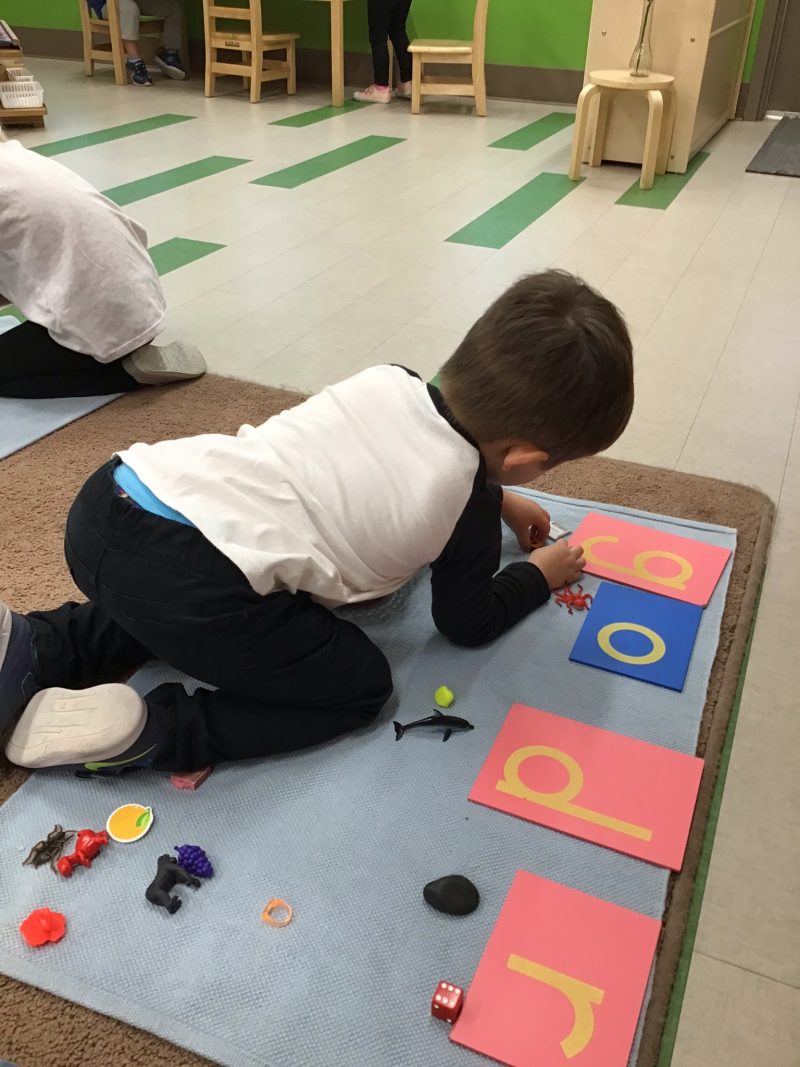
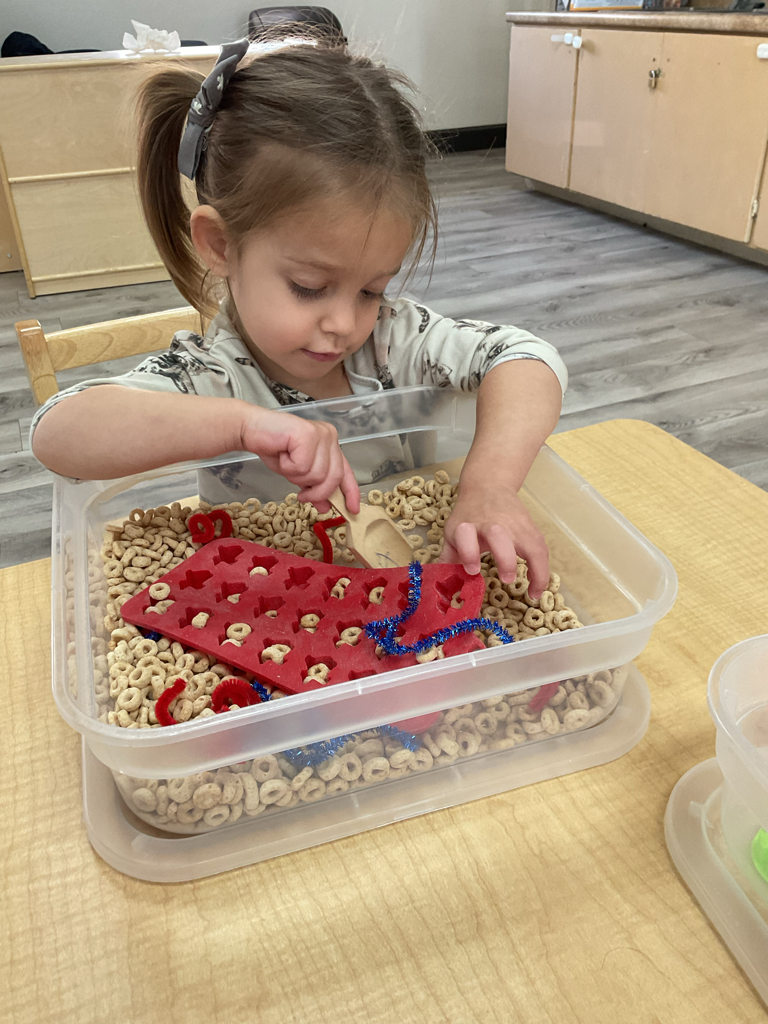
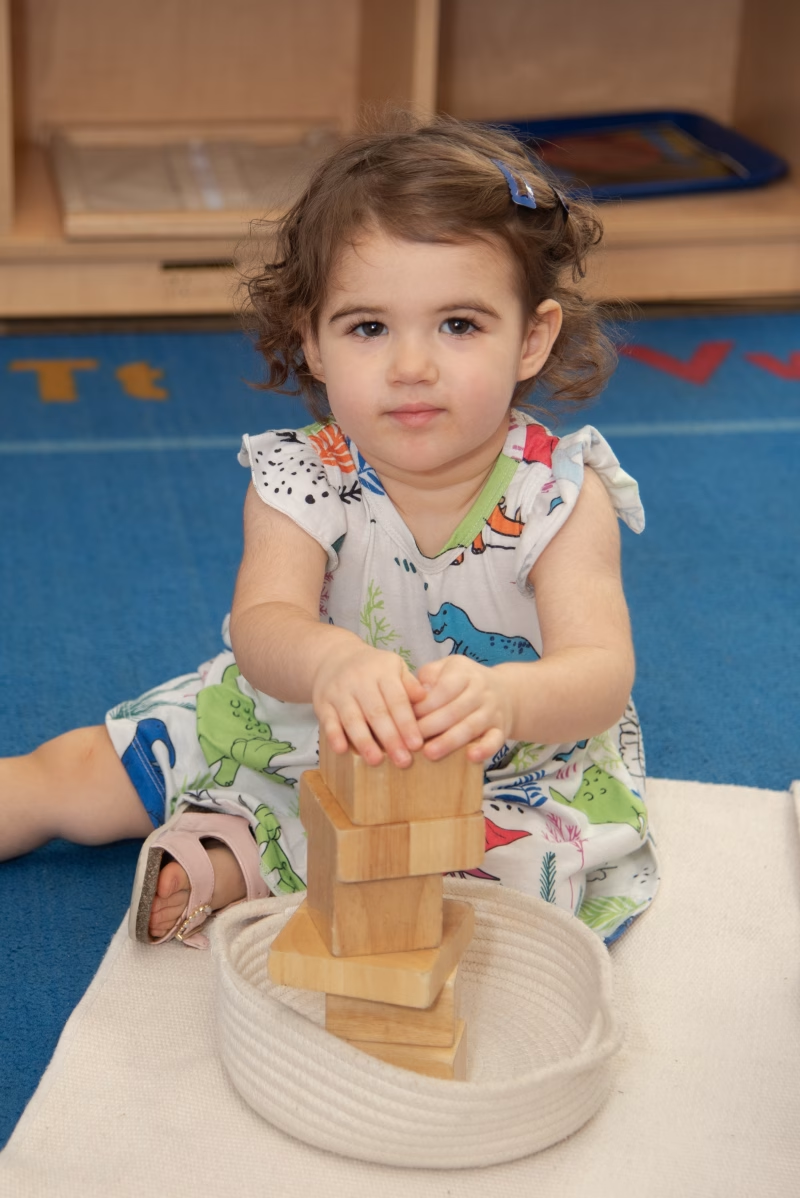
If you’ve ever watched a toddler become completely absorbed in a task — pouring water from one cup to another, stacking blocks, or arranging shells by color — you’ve witnessed something powerful. That deep focus, that laser-beam concentration… that’s not random play. That’s your child’s brain doing exactly what it evolved to do: learn by exploring.
But here’s what neuroscience now confirms: your child’s brain is most receptive to learning when they choose what to explore. And understanding why this matters could change how you think about early childhood education.
90% of Your Child’s Brain Develops Before Age 5
Let me start with a number that might surprise you:
90%
of your child’s brain development happens before age 5.
Not the most important years. Not the foundational years. We’re talking about nearly all of the neural architecture that will shape how your child thinks, learns, and solves problems for the rest of their life.
During these years, your child’s brain is building approximately 1 million neural connections every single second. That’s not hyperbole — it’s neuroscience. By age three, your child’s brain has already formed about 1 trillion neural connections. By age five, it’s closer to 2 trillion.
But here’s the critical part: not all neural connections are created equal. The connections that stick — the ones that become permanent architecture in your child’s brain — are the ones that are reinforced through experience and emotion.
The Dopamine Connection: Why Choice Matters
When your child is curious about something — when they decide to explore it, play with it, figure it out — their brain releases dopamine. This neurotransmitter doesn’t just make learning feel good; it signals to the brain: “This is important. This is worth remembering. This is worth building into your permanent wiring.”
Child-Led Exploration
Child chooses activity → Curiosity activates → Dopamine releases → Brain signals “remember this” → Neural pathway strengthens
Passive Learning
Adult assigns activity → Compliance mode activates → No dopamine reward → Brain processes passively → Weak retention
In contrast, when a child is passively receiving information (watching a video, listening to a lecture, completing a worksheet), the brain’s reward system isn’t activated in the same way. The information might go in, but it’s not getting cemented into long-term memory and neural architecture the way self-directed exploration does.
This is why child-led learning isn’t just nice — it’s neurologically superior.
How Curiosity Builds Neural Pathways
Let’s get concrete. Imagine your four-year-old discovers the Montessori “pouring work” — a tray with a pitcher of water, glasses of different sizes, and maybe a little sponge for cleanup. On the surface, it’s incredibly simple. Maybe even boring to an adult.
But here’s what’s happening in your child’s brain:
Visual processing: Your child is observing the water level, judging distance and angles, noticing how the water moves and splashes.
Proprioception: They’re learning where their hand is in space, how much pressure to apply, how to control fine motor movements.
Problem-solving: What happens if I pour too fast? How do I adjust my grip? What if this glass is too small — where do I try next?
Self-correction: The water spilled. I see the problem. I’m going to try differently. Their brain is literally building the neural pathways for trial-and-error learning.
Executive function: They’re planning a sequence (get the pitcher, position the glass, pour, check the result, adjust), holding that plan in mind, and executing it. That’s working memory and impulse control being developed in real-time.
Every time your child repeats this activity — and they will, because it feels good — those neural pathways get stronger. The connections that fire together, wire together. Repetition transforms neural pathways from temporary to permanent.
Contrast this with a worksheet where a child traces lines between pictures. Yes, they’re being asked to look and match. But they didn’t decide to do it (no dopamine reward). There’s no problem-solving, no self-correction, no emotional investment. The brain processes it differently.
The Role of Safe Failure
Here’s something that might challenge your instincts: the most important thing a child can do during these critical brain-development years is fail safely.
I know that sounds counterintuitive. We want to protect our kids, to help them succeed, to set them up to win. But neurologically speaking, failure is the essential ingredient for building a robust, adaptive brain.
The Failure Loop That Builds Resilience
When your child tries something, doesn’t quite get it right, observes what went wrong, and tries again — that failure loop is building resilience at the neurological level. They’re learning that mistakes aren’t disasters; they’re data. They’re building the neural circuits for problem-solving, persistence, and growth mindset.
In a traditional daycare or classroom where everything is done for the child or to the child — where teachers fix problems, redirect behavior, and control the pace — children get fewer opportunities to fail and self-correct. Their brains build different pathways: dependence on external feedback, learned helplessness when faced with challenges, and reduced resilience.
In a child-led learning environment, your child encounters real problems, real challenges, and real consequences. The spilled water is real feedback. The block tower that falls is real data. The puzzle piece that doesn’t fit is a real problem to solve. And solving these real, immediate challenges builds real neural resilience.
This is why Montessori classrooms are designed so carefully. The environment itself provides immediate feedback. The materials are self-correcting — if you try to put a geometric solid through the wrong hole, it doesn’t fit. The child doesn’t need an adult to tell them it’s wrong. The material shows them. And that direct, unmediated feedback is neurologically more powerful than any amount of adult correction.
The Brain’s “Sponge” Isn’t Random
You’ve probably heard the phrase: “Young children’s brains are like sponges.” It’s true, but it’s not a random sponge. It’s not passively absorbing everything equally.
Your child’s brain is specifically tuned to absorb things that feel important to them. Things they chose. Things they’re curious about. Things they’re trying to figure out.
Think about how babies learn language. No one sits a six-month-old down and says, “Today we’re going to learn phonetics.” The baby is immersed in language, and their brain automatically begins extracting patterns — not because someone forced those patterns into their head, but because their brain is wired to notice what’s relevant and meaningful in their environment.
Child-led learning operates on the same principle. When your child’s attention is captured by something they’ve chosen, their brain is in peak learning mode. They’re not distracted. They’re not resentful. They’re not waiting for the next activity. They’re fully engaged.
The brain’s prefrontal cortex — the part responsible for attention, memory, decision-making, and impulse control — develops through sustained engagement with meaningful challenges. Just five minutes of forced activity (an activity chosen by an adult, with no intrinsic motivation) doesn’t develop these circuits the way fifteen minutes of self-chosen, self-directed activity does.
This is why you see young children in inquiry-based classrooms work on something for an hour without prompting, without needing a break, without getting bored. Their brains are fully activated.
How This Translates to Real-World Skills
You might be wondering: all this sounds good in theory, but does it actually prepare my child for kindergarten and beyond?
The answer is yes — and the research shows it overwhelmingly.
Children who’ve spent their early years in environments that support child-led, inquiry-based learning develop:
Stronger executive function: Better impulse control, better ability to plan and organize, better working memory.
Greater resilience: They’ve practiced failing and trying again hundreds of times. They expect challenges and persist through them.
Higher intrinsic motivation: They’ve learned that learning itself is rewarding. They don’t need gold stars or sticker charts.
Better social-emotional skills: They’ve spent years in collaborative environments negotiating space, materials, and ideas with peers.
More sophisticated problem-solving: They’ve literally built neural pathways for analyzing problems, generating solutions, and testing them.
When these children enter kindergarten, they’re not waiting for a teacher to tell them what to do. They’re not dependent on rewards and praise. They’re already confident in their ability to figure things out.
And here’s the thing most parents don’t realize: the academic content they might not have explicitly learned (phonics, counting, letters) isn’t actually ahead of where their kindergarten peers are. Many children arrive at kindergarten knowing letters and numbers regardless of early education.
But the neural foundation? The ability to focus, persist, solve problems, and learn from mistakes? That’s where child-led learning creates a profound advantage that compounds for years.
What You Can Do at Home
The good news is that you don’t need fancy materials or a Montessori classroom to support your child’s natural learning drive. You can do this at home, starting today.
Create Space for Exploration
Set up a low shelf with interesting materials — wooden spoons, measuring cups, dried beans, shells, blocks, puzzles. Let your child choose what to explore.
Resist the Urge to Direct
When your child is working with materials, don’t hover. Don’t narrate what they’re doing. Don’t “teach” them the “right way” to use something. Let them figure it out.
Embrace the Mess
If they want to pour beans, let them pour beans. Yes, there will be cleanup. That cleanup is part of the learning. Let them help sweep it up.
Ask Questions, Don’t Give Answers
Instead of correcting (“No, that’s a circle”), ask curious questions: “I wonder what shape that is?” or “What happens if you try turning it?”
Let Them Struggle
If your child is trying to fit a puzzle piece and it’s not working, don’t jump in to fix it. Let them try different angles, different approaches.
Follow Their Interests
If your child becomes deeply interested in bugs, rocks, water, or how things come apart — lean into it. That deep interest is your child’s brain signaling what it’s ready to learn.
The First Five Years Matter — Because the Brain Knows It
When people ask why we focus so intensely on the early years, it’s not just philosophy or personal preference. It’s neuroscience.
Your child’s brain is literally building the foundational architecture for how they’ll think, learn, and engage with the world for the rest of their life. And the research is clear: that architecture is strongest when built through self-directed, curiosity-driven exploration in a safe, responsive environment.
The sponge metaphor is real. But it’s not an indiscriminate sponge. It’s a brain specifically designed to learn through play, exploration, and the freedom to follow curiosity.
That’s not just nice. That’s neurologically essential.
Frequently Asked Questions
Why does 90% of brain development happen before age 5?
During the first five years, the brain is forming neural connections at a rate that will never be repeated — approximately 1 million new connections per second. This rapid development creates the foundational architecture for memory, language, emotional regulation, and problem-solving that shapes how your child thinks for the rest of their life.
What is the connection between curiosity and dopamine in learning?
When a child is curious about something and chooses to explore it, their brain releases dopamine. This neurotransmitter signals to the brain that the information is important and worth remembering, which strengthens neural pathways and improves long-term retention. Passive learning (worksheets, lectures) doesn’t trigger this same dopamine response.
Why is “safe failure” important for brain development?
When children try something, fail, observe what went wrong, and try again, they’re building neural circuits for resilience, problem-solving, and growth mindset. This “failure loop” teaches the brain that mistakes are data, not disasters. Children who are always protected from failure or immediately corrected by adults develop different pathways — often including learned helplessness.
How can I support child-led learning at home?
Create space for exploration with accessible materials, resist the urge to direct or correct, embrace messes as learning opportunities, ask questions instead of giving answers, let children struggle before helping, and follow their interests when they show deep curiosity about something. The key is stepping back and letting your child’s natural curiosity drive the learning.
Ready to Support Your Child’s Natural Learning Drive?
Edquisitive Montessori is built around child-led, inquiry-based learning that develops the brain’s full potential during these critical early years. We invite you to visit one of our San Antonio or Boerne campuses and see how your child learns best — when curiosity leads the way.
Related Reading
Why Inquiry-Based Learning is the Future | Benefits of Montessori Education | Kindergarten Readiness Guide | Practical Life Activities