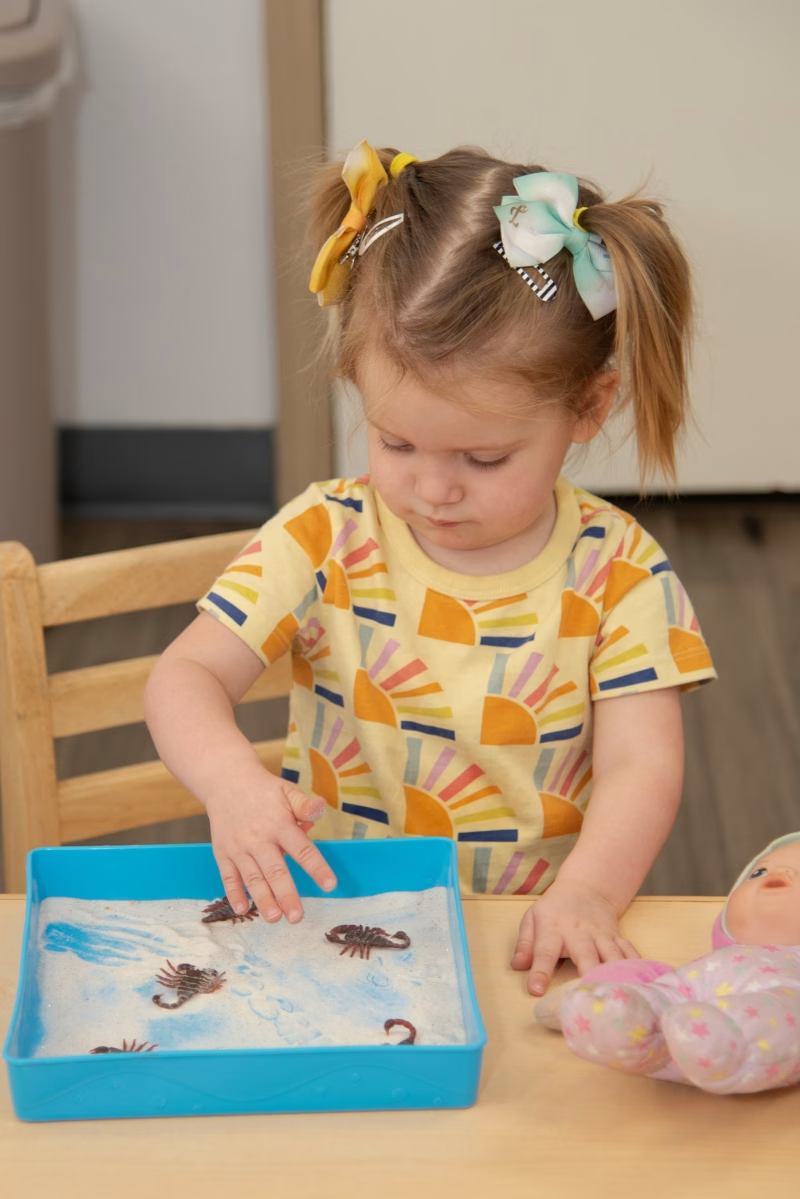
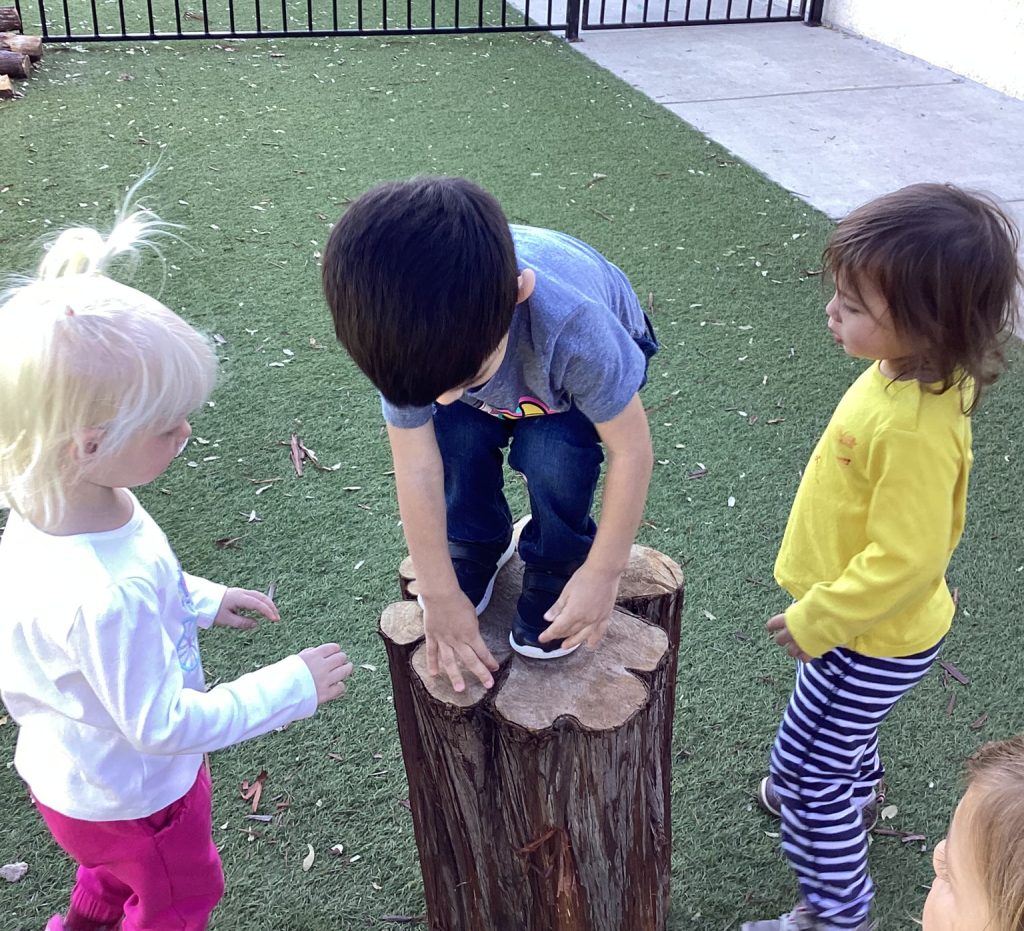
Your toddler climbs to the top of the playground structure and your heart jumps into your throat. Your preschooler wants to use “real scissors.” Your four-year-old asks to jump off the swing at its highest point.
Every parenting instinct screams stop them. But here’s what decades of child development research tells us: those moments of managed risk are exactly what children need to grow into confident, capable humans.
Risky play isn’t about danger. It’s about giving children the chance to test their limits, experience uncertainty, and discover what they’re capable of—all in environments where the stakes are manageable and the rewards are enormous.
What Is Risky Play?
Risky play is thrilling, exciting play where children engage with uncertainty and the possibility of physical challenge. The key word is possibility—not probability. We’re not talking about putting children in danger. We’re talking about allowing them to encounter manageable risks and learn from them.
There’s an important distinction between risk and hazard. A hazard is something a child can’t see or assess—a broken piece of equipment, a hidden hole, a toxic substance. These should always be eliminated. A risk is something a child can evaluate and choose to engage with—how high to climb, how fast to run, whether to attempt a jump.
When we remove all risk from children’s play, we also remove the opportunity to develop judgment, resilience, and confidence.
The 6 Types of Risky Play
Norwegian researcher Ellen Sandsetter identified six categories of risky play that children naturally seek out. Understanding these helps parents and educators recognize that the “scary” things children want to do are actually developmentally appropriate—and important.
1. Playing at Heights
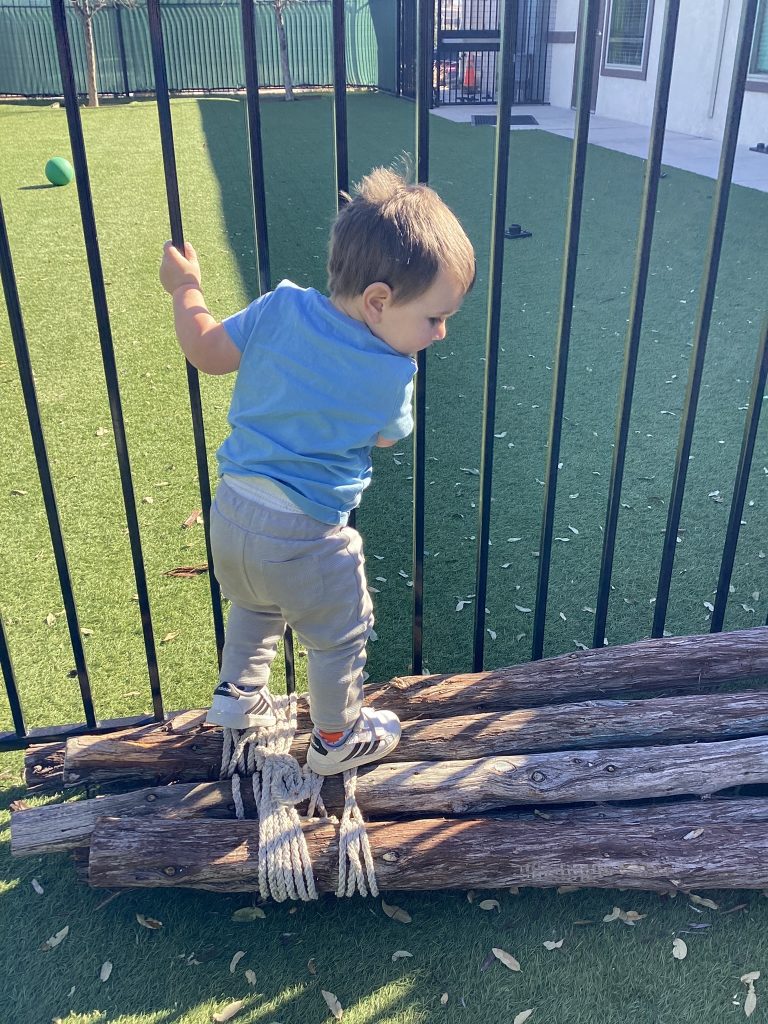
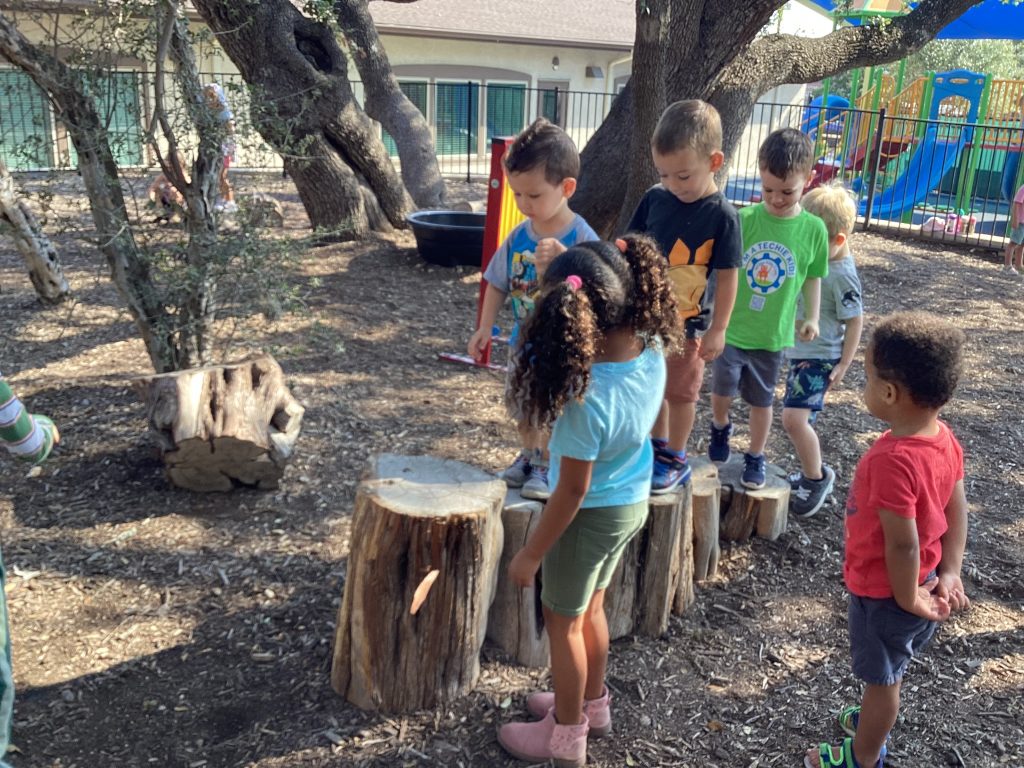
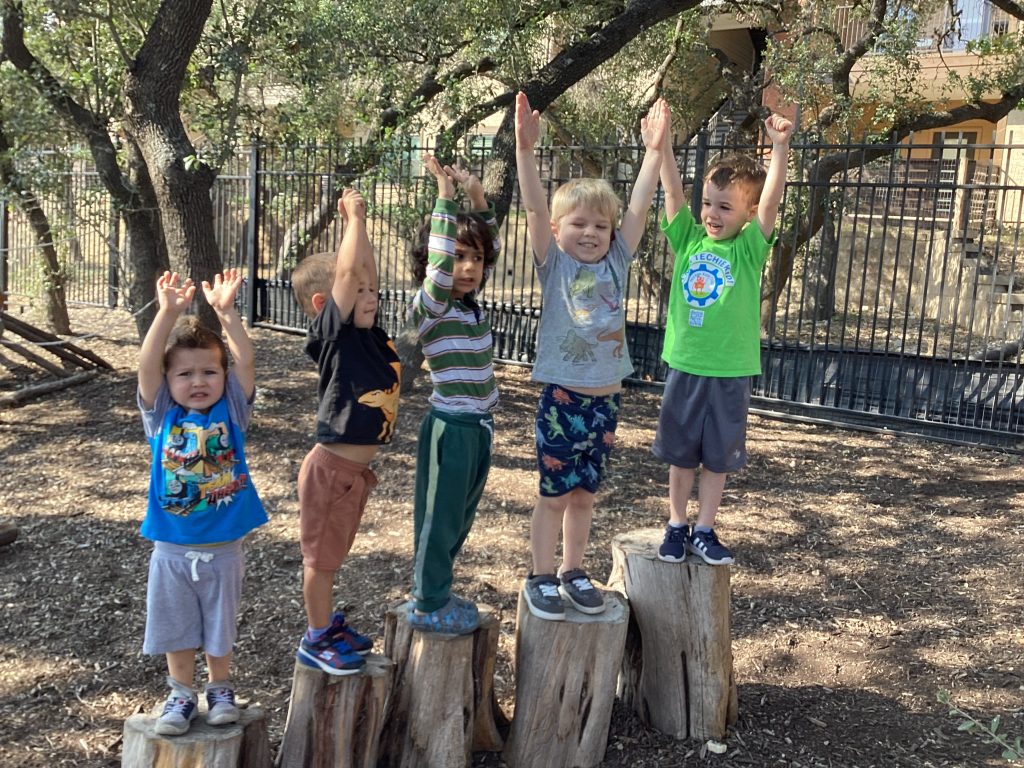
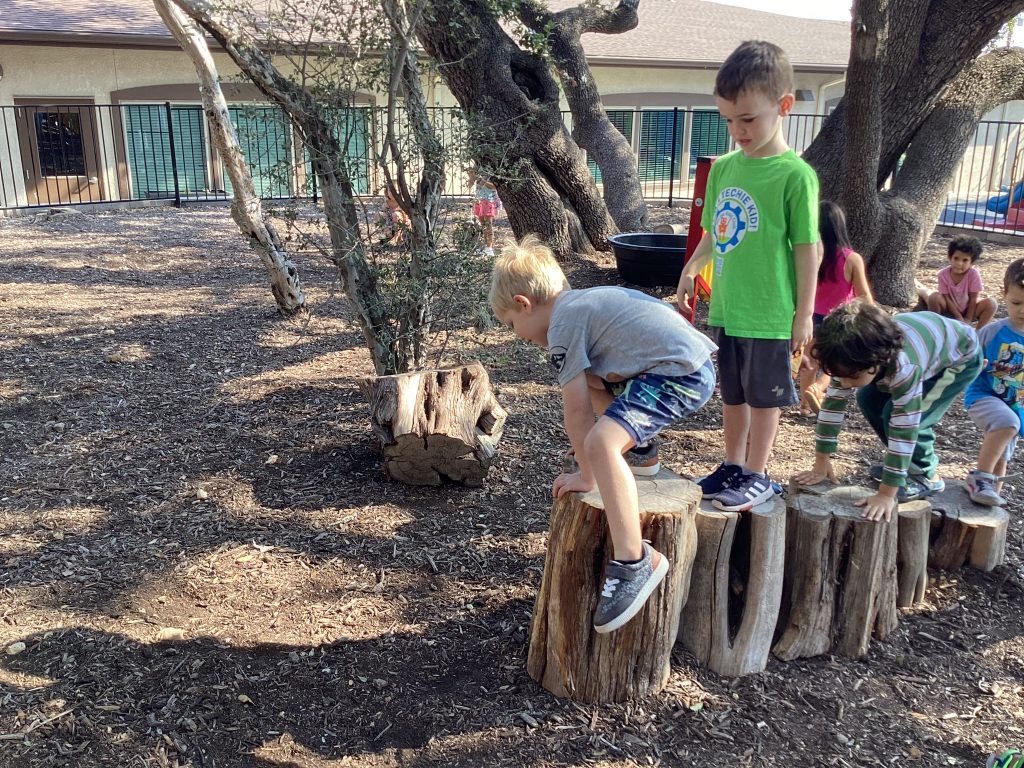
Climbing trees, scaling playground equipment, balancing on walls, jumping from elevated surfaces. Children are drawn to heights because conquering them builds confidence and spatial awareness.
What it looks like by age:
Toddlers (18-36 months): Climbing on low furniture, walking along a curb while holding your hand, stepping up and down from a step stool.
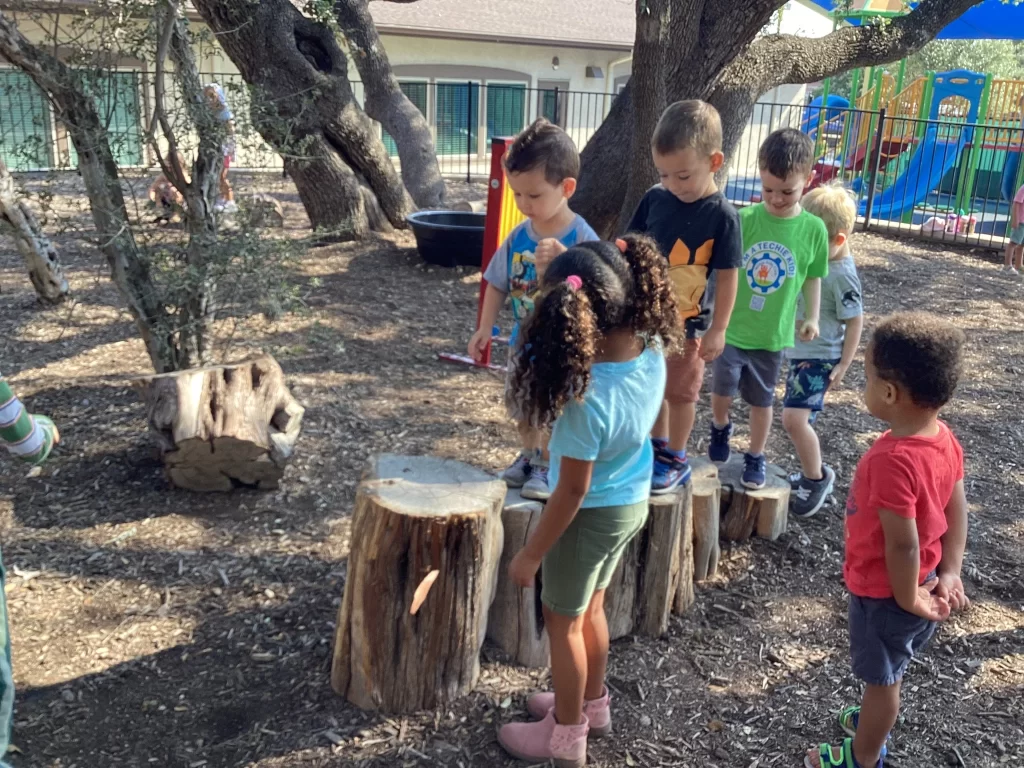
Preschoolers (3-5 years): Climbing playground structures independently, balancing on logs, jumping from the bottom steps.
2. Playing at High Speed
Running as fast as possible, swinging high, sliding down steep slides, riding bikes or scooters. Speed creates excitement and helps children learn to control their bodies in motion.
What it looks like by age:
Toddlers: Running across open spaces, being pushed on swings, sliding down small slides.
Preschoolers: Pumping their own swing, racing friends, riding tricycles or balance bikes fast.
3. Playing with Dangerous Tools
Using scissors, hammers, saws, sticks, or other tools that could cause injury if misused. Learning to handle real tools builds fine motor skills, focus, and respect for materials.
What it looks like by age:
Toddlers: Using child-safe scissors with supervision, stirring with real utensils, handling sticks.
Preschoolers: Cutting with sharper scissors, using hammers with soft materials, whittling soap with butter knives.
4. Playing Near Dangerous Elements
Playing near water, fire, or drop-offs. These experiences teach children to respect natural elements and assess environmental risks.
What it looks like by age:
Toddlers: Water play with supervision, exploring puddles, feeling warmth near a contained fire pit (with adult present).
Preschoolers: Playing at creek edges, sitting near a campfire, navigating uneven terrain.
5. Rough-and-Tumble Play
Wrestling, play fighting, chasing games, and physical roughhousing. This type of play teaches body control, boundaries, social cues, and emotional regulation.
What it looks like by age:
Toddlers: Gentle wrestling with parents, chasing games, pillow fights.
Preschoolers: Superhero play, tag with friends, tumbling on soft surfaces.
6. Playing Where Children Can “Disappear”
Exploring independently, hiding in bushes or forts, wandering just out of sight. This builds independence, navigation skills, and self-reliance.
What it looks like by age:
Toddlers: Playing in a tent or cardboard box, hiding behind furniture during peek-a-boo.
Preschoolers: Hide and seek in the backyard, exploring a fenced outdoor area independently, building forts.
The Benefits of Risky Play
Why does this matter so much? Because risky play builds the exact skills children need to navigate life successfully.
Physical Development
Climbing, running, balancing, and jumping build strength, coordination, and motor skills. Children learn how their bodies move through space and develop physical literacy—the foundation for lifelong health and activity.
Cognitive Growth
Every risky play situation requires assessment: Can I make that jump? Is that branch strong enough? How do I get down? This constant evaluation builds problem-solving skills, judgment, and critical thinking. It’s inquiry-based learning in its purest form.
Emotional Resilience
When children face uncertainty and push through fear, they learn they can handle discomfort. They develop what researchers call “stress inoculation”—the ability to manage anxiety that serves them throughout life. Sometimes they fall. Sometimes they fail. And they learn that’s okay.
Social Skills
Much risky play happens with others. Children negotiate rules, take turns, communicate boundaries, and work together. Rough-and-tumble play, in particular, teaches children to read social cues and respect others’ limits.
Confidence and Independence
Every conquered challenge—every tree climbed, every jump landed, every fear faced—deposits into a child’s confidence bank. They learn: I can do hard things. This self-belief transfers to academic challenges, social situations, and life obstacles.
Are We Raising Children in a “Cocoon”?
Think back to your own childhood. Did you ride bikes with friends until the streetlights came on? Climb trees? Play in the mud? Build forts in the woods?
Many parents today worry about their children’s safety to the point of creating overly controlled environments. The intentions are good—we love our children and want to protect them. But research suggests this approach can backfire.
Children who don’t experience appropriate risk may struggle with anxiety, fear of failure, and difficulty coping with uncertainty. They miss opportunities to develop the judgment and resilience they’ll need as teenagers and adults.
The goal isn’t to put children in danger. It’s to find the balance between keeping them safe and letting them grow.
How to Support Risky Play (Without Losing Your Mind)
Supporting risky play doesn’t mean being reckless. Here’s how to find the balance:
Pause before intervening. When you see your child doing something that makes you nervous, take 17 seconds before saying “be careful” or stepping in. Often, children are more capable than we give them credit for.
Eliminate hazards, allow risks. Remove things children can’t assess (broken equipment, hidden dangers). Allow them to engage with things they can evaluate (heights they chose to climb, speeds they controlled).
Ask instead of tell. Instead of “Don’t climb so high,” try “Do you feel safe up there?” or “What’s your plan for getting down?” This helps children develop their own risk assessment skills.
Supervise without hovering. Be present and aware without micromanaging. Your calm presence communicates trust in their abilities.
Let them fail safely. A skinned knee or a small tumble teaches more than a hundred warnings ever could. These minor setbacks build resilience.
Risky Play at Edquisitive Montessori
At Edquisitive Montessori, we understand that risky play is essential—not optional—for healthy development. Our outdoor learning environments are designed to offer age-appropriate challenges: climbing structures, balance beams, natural materials, and open spaces for running and exploration.
Our teachers are trained to supervise supportively—present and attentive, but not restrictive. We help children navigate potential risks, celebrate their courage, and learn from their stumbles. Because we know that the child who learns to climb the “scary” ladder today is building the confidence to tackle challenges for the rest of their life.
Schedule a tour to see how we balance safety and adventure at our San Antonio and Boerne campuses.
Frequently Asked Questions About Risky Play
What age should children start risky play?
Risky play begins in infancy—every time a baby reaches for something just out of grasp or pulls up to stand despite the possibility of falling. What’s “risky” scales with age and ability. For infants, tummy time on grass is adventurous. For toddlers, climbing a small structure is thrilling. The key is matching the challenge to the child’s developmental stage.
Is risky play the same as dangerous play?
No. Risky play involves uncertainty and challenge that children can assess and choose to engage with. Dangerous play involves hazards—hidden dangers children can’t evaluate. We eliminate hazards (broken glass, unstable structures) while allowing risks (climbing, speed, rough play). The child has agency in risky play; hazards offer no choice.
What if my child is naturally cautious?
That’s okay—and actually healthy. Cautious children are still assessing risk; they’re just taking longer to decide. Don’t push them, but do provide opportunities. Often, watching other children try something first helps cautious kids feel ready. Celebrate small risks they do take, and never shame them for being careful.
How do I know if something is too risky?
Ask yourself: Did my child choose this challenge, or were they pressured? Can they assess the situation? Would a fall or failure result in a minor setback or serious injury? If your child chose the activity, can evaluate it, and the worst likely outcome is a scrape or bruise—it’s probably appropriate risk. Trust your child’s judgment more than your fear.
What about liability at daycares and schools?
Quality early childhood programs understand that appropriate risk is part of development, not a liability issue. At Edquisitive Montessori, we design environments that offer challenge within safety guidelines. We train staff to supervise effectively, document activities, and communicate with parents about the developmental benefits of the experiences we provide.
My child got hurt during risky play. Did I do something wrong?
Minor injuries are a normal part of childhood—and actually part of the learning process. Research suggests children need about three hours of active play daily for ten years before they’re statistically likely to have an injury requiring treatment (and it would likely still be minor). A scraped knee teaches more than endless warnings. Of course, if injuries are frequent or serious, reassess the environment and supervision.
How can I encourage risky play at home?
Provide open-ended materials: logs to balance on, boxes to climb in, sticks to build with. Visit playgrounds with varied challenges. Let your child lead—they’ll naturally seek appropriate risks. Resist the urge to say “be careful” constantly. Instead, try “I’m here if you need me” or “What’s your plan?” And go outside—nature provides endless opportunities for age-appropriate adventure.
Related Reading
Not All Classrooms Have Four Walls — Why outdoor learning transforms early childhood education
Little Falls & Big Rises — How we celebrate children’s stumbles as learning opportunities
Movement & Motor Skills Lab — How physical development supports brain development
- Curiosity of the Key: Inspiring Inquiry-Based Learning in the Classroom
- A world of possibilities: Not every classroom has four walls
Subscribe to Newsletter
Programs offered at Edquisitive Montessori Plus include:
✔️Infants (10 Weeks – 18 Months)
✔️Toddlers (18 – 36 Months)
✔️Primary (3-6 Years)
✔️Kindergarten
✔️Mother’s Day Out
✔️Spanish Immersion / Dual Language
✔️After School Programs and Summer Camp (6 – 12 Years)
Music, Spanish, and Yoga are other programs included as part of the tuition.
Learn more about Inquiry-based Learning