Hands-on learning that builds independence and focus.
If your toddler is saying “no” to everything, melting down over a broken cracker, or suddenly biting when they used to hug — you’re not doing anything wrong. And neither are they.
Between 18 months and 3 years, your child’s brain is doing extraordinary work. Their vocabulary explodes from about 50 words to over 1,000. They’re discovering they’re a separate person from you. They’re testing boundaries because that’s literally how they learn where the edges are.
The question isn’t how to stop these behaviors — it’s how to channel all that developmental energy into something productive. That’s exactly what Montessori does best.
Texas licensing allows toddler classrooms to hold up to 22 children. We chose 18 as our maximum — on purpose.
Read more: Why the “Terrible Twos” Are Really Tiny Scientists at Work →
The toddler years are one of the most intense periods of brain development. Here’s what’s happening:
Vocabulary grows from ~50 words to 1,000+. They’re learning to express needs, ask questions, and have conversations. We fuel this with stories, songs, and rich verbal interaction all day long.
“I do it myself!” is the toddler anthem. This isn’t defiance — it’s healthy development. We channel this drive into real tasks: hand washing, self-dressing, snack prep, and caring for their environment.
Pouring, transferring, stacking, threading — these aren’t just play. They’re building the muscle memory and hand control your child will need for writing, buttoning, and countless other skills.
Toddlers are learning they’re separate people with their own feelings. We help them name emotions, navigate conflicts with words instead of actions, and build trusting relationships with teachers and peers.
We call it “toilet learning” — not training — because it’s a skill your child develops at their own pace, not something we force. We follow your child’s readiness cues, maintain consistency between home and school, and provide a pressure-free environment with child-sized facilities.
Our teachers are experienced partners in this process — we’ll work closely with you to ensure the same approach at school and home.
Biting is one of the most common — and most alarming — toddler behaviors. But it’s almost always developmental, not aggressive. Toddlers bite because they’re teething, overwhelmed, or simply don’t have words yet for big feelings.
Our teachers watch for triggers, redirect gently, and help children find words for their emotions. This phase passes — usually faster than parents expect.
When a toddler melts down because you cut their sandwich wrong, they’re not being dramatic — their brain literally can’t regulate the disappointment yet. The prefrontal cortex (the part that manages emotions) won’t be fully developed until their mid-20s. Our job is to stay calm, validate feelings, and help them learn emotional vocabulary: “You’re frustrated because you wanted the blue cup.” Over time, words replace tears.
Everything in our toddler environment is designed for small hands and big curiosity.
Toddlers thrive when given real work. In our classroom, they wash their own hands, help prepare snacks, pour their own water, wipe tables, put on their own jackets, and care for classroom plants. These aren’t chores — they’re confidence builders.
Transferring beans with tongs, pouring water between pitchers, sorting objects by color, stacking and nesting cubes, threading beads — these activities look like play but they’re building the hand strength, coordination, and concentration your child needs for writing and learning.
Stories, songs, fingerplays, and conversation all day long. We narrate what children are doing, ask open-ended questions, and give them time to respond. This constant language exposure fuels the vocabulary explosion happening in their brains.
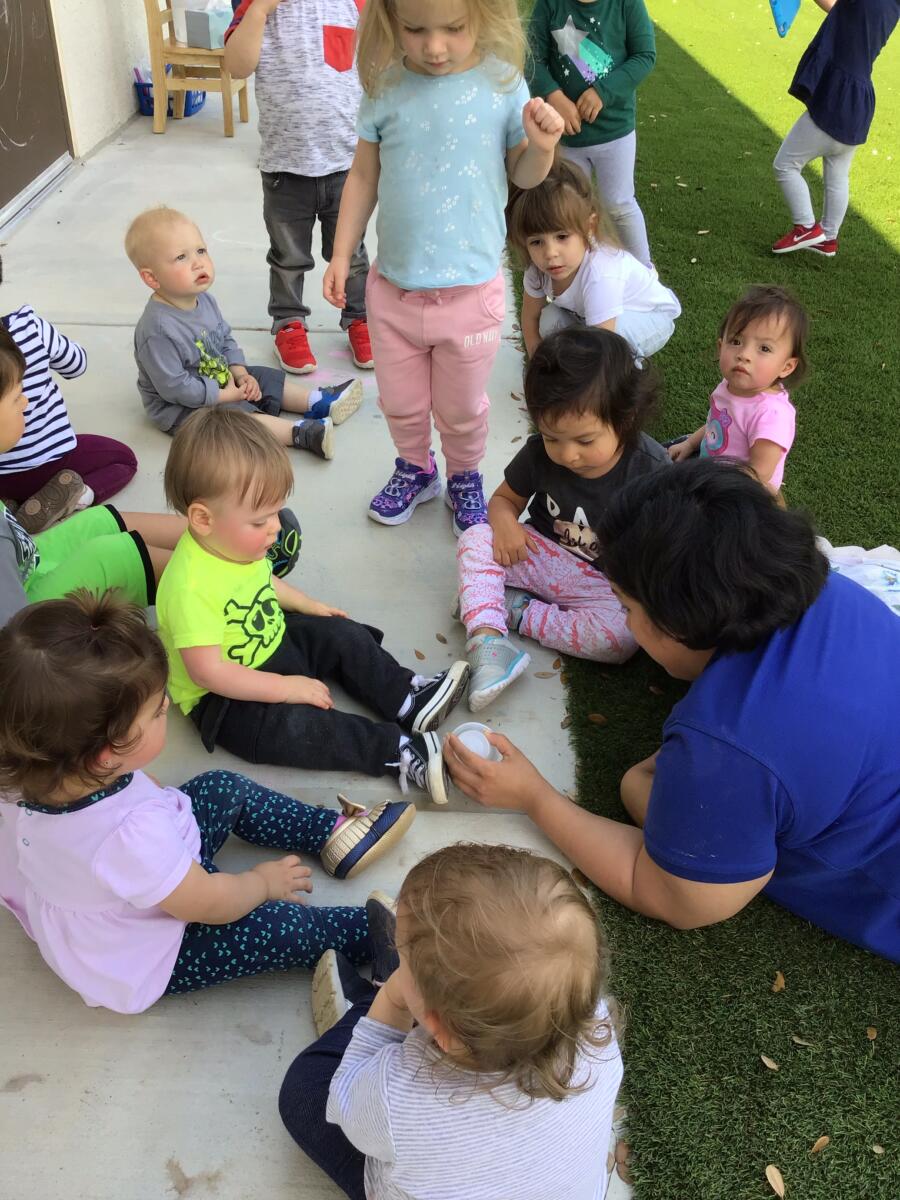
Toddlers are just beginning to notice other children as playmates rather than obstacles. We guide them through sharing, turn-taking, and conflict resolution using simple scripts they can internalize: “You’re using that. I’ll wait for my turn.”
No extra fees for any of these programs.
Native Spanish-speaking teachers introduce language through songs, stories, and daily vocabulary. Toddler brains are wired for language acquisition — this is the perfect window for bilingual exposure.
Simple poses, breathing exercises, and movement games help toddlers develop body awareness, balance, and early emotional regulation skills. Plus, it’s a wonderful way to release all that toddler energy.
Songs, rhythm instruments, and movement develop listening skills, memory, and language. Toddlers light up during music time — and the repetition helps cement new vocabulary and concepts.
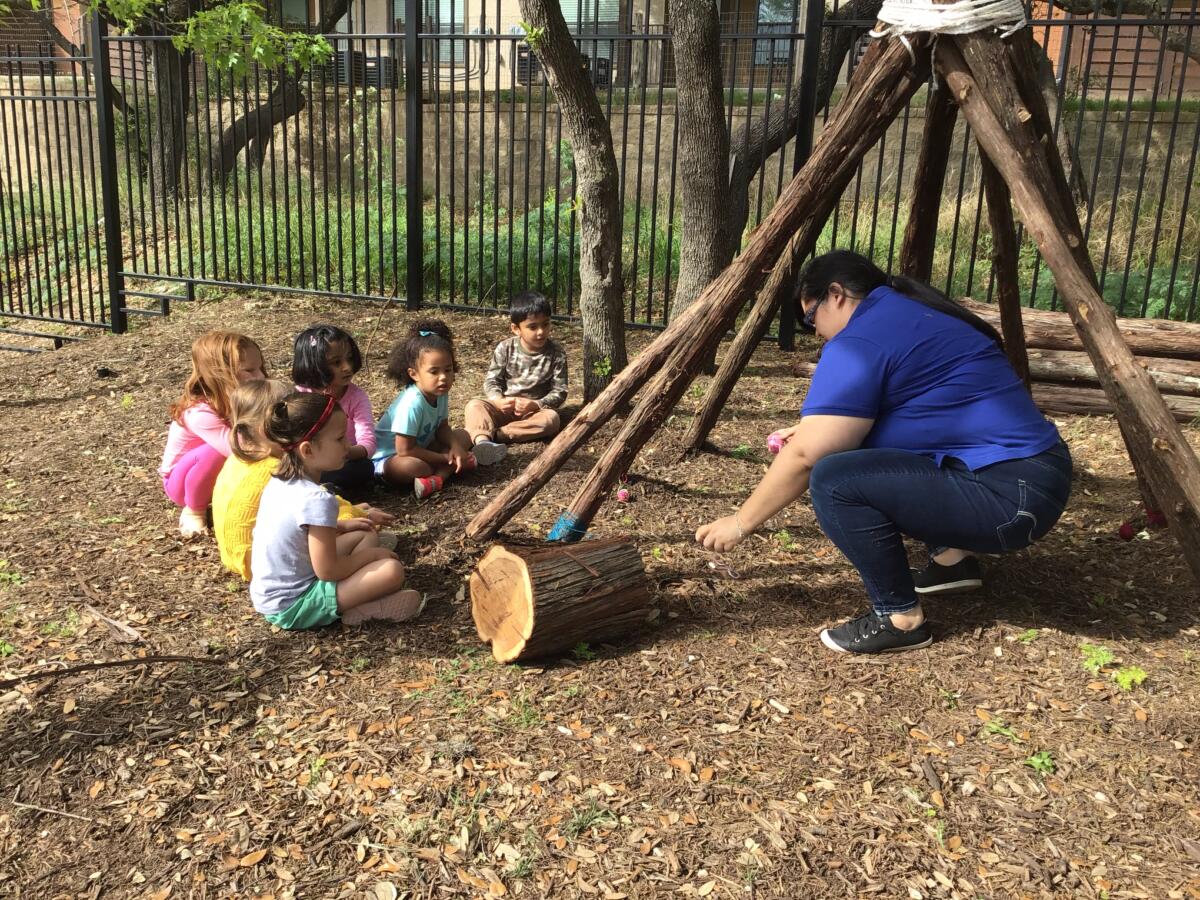
Outdoor play, climbing, running, and our Motor Skills Lab build gross motor coordination while fine motor activities prepare hands for future writing.
All toddler classes participate in Yoga, Music, and Spanish lessons as part of the daily program.
| Time | Activity |
|---|---|
| 6:30 – 7:30 | Arrival / Health Check / Open Room |
| 7:30 – 8:30 | Free Choice in Activity Areas |
| 8:30 – 9:30 | Snack / Calendar & Story / Toileting |
| 9:30 – 10:30 | Montessori Lessons |
| 10:30 – 11:00 | Outside Play or Great Room |
| 11:00 – 11:30 | Song & Story / Lunch Prep |
| 11:30 – 12:15 | Lunch / Clean Up / Toileting |
| 12:15 – 2:30 | Nap Time |
| 2:30 – 3:00 | Toileting / PM Snack |
| 3:00 – 4:00 | Free Choice in Activity Areas |
| 4:00 – 4:30 | Outside Play or Great Room |
| 4:30 – 4:45 | Late Snack |
| 4:45 – 6:00 | Free Choice / Clean Up / Story Time |
| 6:00 – 6:30 | Prepare for Departure / Close Room |
Why routines matter for toddlers: Predictable schedules help toddlers feel secure. When they know what comes next, they can relax into the day instead of constantly wondering what’s happening. This security frees their brain to focus on learning and exploration.
Our Toddler Program welcomes children aged 18 months to 3 years. Transitions from the Infant Program are based on developmental readiness—when your child is walking confidently and ready for more complex activities, we’ll partner with you to make the move smoothly.
We partner closely with parents to make toilet training consistent between home and school. Our teachers follow each child’s natural readiness cues and provide a supportive, pressure-free environment with child-sized facilities and plenty of patience. Read our toilet learning guide →
These behaviors are completely normal during the toddler years. Our experienced teachers use positive guidance and redirection to help children express their feelings appropriately. We teach conflict resolution through language and work closely with parents to ensure consistency. Understanding why toddlers bite →
Toddlers engage in purposeful, hands-on Montessori activities: practical life skills like hand washing and self-dressing; language activities with stories, songs, and conversations; sensory experiences with puzzles and sorting; fine motor activities like pouring and threading; and plenty of outdoor exploration and social interaction.
Montessori for toddlers focuses on “help me do it myself.” We provide child-sized tools, accessible materials, and a carefully prepared environment where your toddler can practice real-life skills at their own pace. Independence isn’t rushed—it’s nurtured through respect for each child’s individual timeline.
Schedule a tour and watch purposeful independence in action.
One approach, multiple neighborhoods—each with its own sense of community.