

A Nurturing Start: Safe Spaces for Key Milestones.
When parents tour our infant room, the first question is almost always: “What do babies this young actually do here?” It’s a fair question. Most people think infant care is just feeding, diapering, and keeping babies safe until they’re “old enough” to learn.
But here’s what neuroscience tells us: your baby’s brain forms over one million new neural connections every single second during the first year of life. By age three, their brain is 80% of adult size. This isn’t the waiting room before learning begins — this IS learning, at the most intense pace your child will ever experience.
The question isn’t whether your infant is learning. It’s whether their environment is designed to support that learning — or just pass the time.
Every interaction, every sensory experience, every moment of responsive care shapes your baby’s developing brain:
Newborns see primarily in black and white and can only focus 8-12 inches away. We use high-contrast Montessori mobiles and materials designed specifically for developing vision — not bright colors that their eyes can’t yet process.
Long before first words, babies are absorbing the sounds, rhythms, and patterns of language. Our caregivers narrate, sing, read, and engage in rich conversation — building the neural pathways for speech.
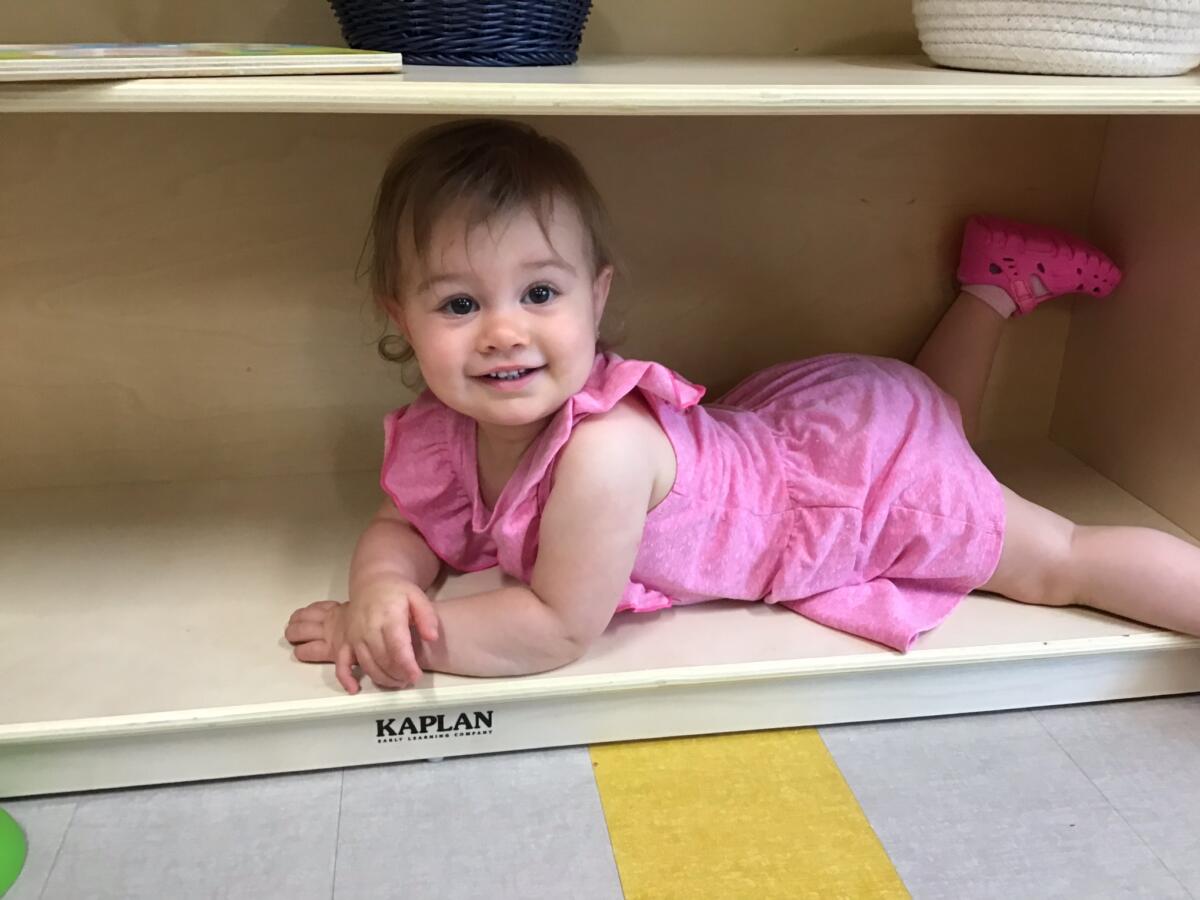
From lifting their head to rolling, crawling, and pulling up — every motor milestone builds on the last. We provide freedom of movement on the floor, not time in containers, so babies can develop strength and coordination naturally.
When caregivers respond consistently to a baby’s needs, they learn the world is safe. This secure attachment becomes the foundation for all future relationships, emotional regulation, and even learning capacity.
You won’t find walkers, bouncers, swings, or “containers” in our infant room. These devices restrict natural movement and can actually delay motor development. Instead, babies spend time on the floor — the safest, most developmentally appropriate place for them to be.
On the floor, babies can practice lifting their heads, rolling, reaching, and eventually crawling — all at their own pace, building strength and confidence with every movement.
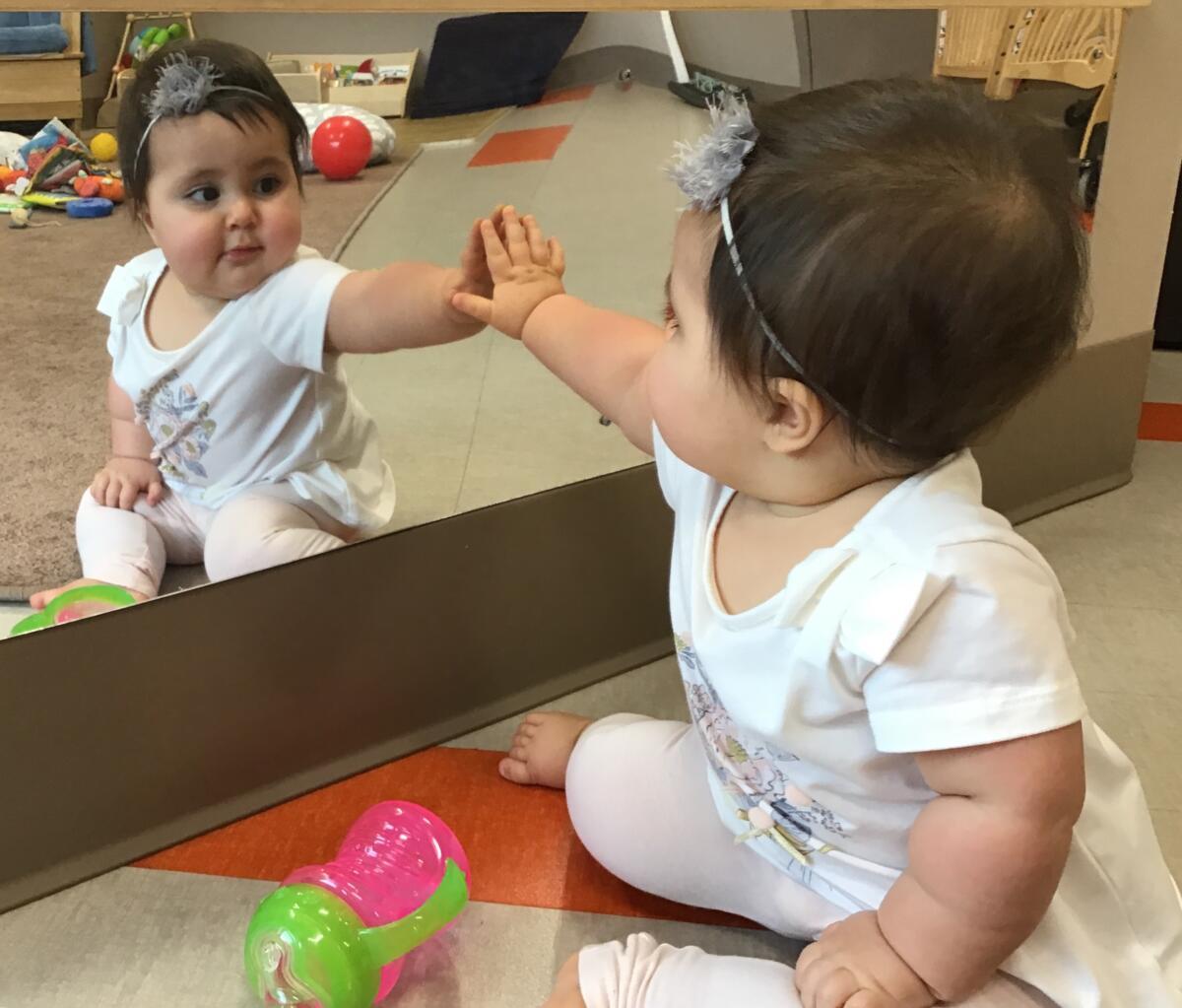
Maria Montessori called the infant environment “Nido” — Italian for nest. It’s calm, beautiful, and intentionally designed. Low mirrors let babies discover themselves. Mobiles progress from high-contrast black and white to colored as vision develops. Materials are selected for where each baby is developmentally.
Every element serves a purpose — nothing is just decoration.
With a 4:1 caregiver-to-infant ratio, your baby gets the attention they need — not just for feeding and diapering, but for genuine interaction. Our caregivers learn each baby’s cues, preferences, and rhythms. When babies are responded to consistently, they develop secure attachment — the psychological foundation for everything else.
We follow your baby’s natural rhythm — not a rigid schedule. Here’s what a typical day looks like:
Tummy time on soft mats, reaching for mobiles, grasping textured rattles, gazing at high-contrast images, and exploring safe mirrors. Every activity is chosen to match developmental stages.
Stories, songs, gentle music, and constant narration. We talk to babies about what we’re doing: “Now I’m going to pick you up. Let’s change your diaper.” This builds language comprehension and trust.
Babies sleep when they’re tired and eat when they’re hungry — on their own schedule, not ours. We maintain detailed logs so you always know when and how much your baby ate and slept.
Weather permitting, babies enjoy fresh air in our safe outdoor infant area. Natural light, nature sounds, and gentle breezes provide sensory experiences that indoor environments can’t replicate.
Four infants per caregiver means your baby gets genuine attention — not just supervision. We exceed state requirements because responsive care can’t happen when caregivers are stretched too thin.
No bouncers, swings, walkers, or “holding devices.” Babies need freedom to move, reach, roll, and eventually crawl. Container time restricts development — floor time promotes it.
We provide private, comfortable space for nursing mothers who want to visit. We safely store and serve pumped breast milk. Whatever your feeding choice, we support it fully.
Real-time photos, feeding logs, diaper changes, nap times, and developmental milestones — all shared through our parent app. You’ll feel connected to your baby’s day even when you’re at work.
When your baby is ready for solids, our chef prepares fresh, nutritious purees and age-appropriate foods. We accommodate allergies and dietary needs, and introduce foods at your direction.
We welcome infants as young as 10 weeks old. Many families enroll while still pregnant to secure their spot, since our infant rooms have limited capacity due to our low ratios.
Absolutely. We work with you to understand your baby’s feeding and sleep patterns. Whether your baby needs to eat every two hours or naps three times a day, we adapt to their needs while maintaining a calm, consistent environment.
Montessori for infants (called “Nido”) focuses on creating a safe, beautiful environment where babies can explore freely at their own pace. We emphasize natural movement, sensory experiences, and responsive caregiving that builds trust and independence from day one.
Yes! We proudly support breastfeeding and welcome mothers to visit during the day to nurse their babies. We provide a comfortable, private space and safely store and serve pumped breast milk following all health guidelines.
Transitions happen based on developmental readiness, typically between 12-18 months. When your baby is walking confidently and showing interest in more complex activities, we’ll partner with you to make the transition smooth. Learn about our Toddler Program →
We do not offer part-time enrollment for infants. Consistent care is especially important during the first year for building secure attachment. Our full-time program runs Monday through Friday, 6:30 AM – 6:30 PM.
Schedule a tour and experience our Nido environment in person.
One approach, multiple neighborhoods—each with its own sense of community.

