You’re comparing preschools in San Antonio and you keep seeing “Montessori” in the mix. Maybe a
friend raves about it. Maybe you drove past one and wondered what makes it different. Or maybe
you’re skeptical—is it just a fancy label, or is there actually something to it?
This guide breaks down the real differences between Montessori and traditional preschool
approaches, specifically for San Antonio families. No philosophy lectures—just the practical stuff
you need to make a decision.
Parents searching for childcare often wonder what actually sets Montessori apart from traditional daycare. The differences go far beyond labels—they shape your child’s entire daily experience.
The core difference: In traditional daycare, the teacher decides what everyone does and when. In Montessori, children choose their own activities from a carefully prepared environment, with teachers guiding rather than directing.
Here are the 7 key differences that matter most to San Antonio families:
| Element | Montessori Daycare | Traditional Daycare |
|---|---|---|
| Learning approach | Child-led, self-directed | Teacher-led, structured |
| Classroom grouping | Mixed ages (3-year spans) | Same-age groups |
| Daily schedule | 2-3 hour uninterrupted work blocks | 15-30 minute activity rotations |
| Materials | Purpose-designed, self-correcting | General toys and supplies |
| Teacher role | Guide and observer | Director and instructor |
| Motivation | Intrinsic (satisfaction of learning) | Often extrinsic (stickers, praise) |
| Independence focus | “Help me do it myself” | Teacher assists with tasks |
Keep reading for a deeper dive into each of these differences and what they mean for your child’s daily experience.
Traditional preschool is teacher-led. The teacher decides what everyone does and when. Circle time, art project, snack, playground—same schedule, same activities for all kids.
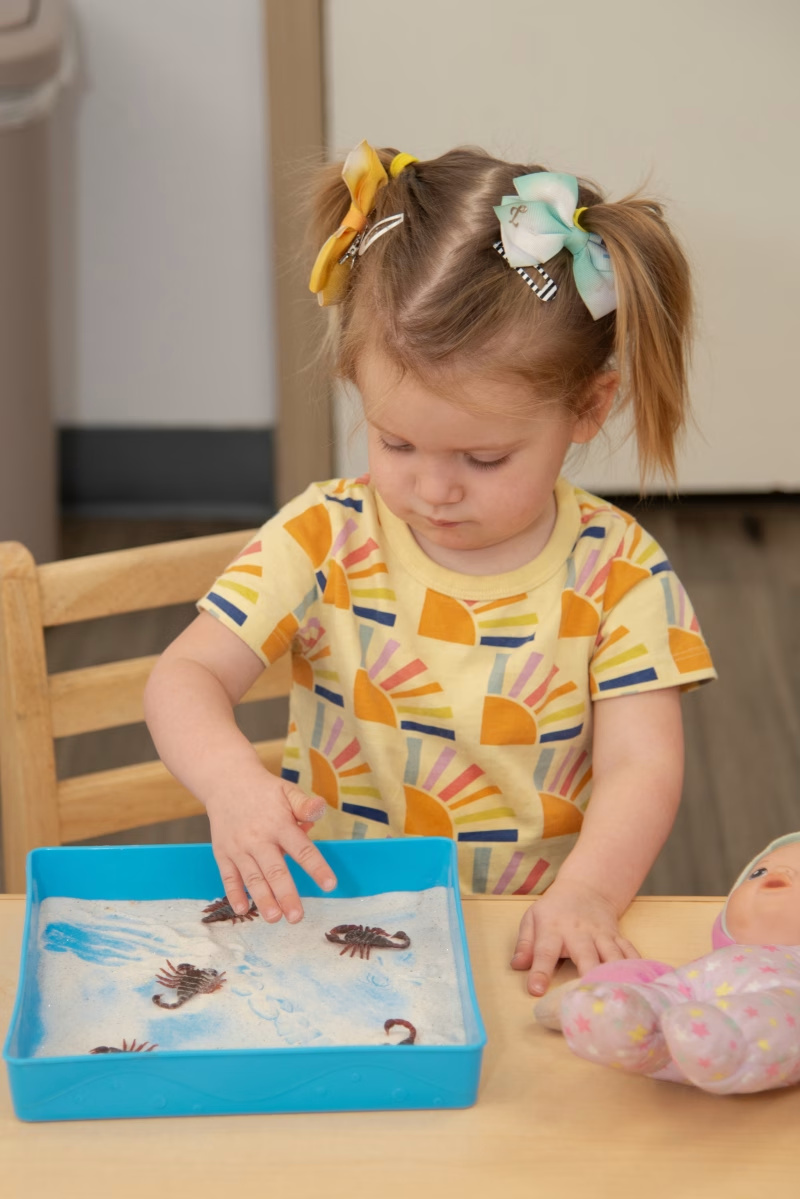
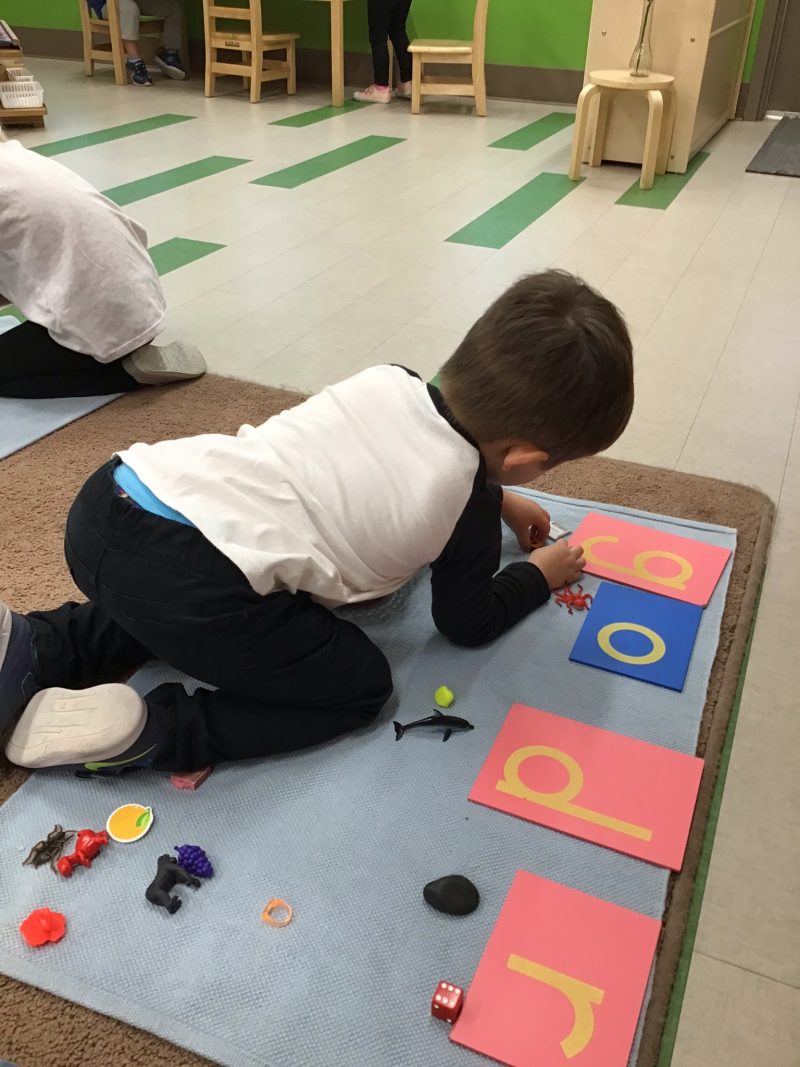
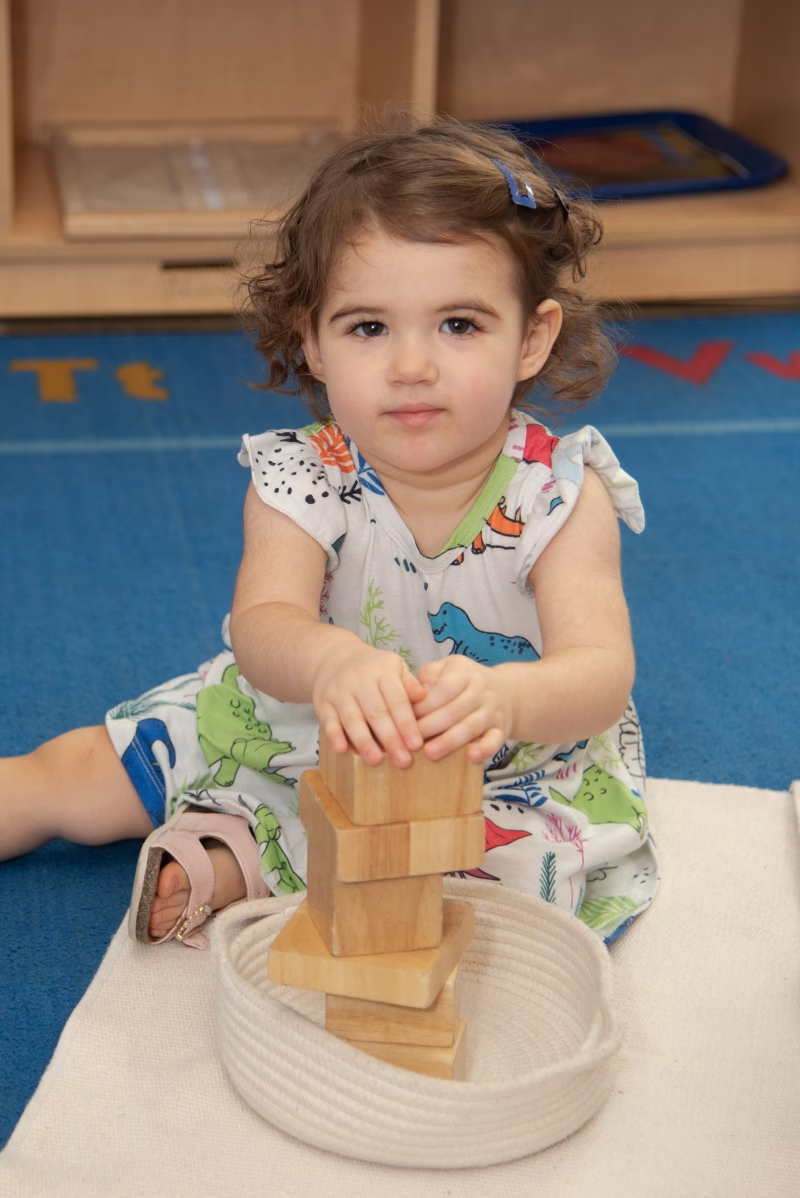
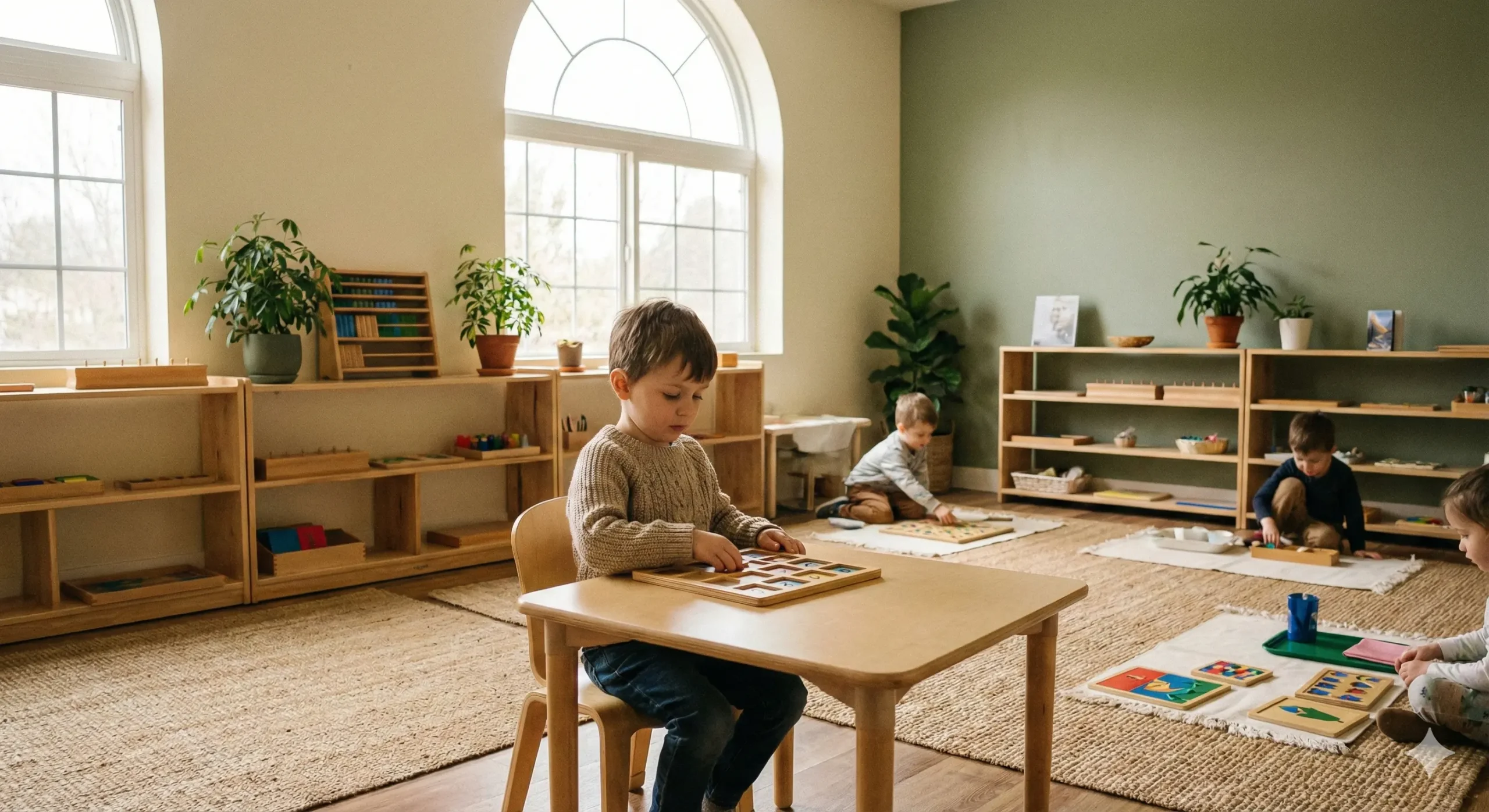
Montessori preschool is child-led. Kids choose their own activities from a prepared environment. The teacher observes and guides rather than directs. Children of different ages learn together.
Neither is “better”—they’re genuinely different approaches. The question is which one fits your child and your family.
✓ Both approaches prepare kids for kindergarten—they just do it differently
✓ Montessori is highly structured (not chaotic)—the structure is in the environment, not the schedule
✓ Cost difference: $50-$100/week more, but often includes Spanish, yoga, and STEM bundled in
✓ San Antonio advantage: Many Montessori programs offer bilingual Spanish immersion at no extra cost
✓ Best choice depends on your child’s learning style, not which philosophy is “superior”
✓ Research shows: Montessori students often outperform peers in executive function, reading, and math by kindergarten
| Traditional Preschool | Montessori | |
|---|---|---|
| Daily structure | Teacher sets schedule. Activities rotate every 15-30 min. | Child chooses activities. 2-3 hour uninterrupted work periods. |
| Age grouping | Same-age classrooms (all 3s, all 4s) | Mixed-age (3-6 together). Older kids mentor younger. |
| Learning materials | Toys, crafts, worksheets, play kitchens, blocks | Specialized materials designed to teach specific concepts (pink tower, bead chains, moveable alphabet) |
| Teacher’s role | Leads activities, manages group, directs learning | Observes, guides, introduces new materials when child is ready |
| Academic focus | Pre-K standards: letters, numbers, shapes, colors | Same concepts through hands-on materials. Many kids read and do basic math before kindergarten. |
| Independence | Teacher helps with tasks (tying shoes, pouring drinks) | “Help me do it myself.” Kids pour own water, clean own spills, dress themselves. |
| SA area cost | $150-$300/week typical | $200-$400/week typical (often includes enrichments like Spanish, yoga) |
| Best for child who | Thrives with predictable routines, enjoys group activities, likes teacher direction | Self-directed, focuses deeply, prefers choosing own work, learns by doing |
Yes—with either approach. Both traditional and Montessori preschools in San Antonio prepare children for SAISD, NEISD, Northside ISD, and area private school kindergartens.
The difference is how they get there. Traditional preschools teach to kindergarten readiness standards directly (letter of the week, number worksheets). Montessori gets to the same place through hands-on materials—and often goes further.
The research backs this up: A 2017 study published in Frontiers in Psychology found that Montessori students showed significantly higher executive function and reading skills compared to traditional preschool peers, with effects lasting into elementary school. [CITE: Lillard & Else-Quest, 2017]
It’s common for Montessori kindergarteners to enter school already reading chapter books and working with multi-digit math. According to our data at Edquisitive, 95% of our graduates test into advanced reading groups in kindergarten.
The real question isn’t academic readiness—it’s whether your child will be ready to sit still, follow directions, and work independently. Both approaches develop these skills, just differently.
This is the #1 misconception. Montessori classrooms are highly structured—just not in the way you might expect.
The structure is in the environment, not the schedule. Every material has a specific place. Every activity has a specific sequence. Children learn to complete work cycles, return materials to shelves, and respect others’ work space.
What looks like “free play” to a visiting parent is actually children making choices within a very intentional framework. Dr. Maria Montessori called this “freedom within limits”—not chaos, but purposeful independence.
Here’s what structure looks like in a Montessori classroom:
The freedom is real, but it’s freedom within a carefully designed system.
Some children do thrive with more explicit direction, especially at first. A good Montessori teacher recognizes this and provides more guidance for children who need it—gradually releasing responsibility as the child gains confidence.
In practice, this looks like:
That said, if your child has significant difficulty with transitions or strongly prefers adult-led activities, a traditional preschool might be a better starting point. You can always try Montessori later—there’s no wrong door.
Let’s look at real San Antonio numbers. Montessori programs typically run $50-$100/week more than traditional preschools. According to our 2024 San Antonio market analysis:
Many Montessori programs include extras that traditional programs charge separately for:
And some Montessori programs (including Edquisitive) accept CCS/CCA subsidies, making the cost comparable to traditional daycare for qualifying families.
The real question is value, not price. If the approach fits your child and produces the outcomes you want, the investment may be worth it. If it doesn’t fit, no amount of savings makes it the right choice.
Forget the philosophy debates. Here’s a practical framework based on what we see working for San Antonio families:
Pro tip: Your child’s learning style matters more than their personality. A shy child can thrive in Montessori if they’re self-directed. A high-energy child can excel in traditional preschool if they respond well to group structure.
When you tour any preschool in San Antonio—Montessori or traditional—watch for these warning signs:
Universal Red Flags
🚩 Chaotic classrooms. Kids should be engaged, not running wild. Montessori rooms should be calm; traditional rooms should be active but orderly.
🚩 Screens as babysitters. Some educational screen time is fine. Tablets all morning is a red flag.
🚩 Teachers not at child level. Good teachers kneel, crouch, and make eye contact. Standing over kids and directing from above isn’t ideal in either approach.
🚩 Unwilling to let you observe. Any quality program welcomes parent tours during class time—not just during nap.
🚩 High teacher turnover. Ask how long lead teachers have been there. Consistent caregivers matter.
🚩 “Montessori” in name only. The term isn’t trademarked. Ask about teacher training and look for authentic materials.
🚩 No AMI or AMS-certified teachers. Authentic Montessori requires specialized training. Ask to see credentials.
🚩 Plastic toys mixed with Montessori materials. A play kitchen and dress-up corner aren’t Montessori. Look for wood and natural materials.
🚩 Teachers interrupting children’s work frequently. The guide should observe more than direct.
🚩 No 3-hour work periods. If the schedule is broken into 30-minute blocks, it’s not Montessori.
🚩 Materials not authentic. Look for brands like Nienhuis, Gonzagarredi, or Alison’s Montessori. Generic Amazon “Montessori-inspired” materials are a yellow flag.
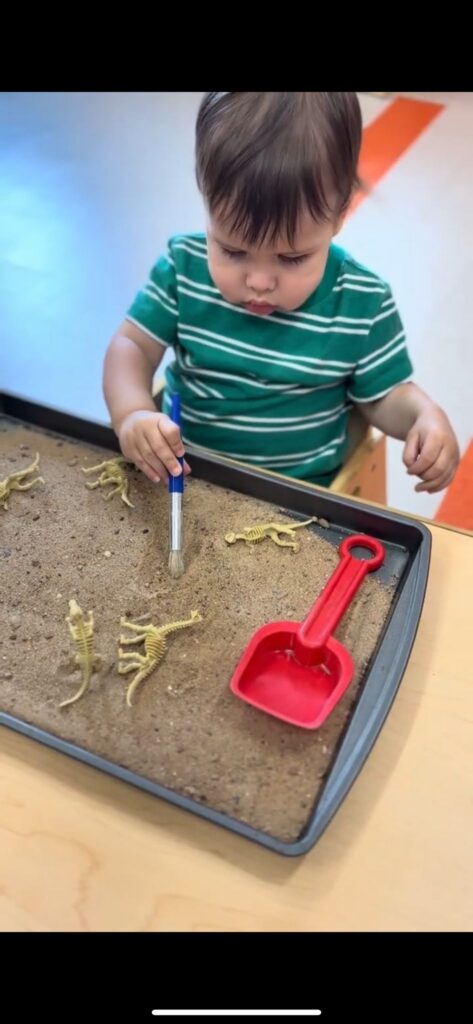
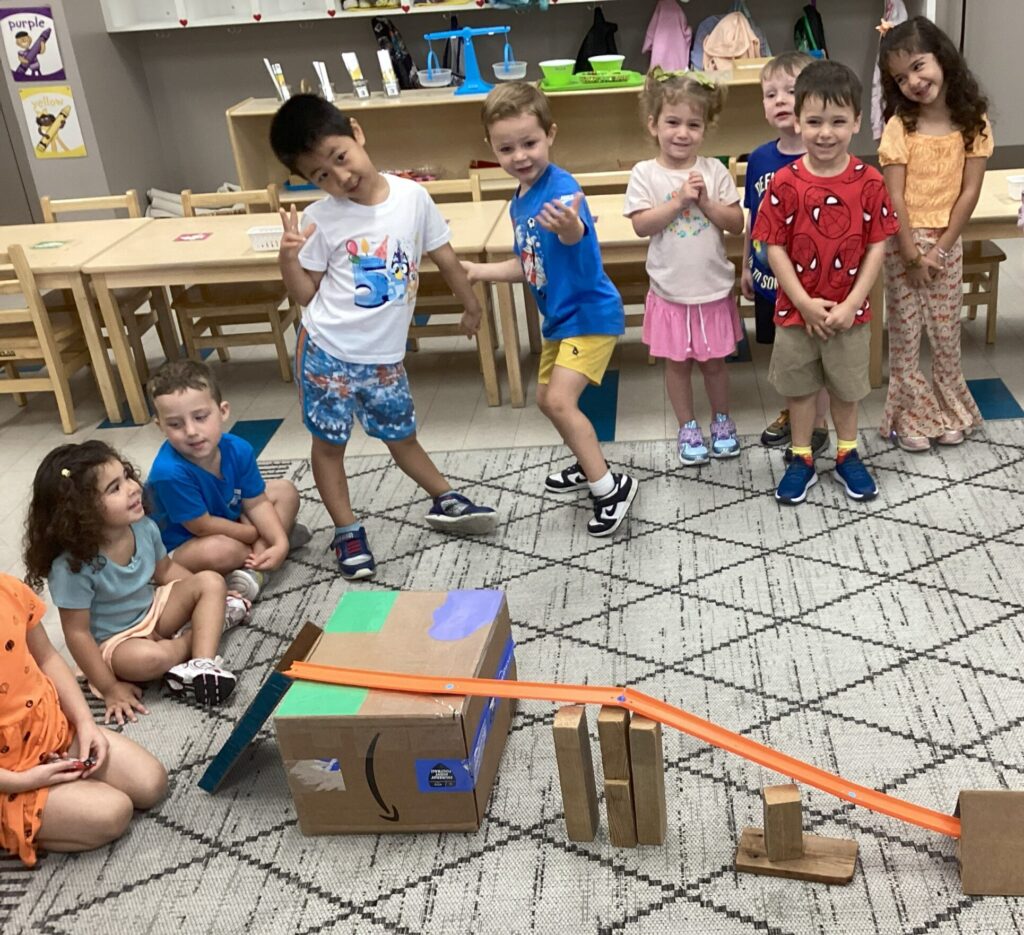
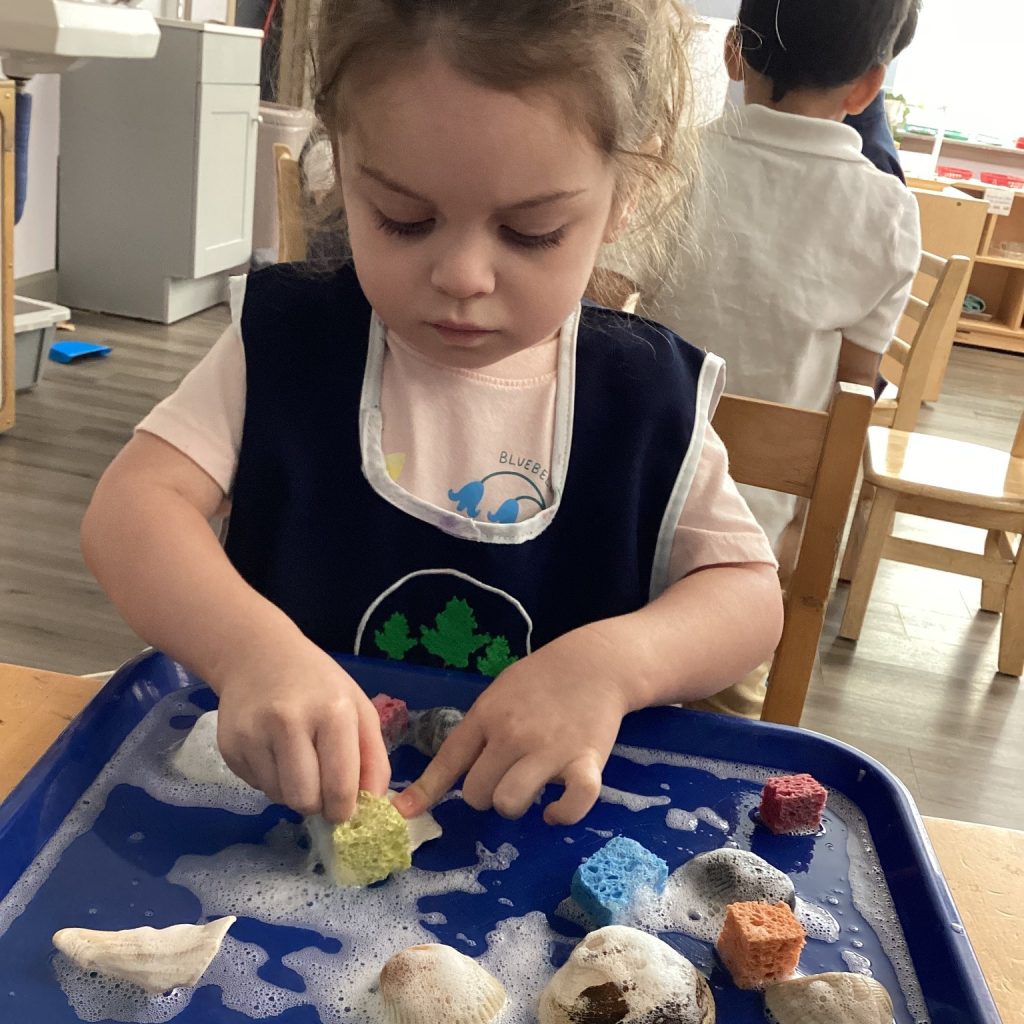
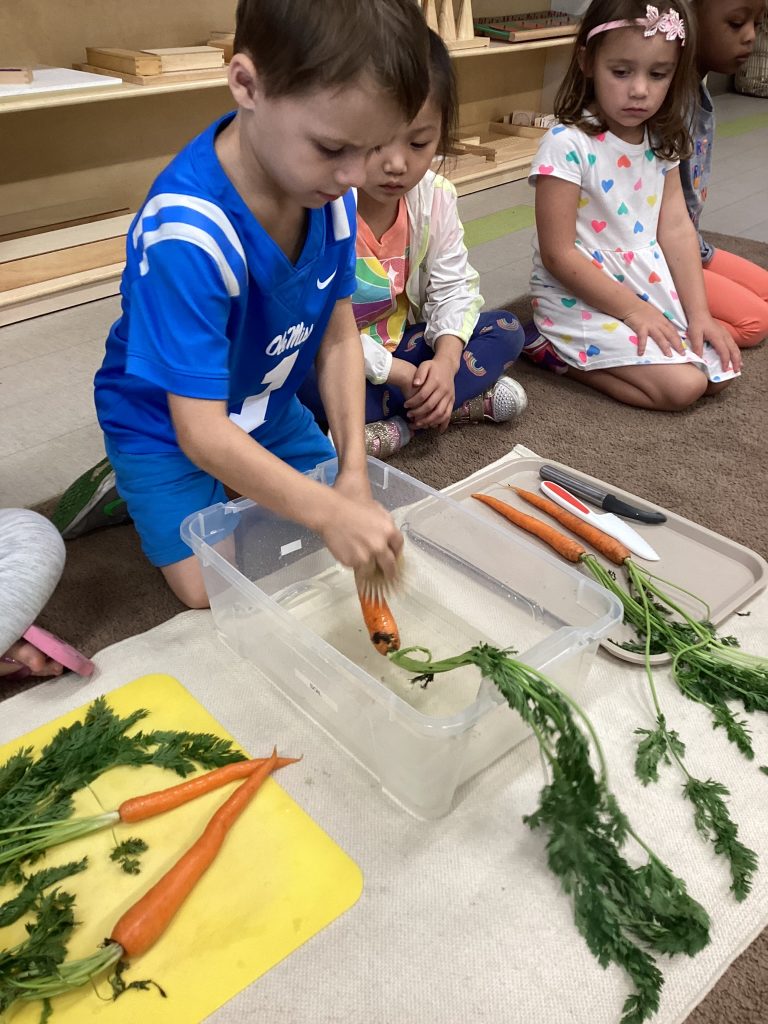
San Antonio has a strong Montessori community with several well-established programs. You’ll find options from Medical Center to Stone Oak to Boerne.
Local Advantages
Bilingual Spanish immersion at no extra cost. Many San Antonio-area Montessori programs offer dual-language education included in tuition—a significant value given our proximity to the border and the city’s bilingual heritage. This is harder to find in traditional preschool settings without paying premium rates.
Strong kindergarten transition support. NEISD, Northside ISD, and SAISD kindergarten teachers report that Montessori students sometimes need 2-3 weeks to adjust to more structured days, but they typically adapt quickly—and often exceed peers in reading, math, and independence by October.
Multiple authentic programs to choose from. San Antonio’s Montessori schools include both AMI and AMS-affiliated programs, giving families options for different interpretations of the method.
While both approaches work, there’s growing evidence that Montessori education produces measurable academic and developmental benefits:
That said, high-quality traditional preschools also produce excellent outcomes—especially those with play-based learning, low teacher-child ratios, and developmentally appropriate practices. The key word is high-quality.
Montessori education serves children from infancy through adolescence, but the early years—birth through age 6—are considered the most critical period. Here’s what Montessori looks like at each stage in San Antonio programs:
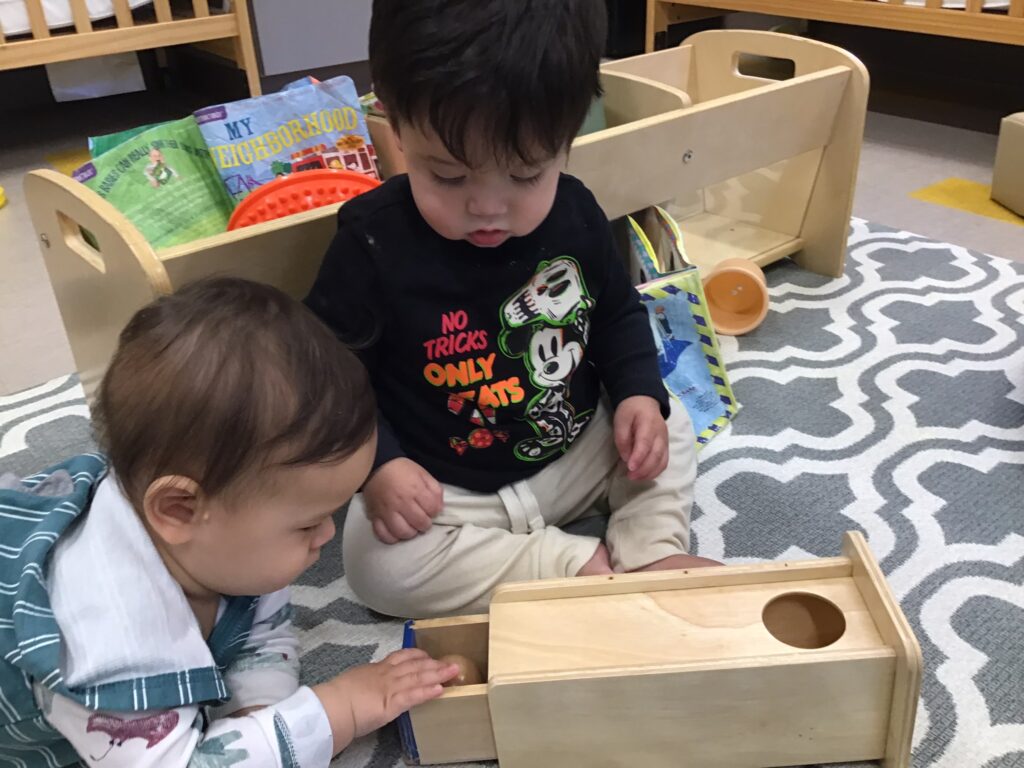
Montessori infant programs create a calm, orderly environment that supports natural development:
San Antonio availability: Edquisitive Montessori accepts infants starting at 10 weeks at all four campuses.
The toddler years are when Montessori really shines. This is the period of “I do it myself!”—and Montessori environments are designed to support that drive:
This is where parents see the most dramatic difference—toddlers who can pour their own water, put on their own shoes, and choose their own work.
The classic Montessori classroom. Children ages 3-6 learn together with the full range of materials across five curriculum areas:
By age 6, children in quality Montessori programs typically read, write, and understand mathematical concepts—not because they were drilled, but because they were ready and interested.
The Bottom Line: There’s no “wrong” age to start Montessori. Children who begin as infants experience continuity. Children who join at 2 or 3 adapt quickly. What matters most is finding a quality program with trained teachers.
The toddler years (roughly 12 months to 3 years) represent an extraordinary window of development. During this period, children are driven to move, explore, communicate, and assert independence. Montessori education is uniquely designed to harness—not fight—these natural drives.
Montessori toddler environments are designed for small hands. Child-sized furniture, accessible shelves, real (but appropriately sized) tools. When a 2-year-old can pour their own water, choose their own activity, and put their shoes on independently, they develop a sense of capability that shapes their self-image.
Parents often tell us: “My toddler insists on doing everything herself now—and she actually can.”
Toddlers are in a sensitive period for language—their vocabulary can grow from 50 words to over 1,000 during this time. Montessori classrooms are language-rich environments with real vocabulary (not baby talk), songs, stories, and conversation.
At our Spanish Grove Academy location, toddlers absorb both English and Spanish naturally during this sensitive period.
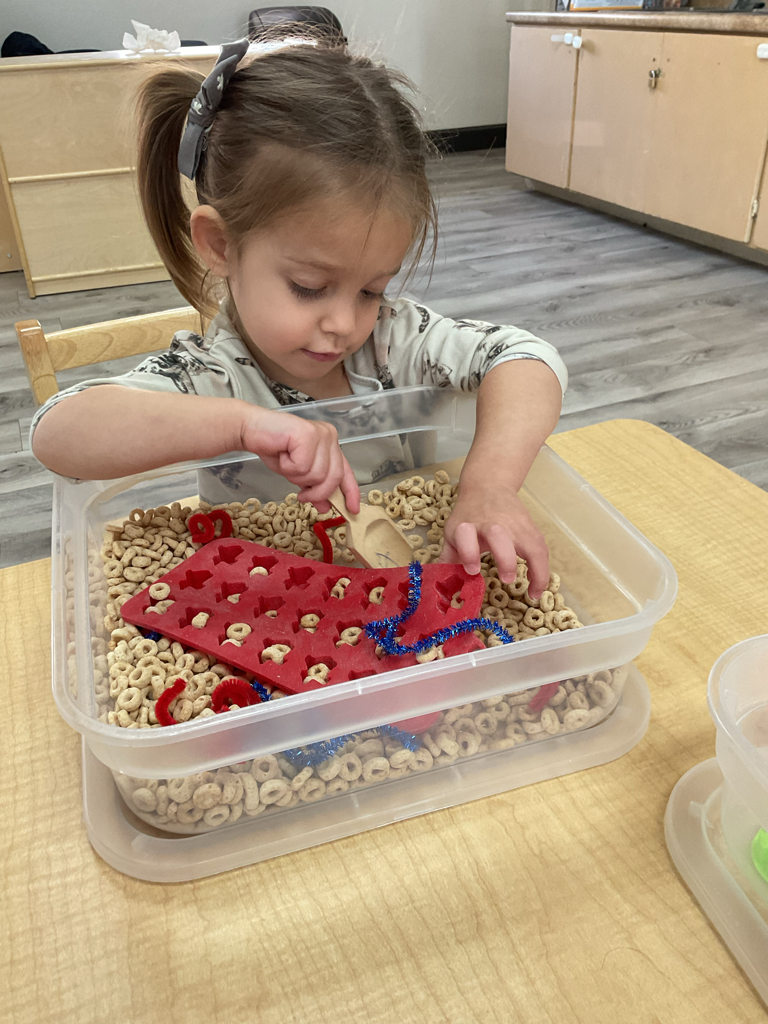
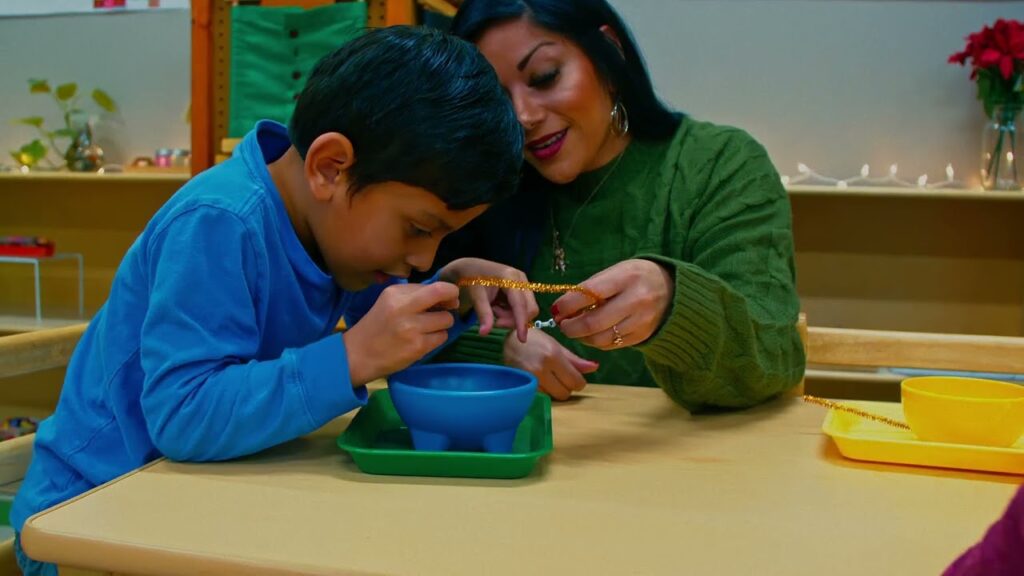
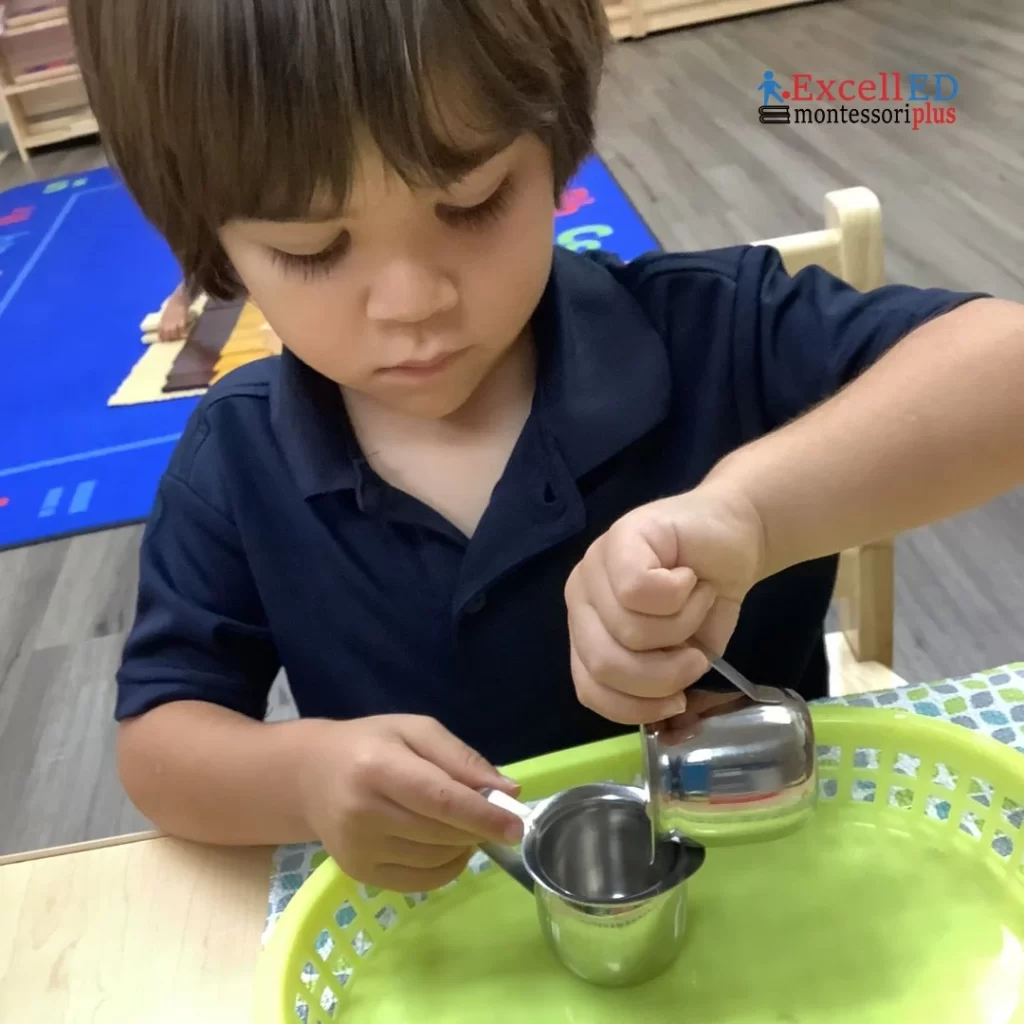
Montessori practical life activities—pouring, spooning, threading, buttoning—develop the fine motor skills that will later support writing. Freedom of movement throughout the classroom supports gross motor development and body awareness.
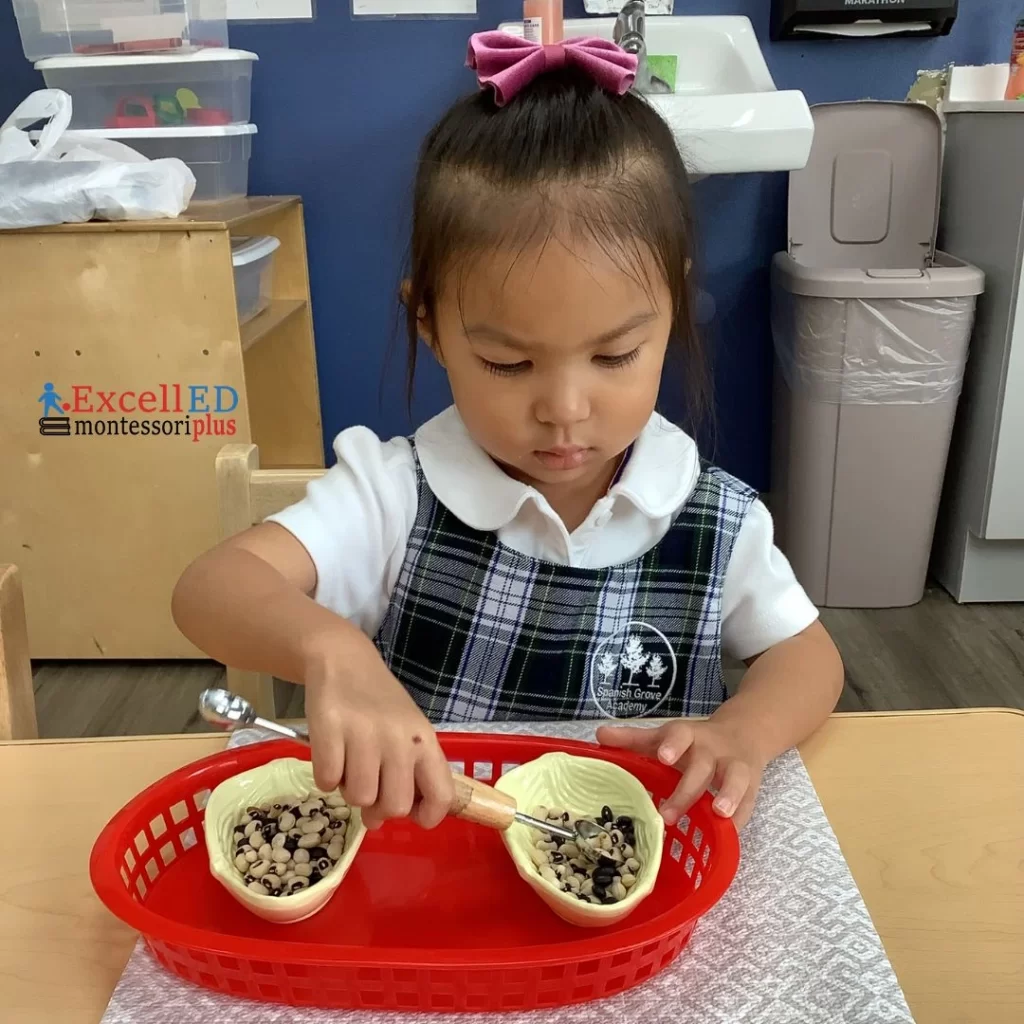
Even toddlers can concentrate deeply when engaged in meaningful work. Montessori respects this by not interrupting a child who is focused. A toddler transferring beans with a spoon might repeat the activity 20 times—building neural pathways for sustained attention.
Toddlers crave order—they want their cup in the right place, their routine followed. Montessori classrooms are meticulously organized: every material has a place, routines are consistent, and the environment is calm rather than chaotic.
Montessori teachers help toddlers name their emotions, develop coping strategies, and learn to express needs appropriately. The peaceful classroom environment helps toddlers develop self-regulation earlier than in more chaotic settings.
Montessori approaches toilet learning as a natural developmental milestone, not a battle. The independence-focused environment—where children already manage many self-care tasks—makes toilet learning feel like a natural next step.
What Research Shows: Studies comparing Montessori-educated children with peers in traditional programs consistently find advantages in executive function, reading, and math—with the strongest effects for children who start during toddler years and continue through kindergarten.
Individual Montessori schools can be accredited through AMI (Association Montessori Internationale) or AMS (American Montessori Society). Texas doesn’t have a specific “Montessori license,” but all preschools must meet Texas Rising Star standards and licensing requirements through DFPS (Department of Family and Protective Services).
Most don’t. Research shows Montessori students adapt within 2-4 weeks and often excel academically. The main adjustment is sitting still for longer group lessons and following a fixed schedule. Teachers report Montessori students are typically more independent and self-directed than peers.
Montessori education has been available in San Antonio for over 40 years, with some of the city’s oldest programs established in the 1980s. The approach has grown significantly in the last decade as more families seek alternatives to traditional daycare.
Yes, though it depends on the specific needs and the program’s capacity. Montessori’s individualized approach can be excellent for children with ADHD, sensory processing differences, or mild learning differences. However, programs may have limited resources for children requiring intensive support. Always discuss your child’s needs during the tour.
Montessori students transition successfully to traditional schools all the time. The academic skills transfer directly, and the independence often gives them an advantage. Some families report their child misses the freedom and hands-on learning, but adjustment periods are typically short.
Authentic Montessori classrooms are calm but not silent. You’ll hear productive conversation, movement, and activity—just not chaos. Children are expected to walk (not run), use quiet voices indoors, and respect others’ work. These aren’t strict rules; they’re practical ground rules for a shared community.
No. While Maria Montessori was Catholic, the educational method itself is secular and based on child development research. Some religious schools (Catholic, Christian, Jewish) use Montessori methods, but most Montessori schools are non-religious.
Don’t overthink this. Visit both types of programs. Watch the children. Talk to the teachers. Trust your gut.
The best preschool for your child is one where they feel safe, engaged, and challenged—whether that’s a traditional classroom with a beloved teacher or a Montessori environment where they can explore at their own pace.
Your child will be fine either way. The early years matter, but they’re not make-or-break. What matters most is that you’re paying attention and making a thoughtful choice. You’re already doing that.
Edquisitive Montessori offers free tours at four San Antonio and Boerne campuses. Observe a classroom during work time, ask questions, and see if the approach fits your family.
Locations: Fair Oaks/Boerne | Stone Oak | NW Military | Medical Center
Download our free checklist: 20 Questions to Ask on Any Preschool Tour. Use it at Edquisitive and everywhere else you visit.
https://amshq.org/https://www.frontiersin.org/articles/10.3389/fpsyg.2017.01783/fullhttps://www.science.org/doi/10.1126/science.1132362https://texasrisingstar.org/https://www.dfps.texas.gov/Child_Care/https://montessori-ami.org/Article last updated: 1/5/2026
Kindergarten registration is right around the corner—Boerne ISD, NISD, NEISD, and other San Antonio Area school districts opens enrollment in March 2026, and if you’re […]
Quick Answer: Is Elf on the Shelf Real? No, the Elf on the Shelf is not real. It’s a holiday tradition where parents move a […]
The Deep Work of Toddlerhood—And the Special Teachers It Demands If you’re a parent of a toddler, you know the feeling: they are non-stop. Their […]
One approach, multiple neighborhoods—each with its own sense of community.