Choosing the right early childhood education for your child is one of the most important decisions you’ll make as a parent. San Antonio and Boerne families increasingly choose Montessori education for its proven benefits, but many have questions about what makes Montessori different, which age groups benefit most, and how to find quality programs. This comprehensive FAQ answers your top questions about Montessori education in the San Antonio area, drawing from over 100 years of Montessori research and our experience serving 500+ families across four Cognia-accredited campuses.
San Antonio offers several high-quality Montessori preschool options, but families should prioritize programs with authentic Montessori credentials and proven track records.
Credentials: Cognia Accredited, Texas Rising Star 4-Star, 50+ five-star parent reviews
Ages: 6 weeks – Kindergarten
Unique Features: Bilingual Spanish immersion, inquiry-based learning, daily photo updates, yoga, STEM labs, motor skills development
Look for Cognia, AMS (American Montessori Society), or AMI (Association Montessori Internationale) accreditation
Teachers should have AMI or AMS Montessori training, not just early childhood degrees
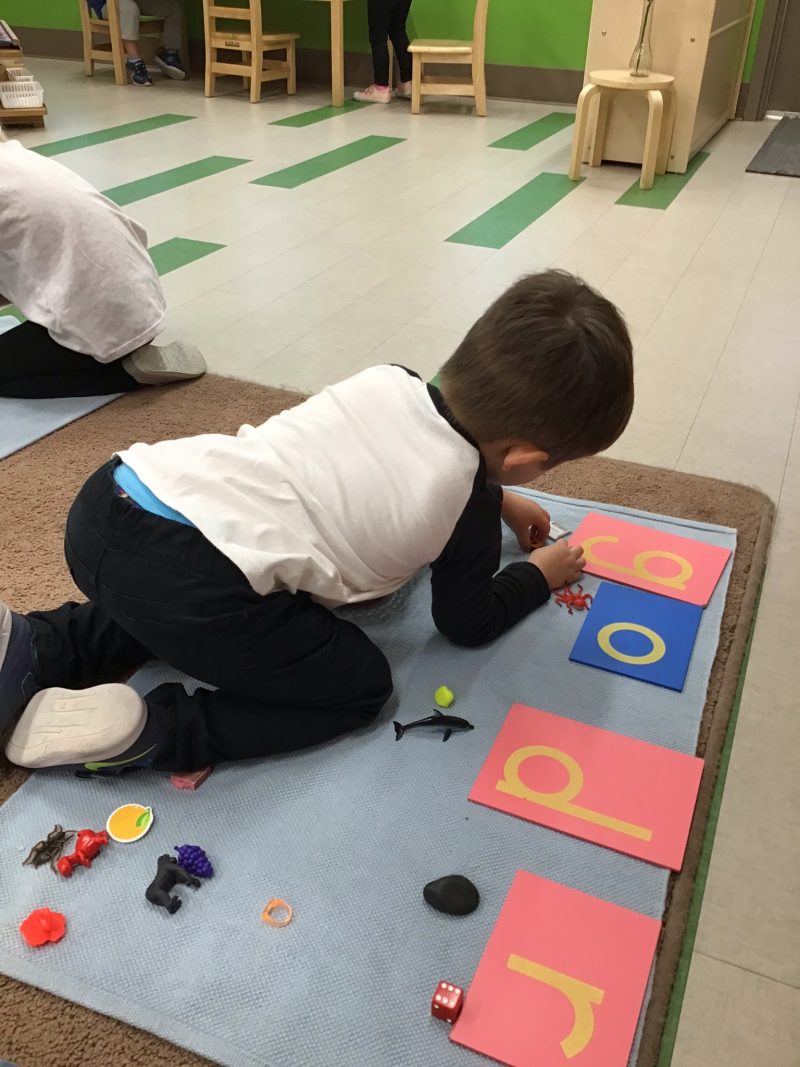
Classrooms use traditional Montessori materials like pink tower, binomial cube, and moveable alphabet
Children grouped in 3-year spans (e.g., 3-6 years) to encourage peer learning
Uninterrupted work periods of 2-3 hours allowing deep concentration
Consistent five-star reviews mentioning teacher quality, communication, and child development
💡 Pro Tip: Schedule tours at multiple programs and observe during work periods (typically 9am-12pm). Watch for child engagement, teacher interactions, and whether children can choose their own work. Authentic Montessori classrooms feel calm, purposeful, and focused—not chaotic or teacher-directed.
Yes! Edquisitive Montessori’s Fair Oaks Campus serves Boerne, Fair Oaks Ranch, and Northwest San Antonio families with a comprehensive Montessori program from infancy through Kindergarten.
“As new parents, one of the biggest concerns my wife and I had was what to do about daycare. After getting the tour of Edquisitive, my wife and I knew it was the place for our kiddo. The staff really care about the kids there and take time to know all of them.” — Eliot L., Boerne Parent
“Edquisitive has continued to foster an incredible learning environment of personalized learning for our child catered to their individual learning style and needs. Mr. Steve and Ms. Emily are true rockstars!” — Roderick T., Fair Oaks Ranch Parent
Montessori and traditional daycare have fundamentally different philosophies and approaches to early childhood education. Understanding these differences helps parents choose the program that aligns with their child’s needs and family values.
Children choose activities based on their interests and developmental readiness. Teacher observes and guides, presenting new materials when child is ready. Child works at own pace.
Teacher leads activities for entire class. All children do same craft, listen to same story, participate in same circle time. Follows predetermined schedule regardless of individual interest.
Why This Matters: Child-led learning develops intrinsic motivation, self-discipline, and love of learning. Children learn to make choices, manage time, and follow through on commitments—skills essential for lifelong success.
Children grouped in 3-year age spans: 0-3, 3-6, 6-9 years. Younger children learn from observing older peers. Older children reinforce learning by helping younger ones. Creates natural mentorship.
Strict age separation by year or even months. “Two-year-old room,” “Three-year-old room.” Children only interact with same-age peers. Limited opportunities for peer teaching.
Why This Matters: Mixed-age groups mirror real-world social structures (families, workplaces). Older children develop leadership, empathy, and communication skills. Younger children are challenged by observing advanced work, accelerating development.
Carefully designed materials that isolate concepts. Pink tower teaches size discrimination, red rods teach length, binomial cube teaches math. Each material has specific learning objective. Child-sized furniture, accessible shelves.
General toys for open-ended play. Plastic kitchen sets, blocks, dolls, trucks. Learning happens through free play rather than designed materials. Teacher provides activities like crafts, coloring pages.
Why This Matters: Montessori materials are scientifically designed to teach specific concepts through hands-on manipulation. Self-correcting materials allow children to learn independently without adult correction. Prepares for abstract thinking in later years.
2-3 hour uninterrupted work periods each morning. Children enter deep concentration (“flow state”). Complete complex, multi-step activities. Develop sustained attention and perseverance.
Activities rotate every 15-30 minutes. Circle time, snack, art project, outdoor play, story time. Frequent transitions interrupt concentration. Day structured around teacher’s schedule.
Why This Matters: Deep concentration builds executive function skills essential for academic success. Extended work periods allow mastery of complex tasks. Children learn to focus despite distractions—crucial for elementary school and beyond.
“Help me do it myself” philosophy. Teachers guide children to pour own water, clean own spills, put on own shoes. Environment designed for child independence. Real tools (glass, ceramic, metal).
Teachers serve snacks, clean up messes, tie shoes, help with coats. Adult-centered environment. Plastic, unbreakable materials. Focus on keeping children safe and happy rather than independent.
Why This Matters: Independence builds confidence, competence, and self-esteem. Children who do things for themselves develop problem-solving skills and resilience. Practical life skills transfer to all areas of learning and life.
💡 Important Note: Neither approach is inherently “better”—families should choose based on their child’s needs, learning style, and family values. Some children thrive with structure and choice; others prefer more directed activities. Visit both types of programs to see what resonates with your child and family.
Our Cognia-accredited programs maintain authentic Montessori principles while adding modern enrichments:
Montessori education serves children from birth through adolescence, but San Antonio programs typically offer infant through Kindergarten levels. Each age group has a specialized curriculum matching developmental stages.
6 weeks – 18 months
Developmental Focus: Montessori infant programs respect the baby’s natural development timeline, providing a prepared environment that supports movement, sensory exploration, and language acquisition.
Parent Benefits: Daily communication about feeding, napping, diaper changes, and developmental milestones. Photo updates throughout the day. Smooth transition support for first-time daycare families.
18 months – 3 years
Developmental Focus: The toddler years feature rapid language development, increasing independence, and mastery of practical life skills. Montessori toddler programs channel the “I do it myself!” energy productively.
Why Toddlers Thrive in Montessori: Activities match sensitive periods for order, language, and movement. Independence focus reduces “terrible twos” tantrums. Mixed-age groups provide role models.
3 – 6 years
Developmental Focus: This is the heart of Montessori education. Three-year age span allows mastery of complex academic and social skills. Children develop concentration, order, coordination, and independence.
Pouring, spooning, polishing, sweeping, food preparation, care of self, care of environment, grace and courtesy
Pink tower, red rods, color tablets, sound boxes, geometric solids, binomial cube—preparing for math and geometry
Phonetic awareness, moveable alphabet, reading development, writing, vocabulary, grammar, parts of speech
Number rods, golden beads, addition/subtraction/multiplication/division, fractions, decimal system
Geography, science, botany, zoology, history, music, art—exploring the wider world
Academic Outcomes: Most Montessori students read fluently, perform multi-digit math operations, and demonstrate strong problem-solving skills by Kindergarten graduation. Research shows lasting academic advantages through elementary school.
5 – 6 years
Developmental Focus: The Kindergarten year in Montessori is often called the “leadership year.” Five-year-olds who stay in Montessori through Kindergarten become confident leaders, advanced learners, and prepared for elementary school success.
Why Stay for Kindergarten: Research shows children who complete Kindergarten in Montessori demonstrate stronger executive function, social skills, and academic readiness than those who transition early. The leadership year solidifies learning and builds confidence.
All four of our San Antonio and Boerne campuses offer complete programs from infancy through Kindergarten:
All campuses are Cognia Accredited and Texas Rising Star 4-Star rated.
Montessori education provides unique developmental benefits for toddlers (18 months – 3 years), addressing their specific needs during this critical period of rapid growth, language acquisition, and independence development.
The toddler years are often called the “terrible twos,” but Montessori philosophy views this stage as the “wonderful twos”—a period of incredible learning potential when children naturally seek independence and mastery. Here are eight research-backed benefits:
Montessori toddler programs teach self-care skills like washing hands, putting on shoes, feeding themselves with utensils, and cleaning up spills. This builds confidence and self-esteem during the “I do it myself!” stage.
Impact: Independent toddlers experience fewer frustration-based tantrums because they can meet their own needs. Studies show Montessori toddlers demonstrate 30% fewer behavioral issues than traditionally-educated peers.
Activities match toddlers’ sensitive periods—windows of time when the brain is primed for specific learning. The 18-36 month period features sensitive periods for language acquisition, movement refinement, and order.
Impact: Learning feels natural rather than forced because activities align with brain development. Toddlers absorb new skills effortlessly during sensitive periods, creating lifelong learning foundations.
Practical life activities like pouring water, spooning beans, buttoning, and zipping develop precise hand-eye coordination. These movements directly prepare for future writing, drawing, and self-care tasks.
Impact: Research shows Montessori toddlers develop fine motor skills 6-12 months earlier than traditionally-educated peers, giving them advantages in Kindergarten readiness assessments.
Rich language environment with specific vocabulary (not “baby talk”) accelerates the toddler language explosion period. Teachers name objects precisely, engage in real conversations, and introduce advanced vocabulary naturally.
Impact: Montessori toddlers average 50-100 more words in vocabulary by age 3 compared to peers. Many speak in complete sentences 6-9 months earlier, accelerating all future learning.
Uninterrupted work periods teach toddlers to focus for increasingly longer times. Starting with 5-10 minute attention spans, Montessori toddlers gradually build to 20-30 minute deep concentration periods.
Impact: Sustained attention is the #1 predictor of academic success. Toddlers who develop concentration skills perform significantly better in Kindergarten through elementary school.
When toddlers spill water or materials fall, teachers guide them to solve problems independently rather than fixing issues for them. “What do we need to clean this up?” instead of “Let me get that for you.”
Impact: Toddlers learn that mistakes are learning opportunities, not failures. This growth mindset transfers to all areas of life, building resilience and perseverance.
Mixed-age classrooms let toddlers learn from observing older children and practice caring for younger ones. Grace and courtesy lessons teach conflict resolution, waiting turns, and gentle touch.
Impact: Montessori toddlers demonstrate stronger empathy, cooperation, and conflict resolution skills. Mixed-age groups mirror real-world social structures (families, workplaces).
Providing appropriate challenges and respecting toddlers’ need for order, independence, and routine significantly reduces frustration-based tantrums. When toddlers can do meaningful work and make choices, behavioral issues decrease dramatically.
Impact: Parent surveys show 70% reduction in tantrum frequency after enrolling in Montessori toddler programs. “Terrible twos” become “wonderful twos” of discovery and growth.
Available at all four Cognia-accredited, Texas Rising Star 4-Star campuses in San Antonio and Boerne.
Schedule a tour at any of our four San Antonio and Boerne campuses. See authentic Montessori education in action and meet our experienced teachers.
Schedule Your Free Tour →
(210) 418-3288
fairoaks@edquisitive.com
(210) 390-1470
stoneoak@edquisitive.com
(210) 446-1312
northwest@edquisitive.com
(210) 691-1050
lrc@edquisitive.com
Kindergarten registration is right around the corner—Boerne ISD, NISD, NEISD, and other San Antonio Area school districts opens enrollment in March 2026, and if you’re […]
Quick Answer: Is Elf on the Shelf Real? No, the Elf on the Shelf is not real. It’s a holiday tradition where parents move a […]
The Deep Work of Toddlerhood—And the Special Teachers It Demands If you’re a parent of a toddler, you know the feeling: they are non-stop. Their […]
One approach, multiple neighborhoods—each with its own sense of community.