
Quick Answer: Is Elf on the Shelf Real?
No, the Elf on the Shelf is not real. It’s a holiday tradition where parents move a toy elf each night to create the appearance of magic. While many families enjoy this tradition, it raises important questions for parents who value critical thinking, honesty, and intrinsic motivation in child development. This guide explores what happened when my 4-year-old asked Siri about the elf, why it matters, and offers 5 Montessori-aligned alternatives that preserve holiday wonder while building essential life skills.
The Question That Changed Our Elf on the Shelf Tradition
“But HOW does the elf move, Mommy?”
Third time she’d asked this morning. I gave her the standard answer: “He’s magical. He moves while you’re sleeping.”
She wasn’t buying it.
“When does he move? Do you hear him?”
“Really late. When everyone’s asleep.”
“But you’re awake sometimes. When you get water. Do YOU see him move?”
I was scrambling. “Well, he only moves when NO ONE is looking…”
She crossed her arms. The universal 4-year-old sign for “I call BS.”
Then I heard her voice from the living room: “Hey Siri, is Elf on the Shelf real?”
My heart stopped.
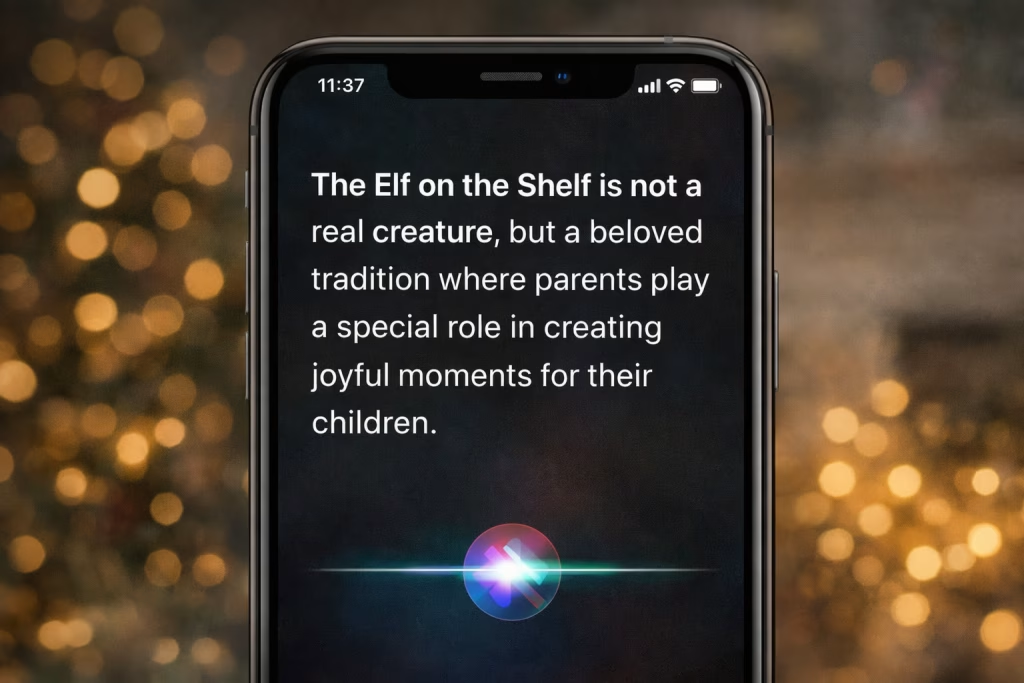
What Siri Said When Asked “Is Elf on the Shelf Real?”
Siri’s response: “The Elf on the Shelf is not a real creature, but a beloved tradition where parents play a special role in creating joyful moments for their children.”
Silence.
Then: “MOMMY! Siri says YOU move the elf! Not magic!”
She walked up to me holding my phone with this look that was equal parts “I KNEW IT” and “why did you lie to me?”
Other Smart Assistant Responses About Elf on the Shelf
If your child asks Alexa if Elf on the Shelf is real, you’ll get a similar diplomatic answer. Google Assistant also confirms that Elf on the Shelf is a family tradition maintained by parents.
The AI assistants have effectively become the truth-tellers for Christmas traditions—which raises important questions about how we handle these conversations with our kids.
Here’s Why I’m Actually Proud (And What This Teaches Us About Critical Thinking)
My 4-year-old just just demonstrated skills that will serve her far beyond the holiday season. She:
- ✅Asked me multiple clarifying questions
- ✅Spotted inconsistencies in my story
- ✅Rejected “because magic” as insufficient evidence
- ✅Independently sought a second source
- ✅Cross-referenced the information
- ✅Called me out on the discrepancy
She fact-checked me. Before breakfast. At age 4.
And honestly? That’s EXACTLY what she should be doing.
Why Critical Thinking Matters More Than Elf on the Shelf Magic
In a world of AI-generated content, deepfakes, and viral misinformation, the most valuable skill isn’t memorizing facts – it’s evaluating them.
My daughter just demonstrated:
- How to spot inconsistencies
- How to seek multiple sources
- How to test claims against reality
- How to think independently
She wasn’t disrespectful. She was thinking critically. There’s a difference.

The Best Part? She Wasn’t Disappointed
She wasn’t sad the Elf on the Shelf wasn’t real. She was EXCITED she’d figured it out.
“That’s a lot of work, Mommy! You do that EVERY night?”
There was admiration in her voice. Understanding how it worked was MORE magical than the fantasy.
The Montessori Perspective: Why Elf on the Shelf Raises Concerns
This moment crystallized something we discuss often at Edquisitive Montessori: the tension between magical thinking and developing a child’s ability to understand reality. While my daughter’s discovery was spontaneous, it highlights core principles that guide Montessori philosophy around truthfulness and child development.
What Is the Montessori Philosophy on Reality and Fantasy?
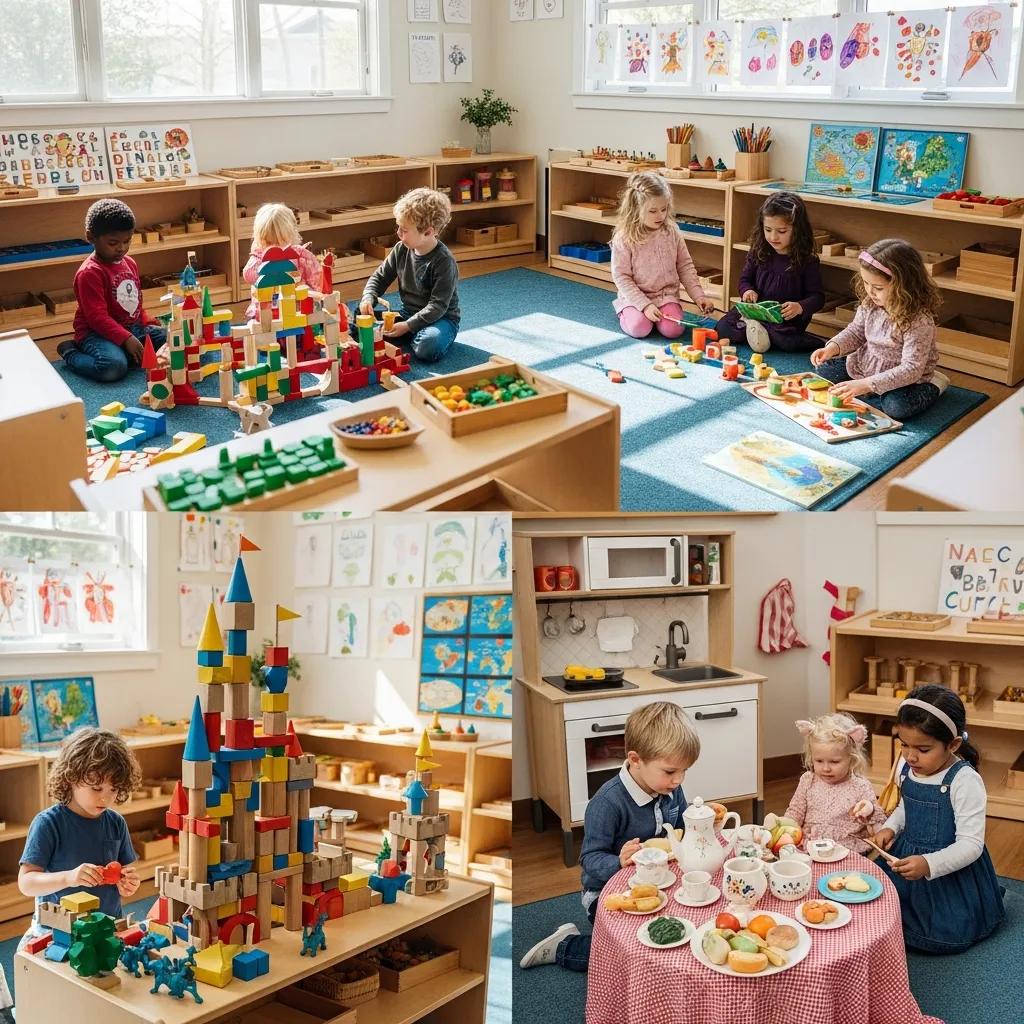
At the heart of Montessori education is profound respect for the child’s developing mind and their innate capacity to absorb and understand the world around them. Montessori teaching encourages presenting the world honestly and concretely, allowing children to build reliable mental models of cause and effect, understand social roles, and grasp moral responsibility based on verifiable facts.
This approach is particularly vital during the sensitive periods of early childhood when children are actively constructing their understanding of reality.
Imagination is highly valued—but as its own distinct territory, clearly separated from factual claims. Keeping make-believe clearly marked as such—whether through storytelling, dramatic play, or artistic expression—helps children develop:
- Crucial language skills
- Logical thinking
- Ethical judgment
- A clear sense of what’s real versus pretend
This distinction protects their burgeoning sense of agency and builds an unbreakable bond of trust between child and adult.
Why Elf on the Shelf Conflicts with Montessori Values
The Elf on the Shelf tradition, while well-intentioned, frames a child’s behavior as something performed primarily for an outside observer and for an external reward. This directly clashes with core Montessori priorities:
1. Intrinsic Motivation vs. External Rewards The narrative of an “elf-as-spy” encourages compliance for a payoff—typically gifts or Santa’s approval. This undermines the internalization of values, shifting a child’s motivation from:
- ❌ “I will be kind to get rewarded”
- ✅ “I care about being kind because it matters”
2. Surveillance vs. Trust The belief that an unseen agent is constantly watching can create undue anxiety and conditional trust. When the elf’s true nature is eventually revealed as staged, it can potentially erode the child’s trust in their parents.
3. Compliance vs. Agency Rather than fostering self-reflection and genuine understanding, surveillance-based traditions promote superficial adherence to rules based on the presence or absence of an observer.
What my daughter learned instead:
Forget the Elf. Here’s what my daughter actually learned:
- Her questions are valid (even when they challenge what adults say)
- She can find answers independently (she doesn’t have to just accept what I tell her)
- Verifying information isn’t rude—it’s smart
- She can trust her own logic (if it doesn’t make sense, it might not be true)
These lessons will serve her far longer than believing in a magical elf ever would.
5 Montessori-Aligned Alternatives to Elf on the Shelf
The good news? You can absolutely preserve holiday magic, joy, and wonder while honoring truthfulness and fostering intrinsic motivation. Here are practical alternatives that San Antonio Montessori families love:
Alternative #1: The Kindness Elf (Service-Based Tradition)
How It Works: Instead of an elf that watches and reports, introduce a “Kindness Elf” who suggests (not demands) acts of service. The child chooses which act to perform.
Example prompts the elf might leave:
- “Could you help set the table today?”
- “Would you like to make a card for our mail carrier?”
- “Can you help your sibling with their puzzle?”
- “Let’s donate a toy to a child who needs one”
Why It Works:
- ✅ High child agency – They choose their actions
- ✅ Builds empathy – Focus on helping others
- ✅ Intrinsic motivation – Satisfaction comes from the act itself
- ✅ Practical life skills – Real contributions to family life
Alternative #2: The Giving Manger (Charity Ritual)

How It Works: Throughout Advent, children select items (canned goods, gently used toys, warm clothing) to place in a manger. On Christmas Eve, these items are donated to a local charity.
Implementation:
- Start with an empty manger/basket on December 1st
- Each day, child picks one item to add
- Discuss why each item might help someone
- Deliver together to local organization
Why It Works:
- ✅ Teaches charity and generosity
- ✅ Develops decision-making skills
- ✅ Creates concrete understanding of helping others
- ✅ Involves sequencing and daily routine
- ✅ Tangible impact the child can see
San Antonio Resources:
- San Antonio Food Bank
- Haven for Hope
- Local church donation drives
Alternative #3: Nature-Based Advent Calendar
How It Works: Root holiday wonder in the real world through daily nature observations and gratitude practices.
Daily Activities:
- Morning walk to observe seasonal changes
- Collect natural items (pinecones, leaves, berries)
- Create a nature table display
- Keep a gratitude journal with drawings
- Document weather patterns
- Observe birds at feeders
Why It Works:
- ✅ Grounds wonder in observable reality
- ✅ Develops scientific observation skills
- ✅ Connects children to natural rhythms
- ✅ Sensory-rich experiences
- ✅ No fantasy/reality confusion
Perfect for San Antonio: Take advantage of our mild winter weather! Visit:
- Friedrich Wilderness Park
- Government Canyon State Natural Area
- Brackenridge Park
- Local greenways
Alternative #4: Family Contribution Jar
How It Works: Each family member writes down and shares daily contributions to the household or community.
Examples of contributions:
- “I helped make dinner”
- “I read to my little brother”
- “I cleaned up without being asked”
- “I was patient when I felt frustrated”
Why It Works:
- ✅ Fosters collective responsibility
- ✅ Highlights intrinsic value of helping
- ✅ Builds mutual appreciation
- ✅ Everyone participates (including adults!)
- ✅ Develops gratitude and recognition
Alternative #5: Holiday Question Investigation
How It Works: Turn holiday curiosity into inquiry-based learning projects.
Example questions to explore:
- “How do reindeer stay warm in winter?”
- “What holidays do other families celebrate?”
- “How do evergreen trees survive winter?”
- “Where do candy canes come from?”
Why It Works:
- ✅ Satisfies natural curiosity
- ✅ Builds research skills
- ✅ Reality-based wonder
- ✅ Family learning together
- ✅ Respects the child’s intelligence
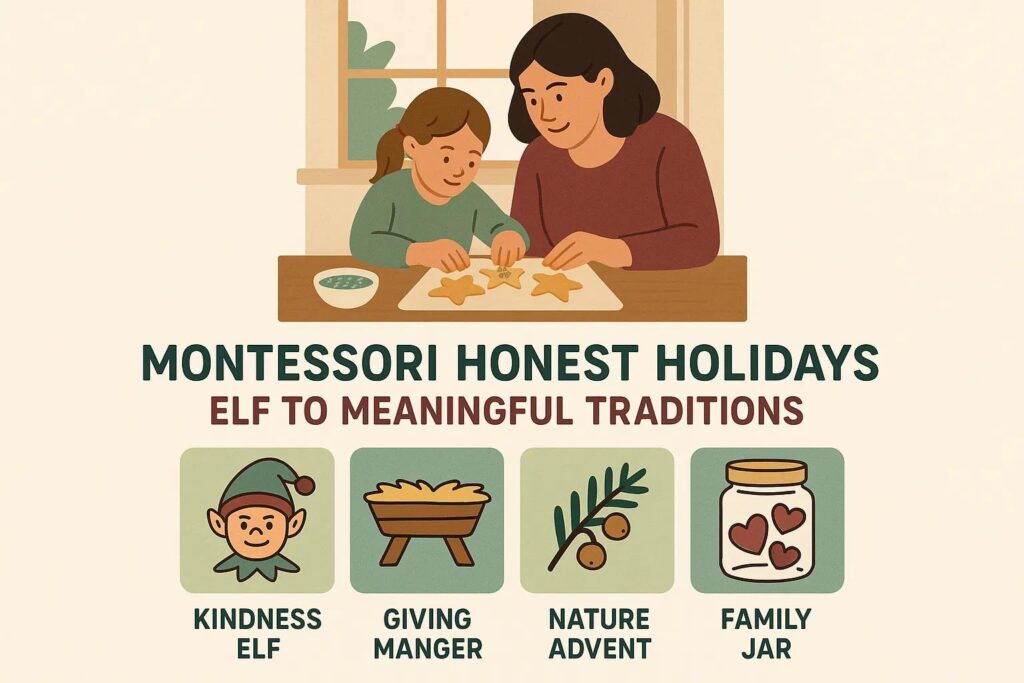
Comparison: Traditional vs. Montessori-Aligned Holiday Traditions
| Tradition | Child Agency | Motivation Type | Aligns with Montessori |
|---|---|---|---|
| Traditional Elf on Shelf | Low – child is watched | External (rewards/punishment) | ❌ No |
| Kindness Elf | High – child chooses actions | Intrinsic (helping feels good) | ✅ Yes |
| Giving Manger | High – child selects donations | Intrinsic (charity, empathy) | ✅ Yes |
| Nature Advent | Moderate – child contributes | Intrinsic (discovery, wonder) | ✅ Yes |
| Contribution Jar | High – identifies own efforts | Intrinsic (recognition, pride) | ✅ Yes |
| Question Investigation | High – child-led inquiry | Intrinsic (curiosity satisfied) | ✅ Yes |
How to Talk to Kids About Elf on the Shelf (Age-Appropriate Guidance)
For Toddlers (18 months – 3 years)
What to say: “That’s a pretend story we enjoy, like the story about the bear in the book.”
Keep it simple:
- Focus on sensory experiences
- Don’t elaborate on fantasy elements
- Redirect to real holiday activities (baking, decorating)
For Preschoolers (3-5 years)
What to say: “We play along with the idea of elves because it’s a fun story. What really matters is being kind and thinking of others.”
Key concepts to introduce:
- The difference between pretend and real
- The “spirit” of giving (without supernatural elements)
- Family traditions vary
At Edquisitive Montessori: We help children understand that stories and imagination are wonderful, but they’re different from facts. This clarity helps them:
- Trust their own observations
- Develop critical thinking
- Feel secure in adult honesty
For School-Age Children (5+ years)
What to say: “Some families tell that story, others don’t. What feels right for our family? How can we celebrate the spirit of giving in a way that’s true to who we are?”
Engage in deeper conversations:
- Cultural traditions and their origins
- Personal values vs. popular culture
- Media literacy and advertising
- How traditions evolve
What Happened After Siri Told the Truth
“So what do we do with him now?” I asked my daughter.
“We can still do it! But now I can help you think of places to put him!”
She turned it into a collaborative activity. Now she:
- Suggests creative spots for the elf
- Helps “trick” her little brother who still believes
- Understands it’s a game we’re playing together
- Is MORE engaged now that she knows how it works
Being trusted with the truth is more empowering than believing in magic.
And that’s exactly what we see every day at our San Antonio Montessori campuses—children who are trusted with truth, given real responsibilities, and respected as capable thinkers become more confident, not less joyful.
How to Navigate Social Pressure About Holiday Traditions
One of the biggest challenges San Antonio parents face isn’t deciding on their own family’s approach—it’s explaining it to relatives, friends, and other parents who might judge or pressure them.
Prepare Brief, Respectful Explanations
When relatives ask, “Why aren’t you doing Elf on the Shelf?”
Try these scripts:
- “We’ve chosen to focus on acts of service this year. Would you like to help us make cards for our neighbors?”
- “We’re doing a different tradition that emphasizes kindness over surveillance. The kids are really enjoying it!”
- “We’re trying something new this year that better matches our values. We’re excited about it!”
Help Children Understand Different Traditions
Age-appropriate conversations:
- “Different families celebrate in different ways, and all ways are valid.”
- “Some of your friends might do Elf on the Shelf, and that’s okay for their family.”
- “We can respect other families’ choices while making different choices for ourselves.”
Set Gentle Boundaries
Scripts for extended family:
- “I appreciate your enthusiasm! For our family, we’ve chosen [alternative tradition]. I’d love for you to participate in that with us.”
- “We’ve made this decision thoughtfully. I’m happy to share more about why if you’re interested, but we’re committed to this approach.”
- “The kids are really thriving with our approach. Thank you for supporting our parenting choices.”
Model Calm Conviction
Children learn how to handle social pressure by watching us. When we:
- State our choices clearly without defensiveness
- Respect others’ different choices
- Stand firm in our values
We teach them to do the same.
How San Antonio Preschools Teach Critical Thinking Through Inquiry-Based Learning
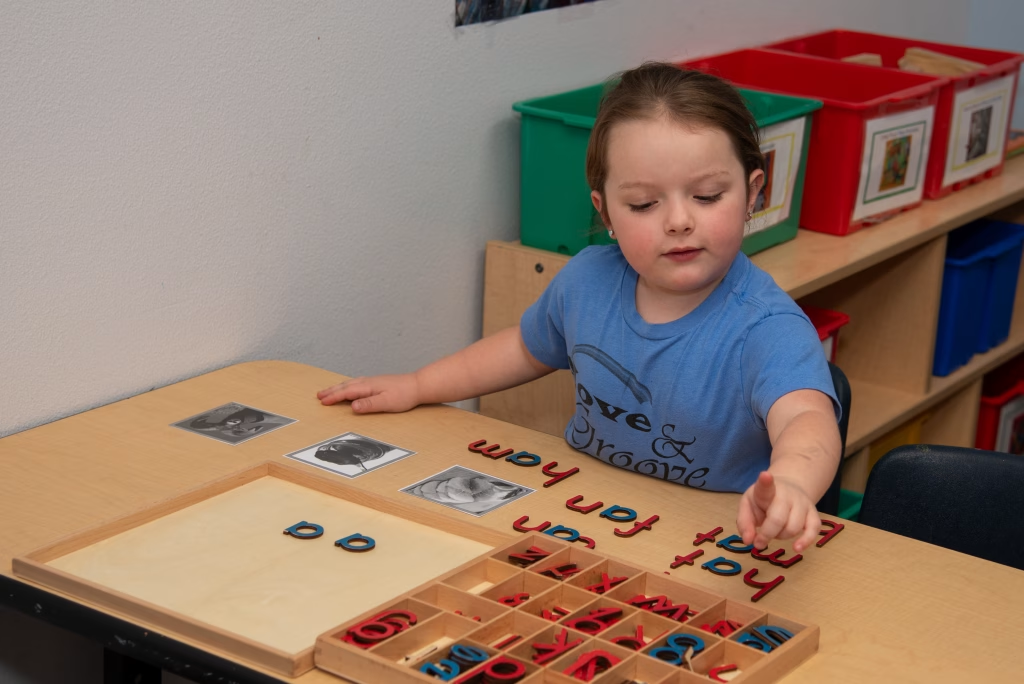
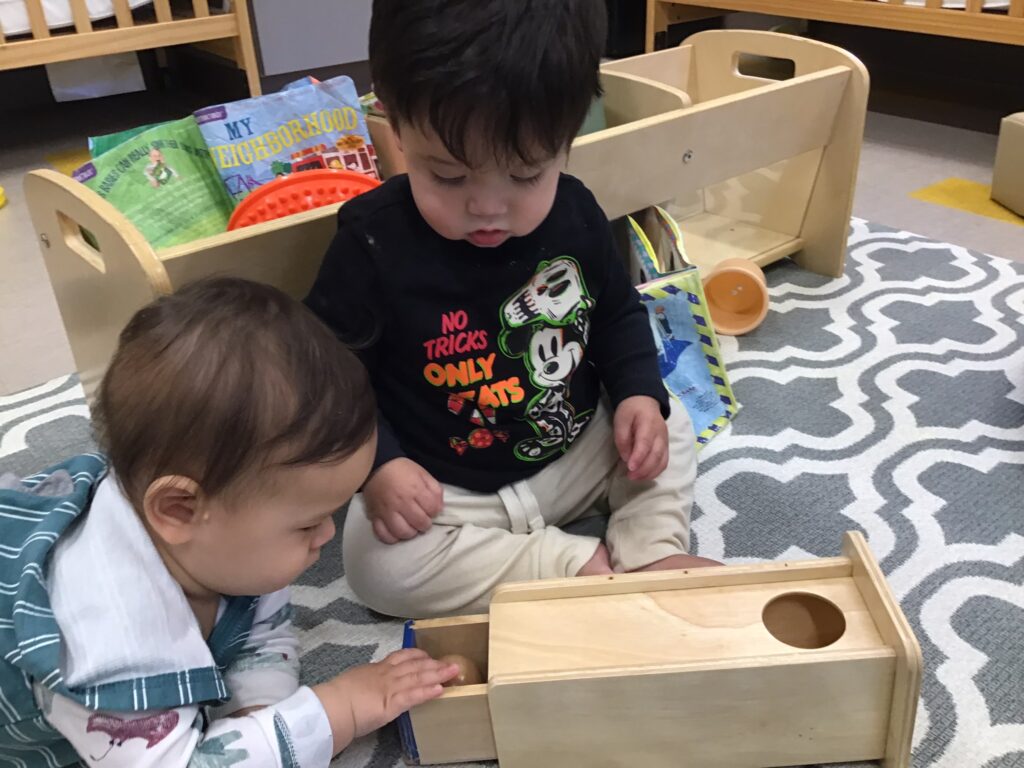
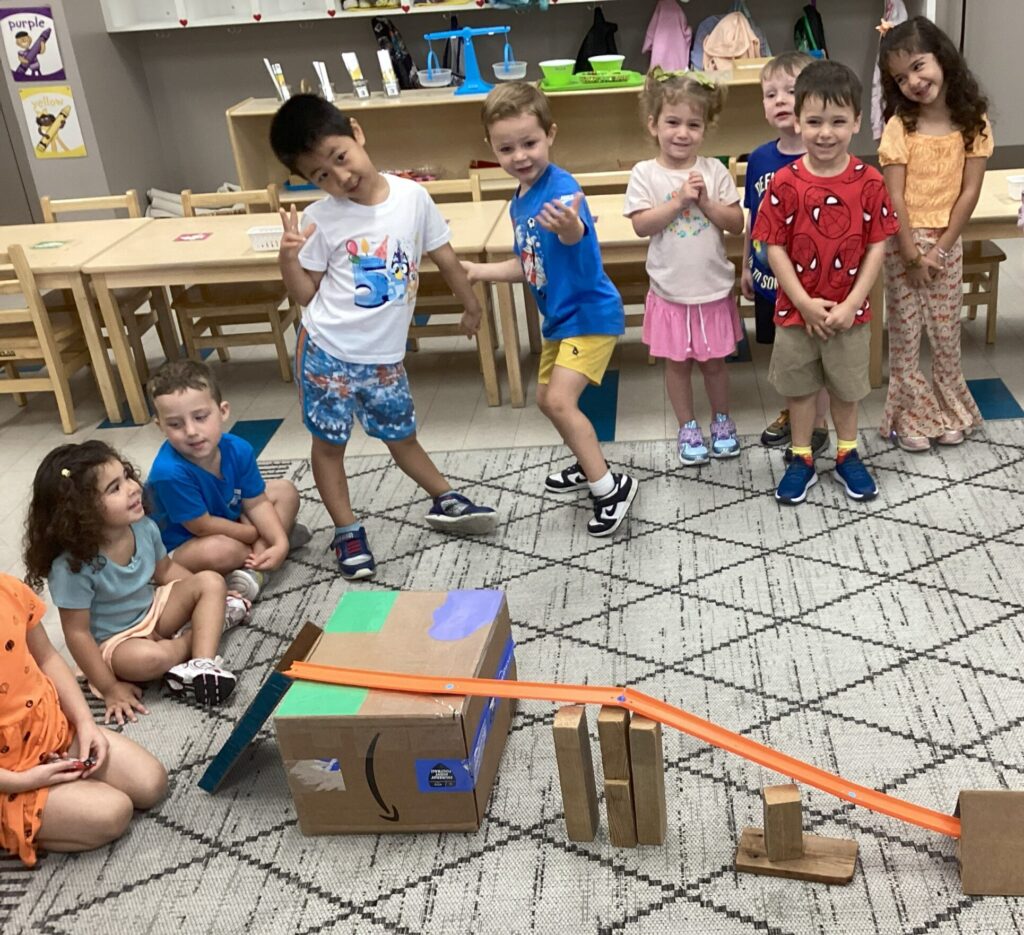
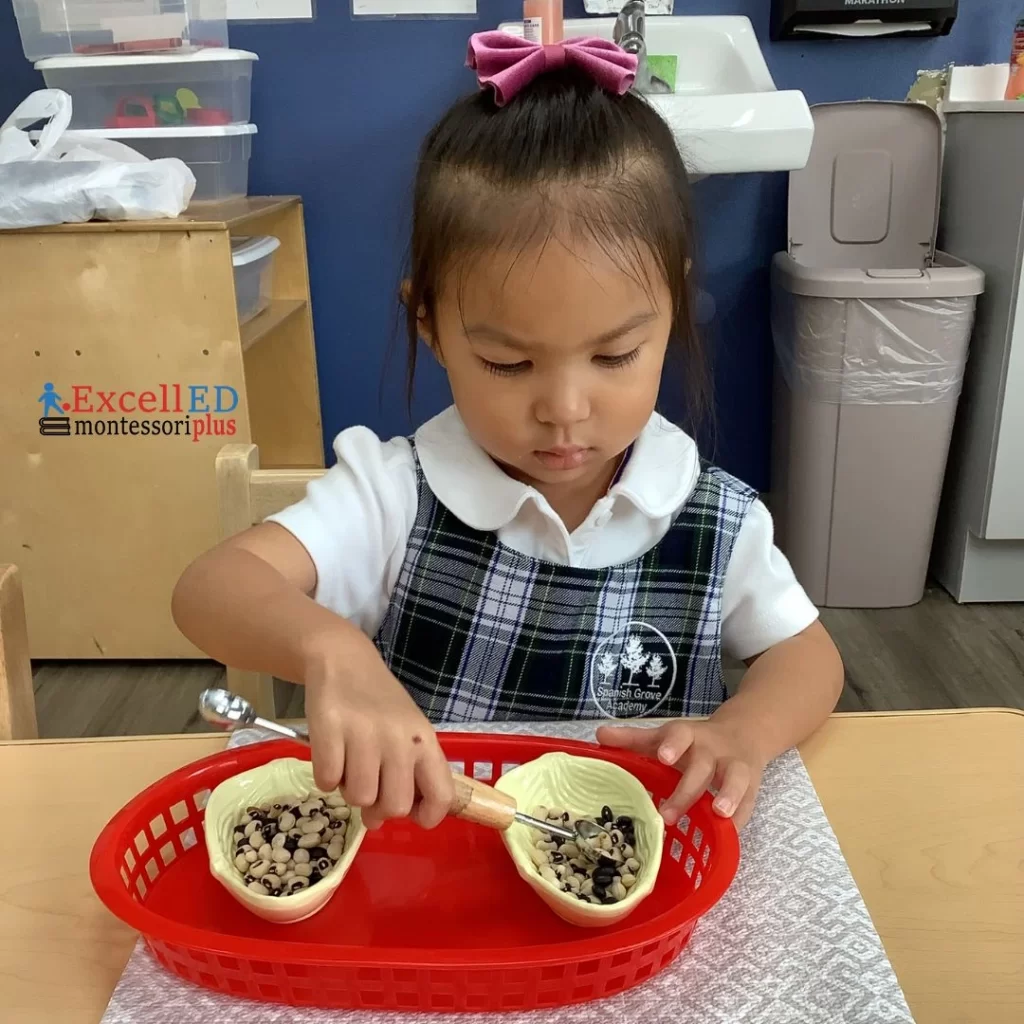
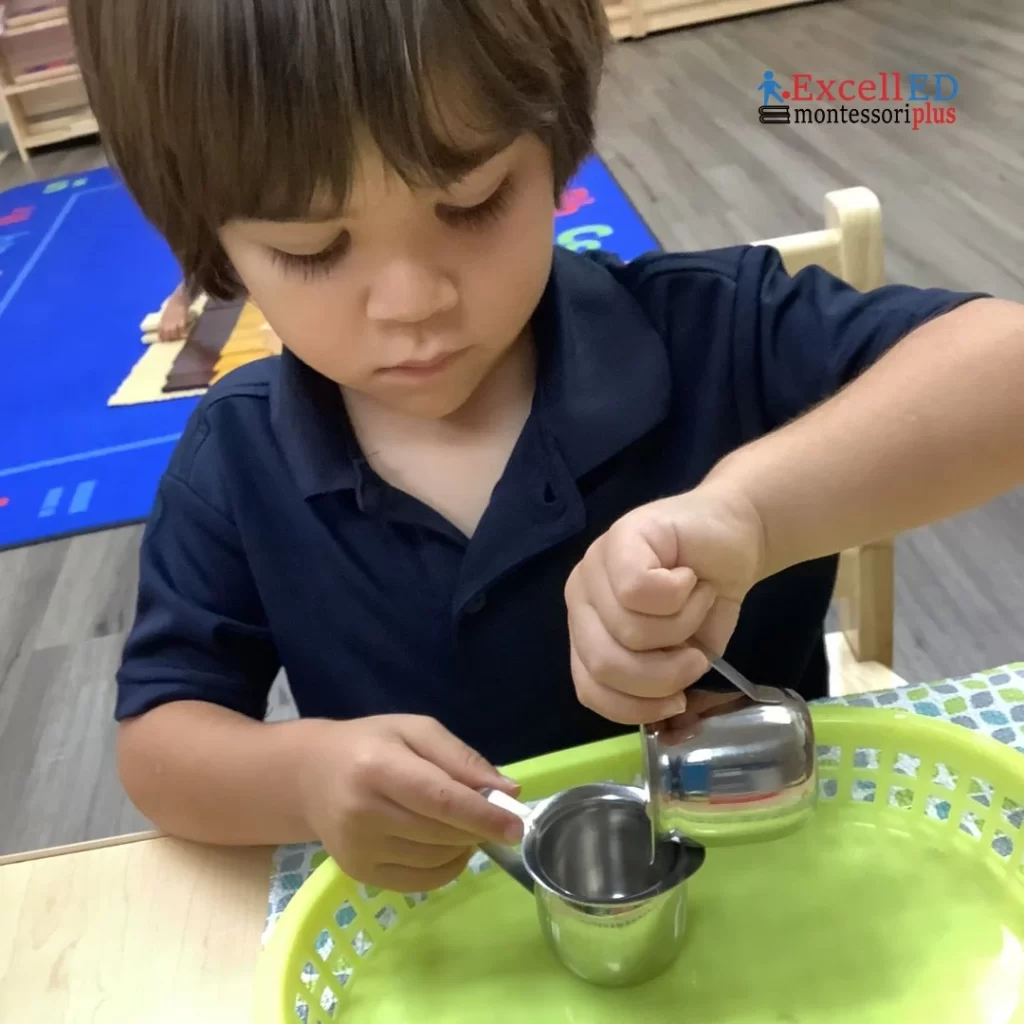
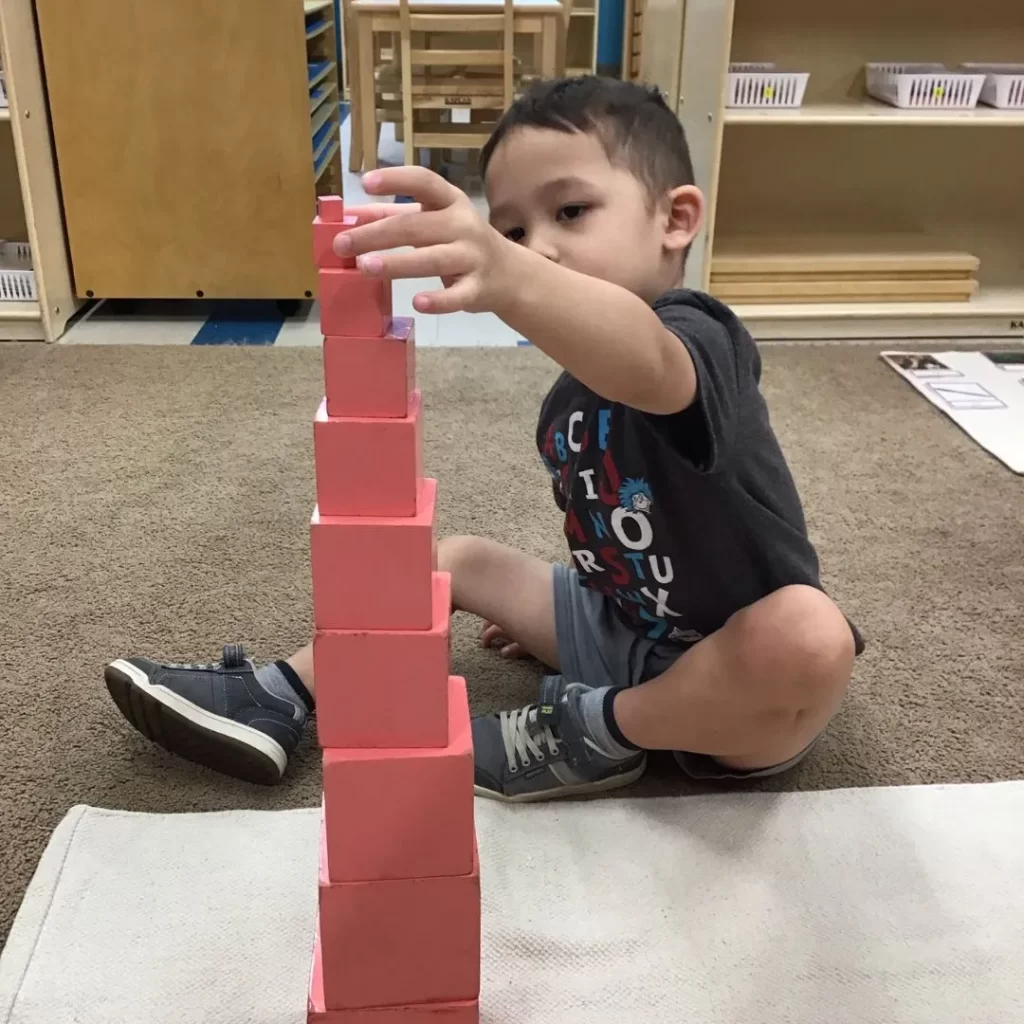
At Edquisitive Montessori in San Antonio, we see moments like my Siri story every day. Children don’t just accept what they’re told—they explore, question, test, and discover.
Real Examples from Our Classrooms:
When a child asks “Why do some things float?”
- ❌ We don’t just tell them about density
- ✅ We give them a water table, objects, and freedom to experiment
- ✅ They discover patterns through testing
- ✅ They develop their own theories
- ✅ They learn that questioning leads to understanding
When something doesn’t make sense:
- ✅ We encourage investigation
- ✅ We ask “How could we find out?”
- ✅ We celebrate the questions, not just answers
- ✅ We model that adults don’t know everything either
The Future Needs Critical Thinkers
The future doesn’t need compliant kids who memorize answers. It needs critical thinkers who:
- Ask good questions
- Spot inconsistencies
- Verify information
- Think independently
- Trust their observations
These are the exact skills my daughter demonstrated when she asked Siri about the elf. These are the skills we cultivate every day at Edquisitive Montessori.
Finding Support for Honest Holiday Parenting in San Antonio
You’re not alone in wanting to approach holidays thoughtfully. Many San Antonio families are seeking ways to preserve wonder while honoring honesty.
Local Montessori Community Support
Edquisitive Montessori Resources:
- Parent education workshops on developmental stages
- Guidance on age-appropriate honesty
- Community of like-minded families
- Activity guides for Montessori-aligned traditions
Our Four San Antonio-Area Locations:
- Fair Oaks / Boerne Campus
- Stone Oak / Spanish Grove Academy
- Northwest Military Campus
- Medical Center / Little Red Caboose
National Montessori Organizations
For deeper learning:
- American Montessori Society (AMS)
- Association Montessori Internationale (AMI)
- Montessori parenting blogs and podcasts
- Research on intrinsic motivation
Why Community Matters
Connecting with other families who share your values:
- Provides moral support when facing judgment
- Offers creative alternatives you might not have considered
- Gives children peers with similar traditions
- Creates a sense of belonging
- Validates your thoughtful approach
Key Takeaways: Rethinking Elf on the Shelf
✅ The Elf on the Shelf is not real—it’s a tradition where parents move a toy elf to create holiday magic
✅ Critical thinking matters more than compliance—children who question and verify information are developing essential skills for the future
✅ Montessori philosophy values honesty over fantasy—clear boundaries between pretend and real help children build trust and understanding
✅ Intrinsic motivation beats external rewards—children who help because it feels good (not for gifts) develop genuine empathy
✅ Five practical alternatives exist—Kindness Elf, Giving Manger, Nature Advent, Contribution Jar, and Question Investigation all preserve wonder while building character
✅ You can navigate social pressure—with prepared scripts, clear boundaries, and connection to supportive community
✅ Truth is more empowering than fantasy—children trusted with honesty become more confident, not less joyful
Frequently Asked Questions About Elf on the Shelf and Critical Thinking
Siri responds: “The Elf on the Shelf is not a real creature, but a beloved tradition where parents play a special role in creating joyful moments for their children.” Alexa and Google Assistant provide similar diplomatic answers that confirm parents move the elf. These responses often lead to follow-up questions from curious preschoolers and present an opportunity to celebrate their critical thinking.
At Edquisitive Montessori, we encourage honesty while respecting each family’s traditions. When children discover the truth through questioning (like asking Siri or spotting inconsistencies), it’s an opportunity to celebrate their critical thinking skills rather than preserve a myth they’ve already figured out. The key is to frame truth-telling in a way that maintains wonder: “You’re right—I do move the elf! Isn’t it fun to create this tradition together?”
Inquiry-based learning programs like those at Edquisitive Montessori encourage children to ask questions, test hypotheses, and discover answers independently. This approach prepares kids for a future where questioning information is more valuable than accepting it.
Many people believe Elf on the Shelf is simply harmless fun, but it can also promote surveillance-based compliance rather than intrinsic motivation. The tradition frames good behavior as something performed for external rewards (gifts) rather than internal values (kindness matters). This misconception overlooks the potential impact on developing trust, agency, and authentic moral reasoning. Montessori educators particularly note how monitoring-based traditions can undermine the development of self-directed conscience.
Absolutely! Many families find the tradition becomes MORE engaging when children know how it works. They can:
Collaborate on creative placement ideas
Help create scenarios for younger siblings
Understand the effort parents put into traditions
Participate in the creativity rather than passively receiving it
This shift transforms the tradition from surveillance to collaboration, which aligns better with Montessori principles of partnership and shared joy.
Balance comes through thoughtful communication and intentional activities. Emphasize:
Storytelling and imaginative play (clearly framed as pretend)
The joy of traditions (without requiring belief in fantasy)
Real-world wonder (nature, science, human connection)
Hands-on experiences (baking, creating, giving)
Discuss the meaning behind traditions—why we give, why we gather, what we value—so children appreciate the spirit without needing supernatural explanations. This approach nurtures wonder while maintaining trust and intellectual integrity.
Ready to See Critical Thinking in Action?
Visit any of our four San Antonio and Boerne area campuses and watch children learn by questioning, exploring, and discovering—not by memorizing and complyingVisit any of our four campuses and watch children learn by questioning, exploring, and discovering—not by memorizing and complying.
What you’ll see on a tour:
Children engaged in self-directed work
Teachers facilitating investigation (not lecturing)
Practical life activities that build real skills
A community that values honesty and respect
The joy that comes from genuine understanding.
Because the future needs children who ask “How do you know?” not “What’s the answer?”
Related Articles:
- How Preschoolers Develop Critical Thinking Skills (Ages 3-5)
- Montessori vs. Traditional Preschool: Which Builds Better Thinkers?
- Talking to Kids About AI and Technology: An Age-by-Age Guide
- San Antonio Preschool Guide: Choosing the Right Program for Your Child
- Why the “Terrible Twos” Are Really Tiny Scientists at Work