Key Takeaways
- Those 1,000 daily questions? That’s not annoying — that’s your child becoming brilliant
- Inquiry-based learning treats children as detectives exploring the world, not empty vessels to fill
- 90% of brain development happens before age 5 — these years are prime time, not warm-up
- The real skills: Problem-solving, confidence, curiosity, critical thinking, independence
- You can support this at home with one simple shift: ask questions instead of giving answers
My Kid Asks 1,000 Questions a Day. Is That Normal?
If you’re a parent, you’ve probably asked yourself this at least once. “Why is the sky blue?” “How do bees make honey?” “What if dinosaurs could fly?” “Why do we have to eat broccoli?”
The questions never stop. And honestly? It can be exhausting.
But here’s what I want you to know: Those questions aren’t annoying. They’re your child becoming brilliant.
That constant curiosity? That’s learning. Real, actual learning happening in real time.
And at Edquisitive Montessori, we don’t just tolerate those questions — we celebrate them. We build an entire approach around them. Because we know something that might surprise you: inquiry-based learning isn’t the future of education. It’s the present. And it’s transforming how children think.
What Even IS Inquiry-Based Learning?
Let me be clear about what we’re NOT talking about.
Inquiry-based learning is not worksheets. It’s not a teacher standing in front of a classroom lecturing. It’s not kids following step-by-step instructions to get the “right answer.”
Inquiry-based learning is this: Your child is a detective. The world is their mystery. And learning is the adventure of uncovering clues.
It’s child-led. It’s exploration-based. It’s driven by genuine curiosity — their curiosity.
Here’s a Concrete Example
In a traditional classroom, a teacher might say, “This is a butterfly. It has wings, antennae, and legs.” Lesson delivered. Information transferred.
In an inquiry-based classroom, a teacher might place a butterfly in front of a child and ask, “What do you notice about this creature?” The child observes. They ask questions. They wonder. They discover. They think.
Which child learns more? The one who heard facts, or the one who discovered them?
The difference is profound: One approach treats learning as information delivery. The other treats learning as exploration. One creates answer-followers. The other creates independent thinkers.
And in a world that changes faster than we can keep up with, independent thinkers are what we need.
How Your Child’s Brain Actually Works
Here’s something neuroscience has proven: Your child’s brain is literally shaped by what they practice.
When your child asks a question, something amazing happens in their brain. A neural pathway is being strengthened. They’re not just being curious — they’re building the infrastructure for thinking.
90%
of your child’s brain is developed by age five. The wiring for memory, language, emotional regulation, and problem-solving? Most of it’s already built by the time they start kindergarten.
These years aren’t warm-up. They’re not practice rounds. They’re prime time.
Let me break down what happens when your child explores:
When they ask “Why?” → They’re gathering data. They’re learning to ask questions. Questions are the foundation of all discovery.
When they try something and it doesn’t work → They’re learning from feedback. They’re adjusting. They’re practicing resilience. This is exactly how AI learns, by the way — through trial and error, through feedback loops. Your child’s brain is doing the same thing.
When they sort and classify → They’re practicing pattern recognition. Blocks grouped by size. Colors sorted by shade. This is the exact thinking skill that powers machine learning — and your child is building it naturally.
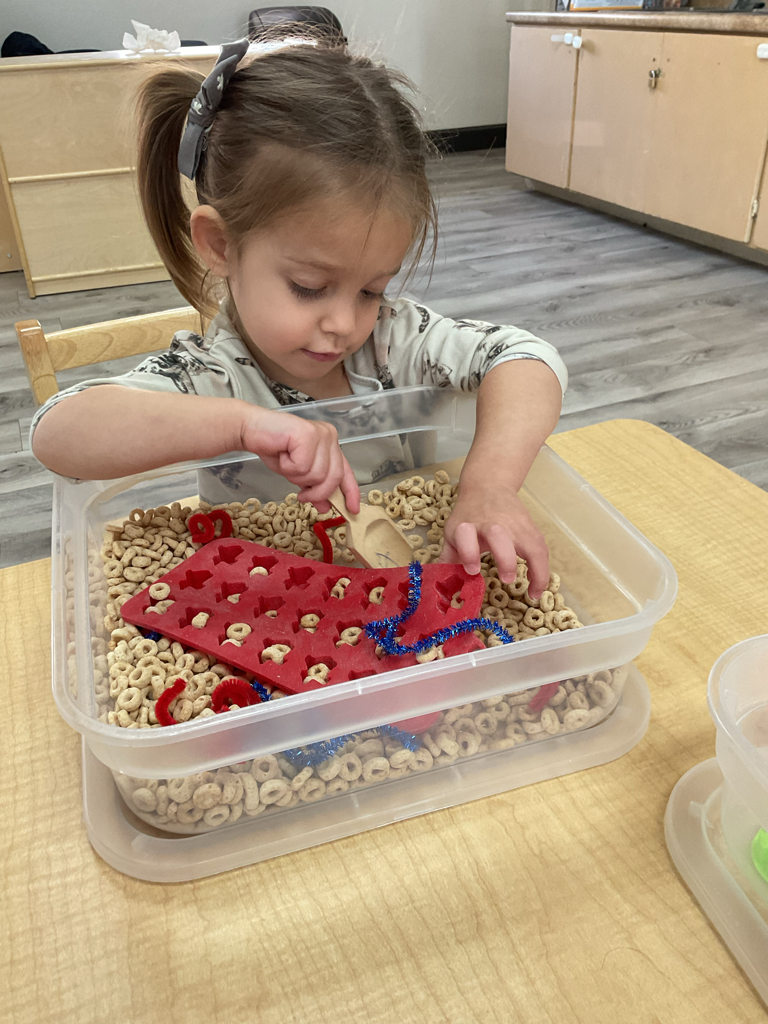
When they repeat a task over and over → They’re building deep focus and mastery. They pour water into a cup. Again. And again. Each time, their coordination improves. Their confidence grows. Their brain is strengthening neural pathways until the task becomes automatic.
This isn’t random play. This is learning at the deepest level.
How Edquisitive Teaches Through Inquiry
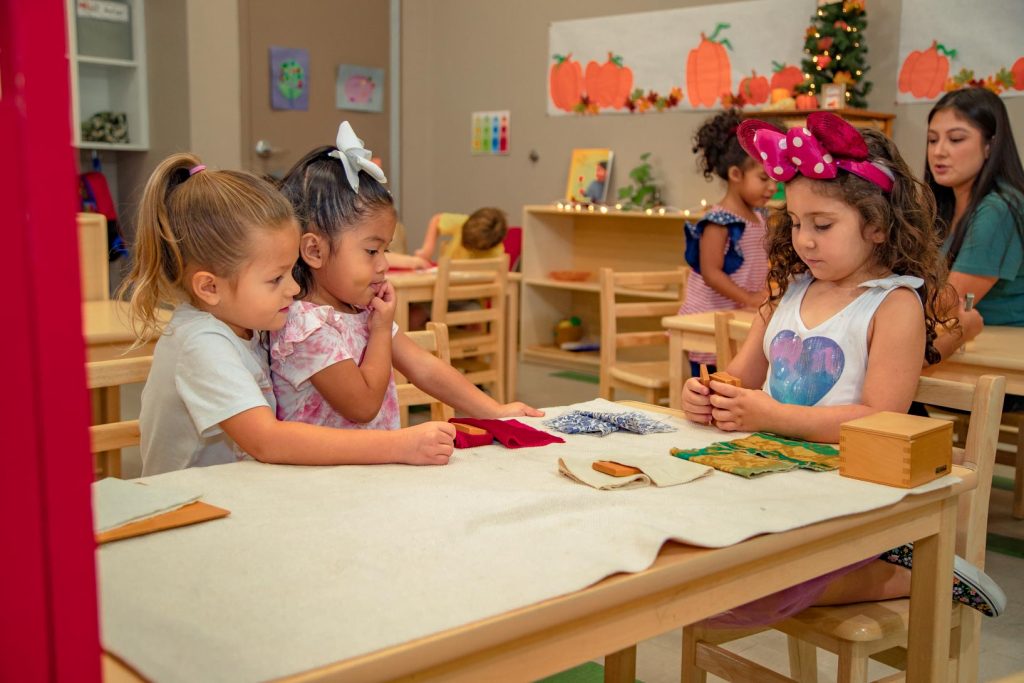
When you walk into an Edquisitive Montessori classroom, you’ll notice something immediately: It doesn’t feel chaotic. It feels calm. Purposeful. Quiet in a way that’s peaceful, not eerie.
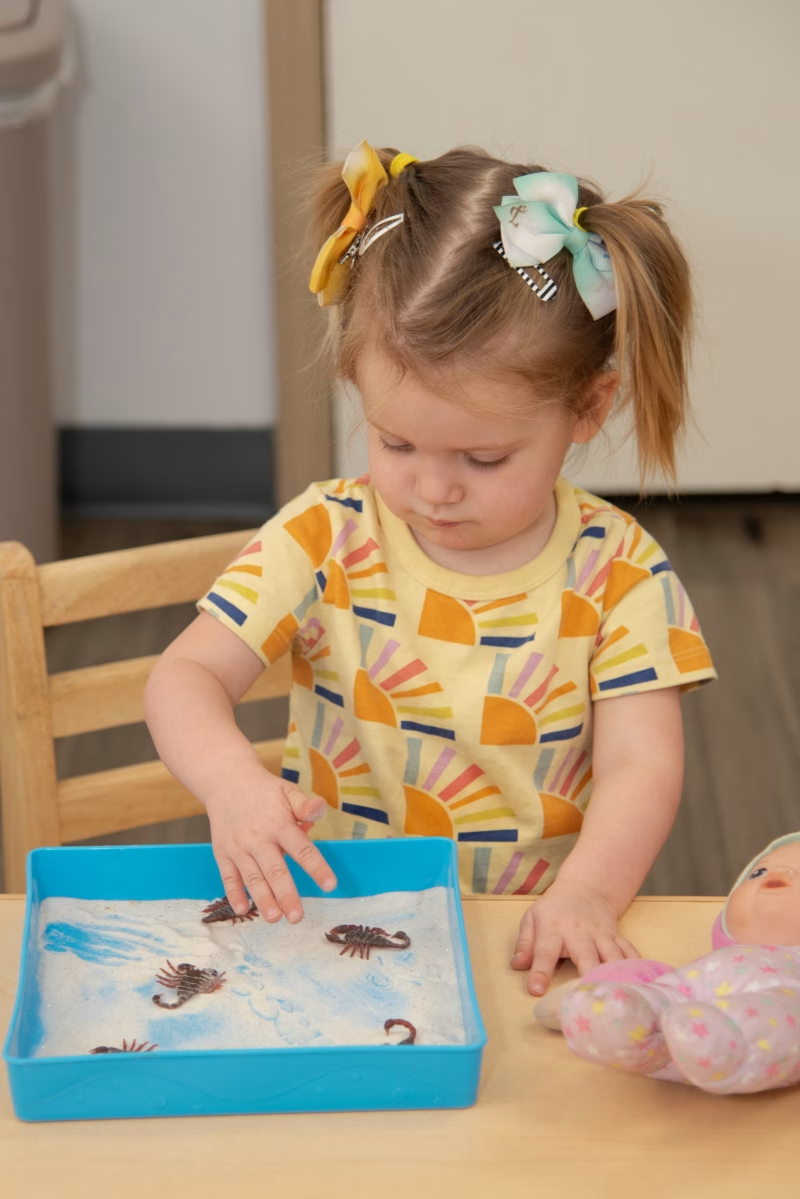
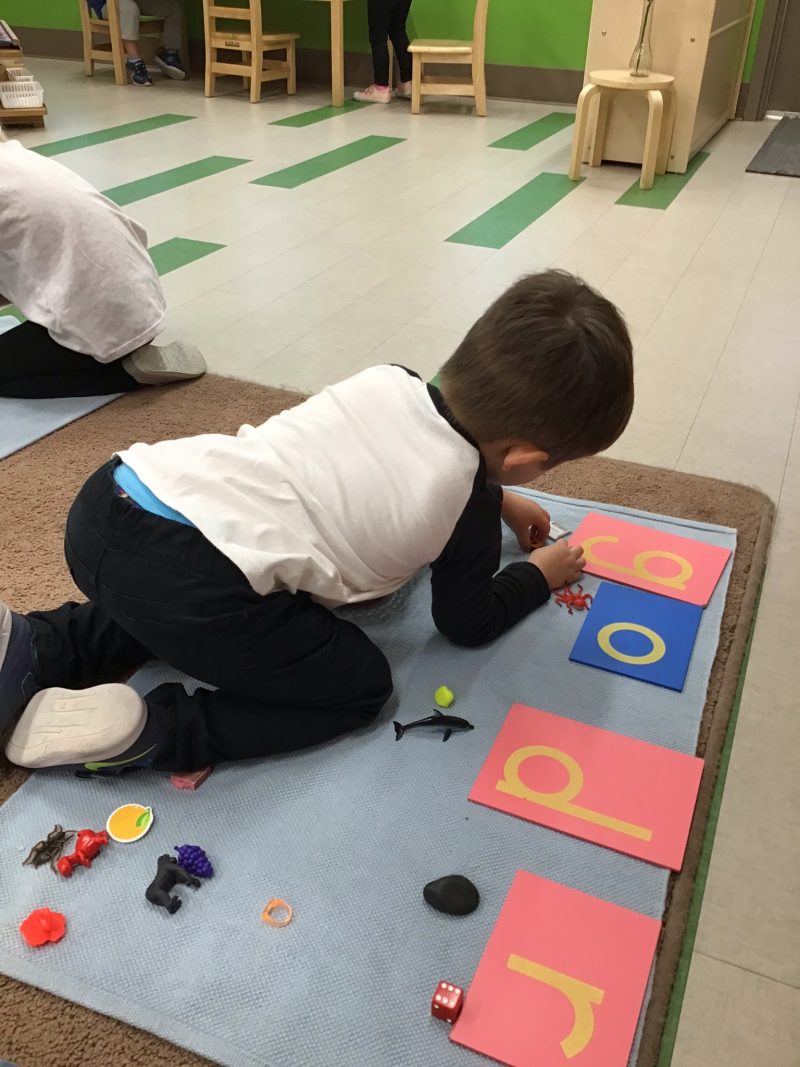
You’ll see children choosing their own work from low shelves. A teacher sitting with a small group, asking questions. Another child repeating a practical life activity — pouring water, sorting colors, buttoning a frame — with deep concentration.
Here’s what you won’t see: A teacher lecturing. Kids sitting in rows. Everyone doing the same activity at the same time.
Instead, you’ll see something more powerful: Children learning.
Montessori Gives Us Structure
- Self-correcting materials (learn from doing, not being told)
- Low shelves for independent access
- Practical life activities that teach real-world skills
- Hands-on work instead of abstract lessons
Inquiry Gives Us Curiosity
- Teachers ask questions instead of giving answers
- Mystery materials invite exploration
- A safe space where no question is “silly”
- Children lead their own learning journey
Together, these create something special. An environment where curiosity is invited. Where questions are celebrated. Where children aren’t just learning facts — they’re learning how to think.
How Inquiry-Based Learning Works in Our Classroom
Here’s a real example of how a single discovery becomes deep learning:
1. Morning Discovery: Children notice a butterfly cocoon in the classroom. This sparks questions: “What’s inside?” “How long until it opens?” “What will come out?”
2. Investigation: Teachers help children research butterflies using books, videos, and observation journals. Children draw predictions and document changes daily.
3. Exploration: The class creates a butterfly garden, learning about habitats, food sources, and life cycles through hands-on experience.
4. Sharing: Children present their findings to classmates and parents, reinforcing their learning and building communication skills.
Explore Our Inquiry-Based Lesson Plans
How do insects learn to be insects?
Do bugs go to preschool? Our students explored this question through observation, research, and creative thinking.
Can you friend a spider?
What started as fear became fascination as children learned about arachnids through inquiry and hands-on exploration.
Real Questions Our Students Have Explored
“Do bugs go to preschool? How do they learn to be bugs?”
“What color makes you happy?”
“Can you catch a lightning bolt?”
“Are seeds sleepy?”
“Can you hear feelings in music?”
These questions might sound silly to adults. But to a child, they’re genuine. And in our classrooms, a teacher doesn’t roll their eyes and move on. A teacher asks back: “What do you think? How could we find out?”
The Skills Kids Actually Develop
When parents ask what kids learn in an inquiry-based, Montessori-inspired classroom, they often expect academic skills. Letters, numbers, colors.
Those things happen. Sure. Kids learn to read and count and identify shapes. But that’s not the real magic.
The real skills are deeper:
Problem-solving. They encounter a challenge. Instead of asking an adult, they think. They try a different approach. They learn that problems have solutions — and they’re capable of finding them.
Confidence. Every time they figure something out themselves, they build belief in their own abilities. “I can do hard things.” This is the superpower that carries them through life.
Curiosity as a habit. Questions become second nature. They don’t stop asking “why?” They become people who wonder, explore, and discover. Lifelong learners.
Critical thinking. They don’t accept answers blindly. They ask “why?” and “what if?” They think about how things work. They imagine alternatives.
Independence. They learn to work without constant adult approval or correction. They know how to choose activities, work toward mastery, and manage themselves.
Persistence. They practice trying again when something is hard. They learn that failure isn’t the end — it’s part of the process.
Compare this to traditional daycare: supervision + group lessons + mostly passive learning. Kids aren’t practicing these skills daily. When kindergarten comes around and suddenly demands independence, focus, and problem-solving, it’s jarring.
But kids from inquiry-based classrooms? These ARE their daily life. By kindergarten, they’re not learning these skills — they’re already using them.
“When my daughter started at Edquisitive, I was amazed at how quickly she went from asking me questions to finding her own answers. She’s become so much more confident and independent. Last week, she designed her own experiment to see which materials dissolve in water!”
— Sarah M., Parent of 4-year-old
How Parents Can Support Inquiry at Home
Here’s the beautiful thing: You don’t need special programs or expensive toys to encourage inquiry-based learning at home.
You need one simple tool: Instead of giving answers, ask questions back.
Your child asks: “Why is the sky blue?”
Traditional answer: “It’s because of light waves in the atmosphere.”
Inquiry answer: “What do you think? What could make something look blue?”
I know, I know. It’s slower. It’s easier to just answer. But that one shift — pausing instead of answering — is powerful.
Specific Ways to Create an Inquiry-Based Environment at Home
Daily Question Time
At dinner, ask each family member: “What’s one question you wondered about today?” It makes mealtime interesting and shows your child that curiosity is valued.
Wonder Walks
Take walks and play “I wonder why…” Look at trees, the sky, bugs, buildings. The point isn’t to find answers — it’s to notice and wonder together.
Let Them Try
Cooking, laundry, setting the table, pouring juice — these are learning opportunities. Let them attempt tasks, even if it’s messier or slower. The doing is the learning.
When They Make Mistakes, Ask
Instead of “You spilled the water,” try “What happened? What could we try next time?” Mistakes become learning opportunities instead of failures.
Ask Before Answering
Your kid asks a question? Pause. Ask them back: “What do you think?” This teaches them to think, not just receive information.
Celebrate Curiosity
When your child asks a question — even if it seems random — say: “That’s a great question. I love how curious you are.” Build the belief that questions matter.
Frequently Asked Questions
If my kid is asking questions all day, aren’t they distracted from learning?
No. Questions ARE learning. The most advanced minds are the ones that ask the most questions. Einstein, Marie Curie, every innovator and inventor — they all had one thing in common: relentless curiosity. Your child asking 1,000 questions a day isn’t a problem. It’s a gift.
Will my kid fall behind without early academics?
Actually, research shows the opposite. Kids who spend more time with hands-on play, exploration, and inquiry-based learning develop better problem-solving, focus, and creativity. Tech skills can be learned fast later. But the developmental window for motor skills, language, self-regulation, and deep thinking? That’s happening right now. Your child isn’t behind — they’re building the foundation that makes everything else easier.
Isn’t Montessori just unstructured play?
No. It’s structured freedom. Materials are carefully designed. The environment is thoughtfully arranged. Teachers are intentionally guiding. But within that structure, children have choice. They have agency. They have the freedom to explore and discover. It’s not chaos — it’s the opposite. It’s deeply intentional.
What if my child doesn’t want to work on what I think they should?
That’s actually perfect. Montessori respects the child’s readiness and interests. If they’re not ready for writing, they might be ready for practical life or sensorial work. The child leads, and we follow their natural development. This builds intrinsic motivation — they learn because they want to, not because they’re told to.
🎧 Listen: Inquiry-Based Learning for Parents
Want to dive deeper? Listen to our podcast episode on how inquiry-based learning transforms early childhood education:
The Bottom Line
Your child is already learning like a scientist. Asking questions, making observations, testing ideas, adjusting when something doesn’t work.
Our job — in school and at home — is to protect that curiosity. To nurture it. To create an environment where questions are celebrated instead of shut down.
Because here’s the truth: The world doesn’t need more kids who can follow instructions perfectly. It needs kids who can ask great questions, think critically, and solve problems we haven’t even imagined yet.
That’s what inquiry-based learning builds. And it starts now. In these early years. With curiosity. With questions. With wondering “what if?”
Ready to See Inquiry-Based Learning in Action?
Visit Edquisitive Montessori and experience a classroom where curiosity is celebrated, questions are welcomed, and children are learning how to think.
Schedule a tour today. Let’s talk about how we can nurture your child’s natural curiosity into a lifelong love of learning.
Because at Edquisitive, we believe in Curious Minds. Intelligent Futures.
Related Reading
Benefits of Montessori Education | Practical Life Activities | Montessori vs Traditional Preschool | Why Parents Choose Montessori
Subscribe to Newsletter
Programs offered at Edquisitive Montessori Plus include:
✔️Infants (10 Weeks – 18 Months)
✔️Toddlers (18 – 36 Months)
✔️Primary (3-6 Years)
✔️Kindergarten
✔️Mother’s Day Out
✔️Spanish Immersion / Dual Language
✔️After School Programs and Summer Camp (6 – 12 Years)
Music, Spanish, and Yoga are other programs included as part of the tuition.
Learn more about Inquiry-based Learning