“Life does not happen in a bubble and some of the greatest learning takes place not when a child walks into a classroom…but rather when a child walks out of it.”
Watch a child discover a ladybug on a leaf. Notice how they crouch down, completely absorbed. How they whisper questions: Where does it sleep? What does it eat? Why is it so tiny?
That moment—that spark of pure curiosity—is exactly what learning should feel like. And it rarely happens while sitting at a desk.
At Edquisitive Montessori, we see the entire world as the best classroom a child could have. We believe some of the most powerful lessons happen when children step outside the classroom entirely. Because not all classrooms have four walls.
Watch: Outdoor Learning in Action
Our founding HOS Steve Whewellshares why we’ve always believed learning shouldn’t be confined to four walls—and you’ll see our students discovering, exploring, and growing in nature.
The Difference Between Being Taught and Actually Experiencing
There’s a reason you remember building mud pies more vividly than memorizing flash cards.
When we read children a story about caring for animals, they understand it’s a good thing to do. But when they find an injured bird on the playground and help nurse it back to health? They know they made a difference. They’ve learned biology, empathy, and responsibility in a single afternoon—lessons that will stay with them for life.
This is the heart of inquiry-based learning: following a child’s natural curiosity wherever it leads. And nature provides an endless supply of questions worth exploring.
The World as a Classroom
Nature play is a whole different experience from what you’d find on a typical playground. It’s all about exploring and asking questions. Kids dive into their surroundings, wondering “Why does this leaf have so many veins?” or “How do ants build their homes?” They find answers not just by being told, but by exploring—sometimes on their own, sometimes with a little help from friends or teachers.
Watch what happens when children encounter a butterfly up close with their teacher:
Every place we go turns into a learning adventure. A nature walk isn’t just exercise—it’s a live lesson in everything from biology to physics. And it’s not just outdoor time that matters. It’s how grown-ups approach that time. When adults are relaxed and engaged—okay with a bit of mess and exploration—children feel free. Their imaginations take off, and that’s when the magic of nature really comes alive.
What Happens When Children Learn Outside
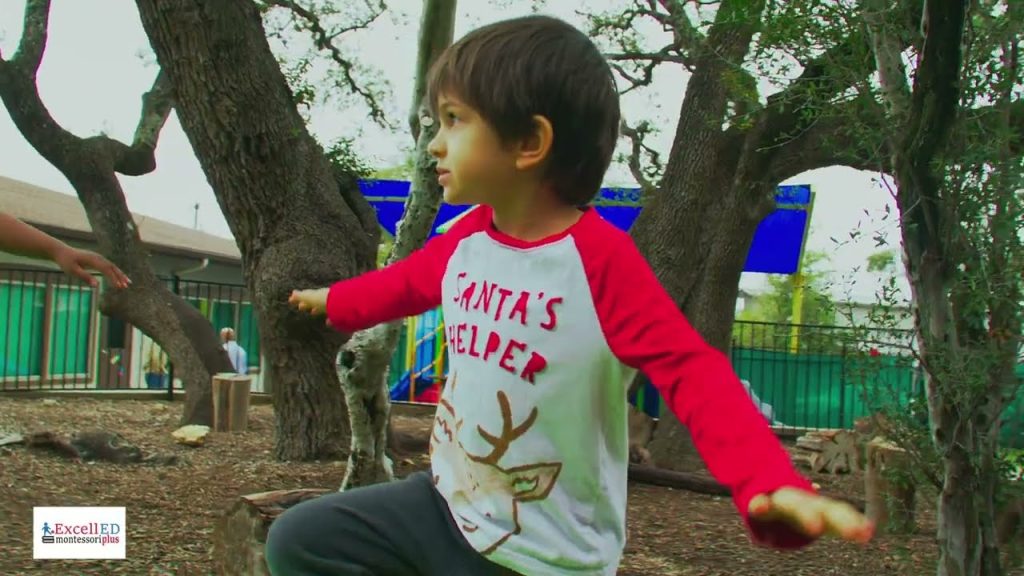
The simple phrase “let’s go outside” transforms a classroom in an instant. Children’s eyes light up. Their bodies straighten with anticipation. Their sense of exploration awakens.
Here’s what we see happen when learning moves outdoors:
Movement Becomes Natural
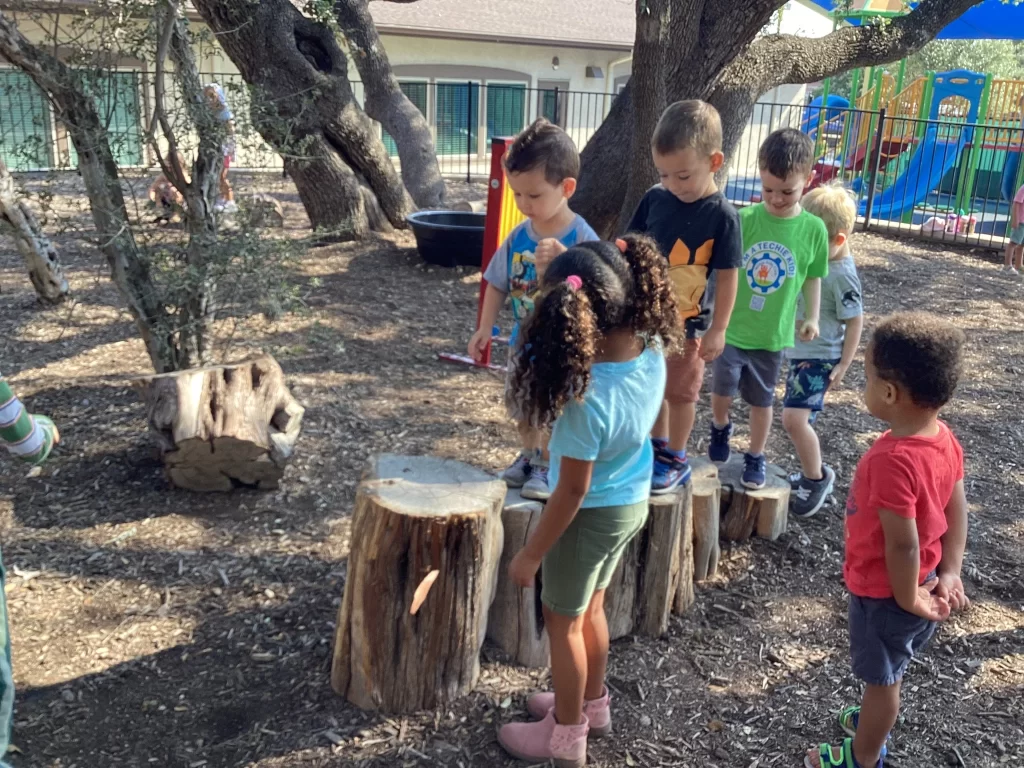
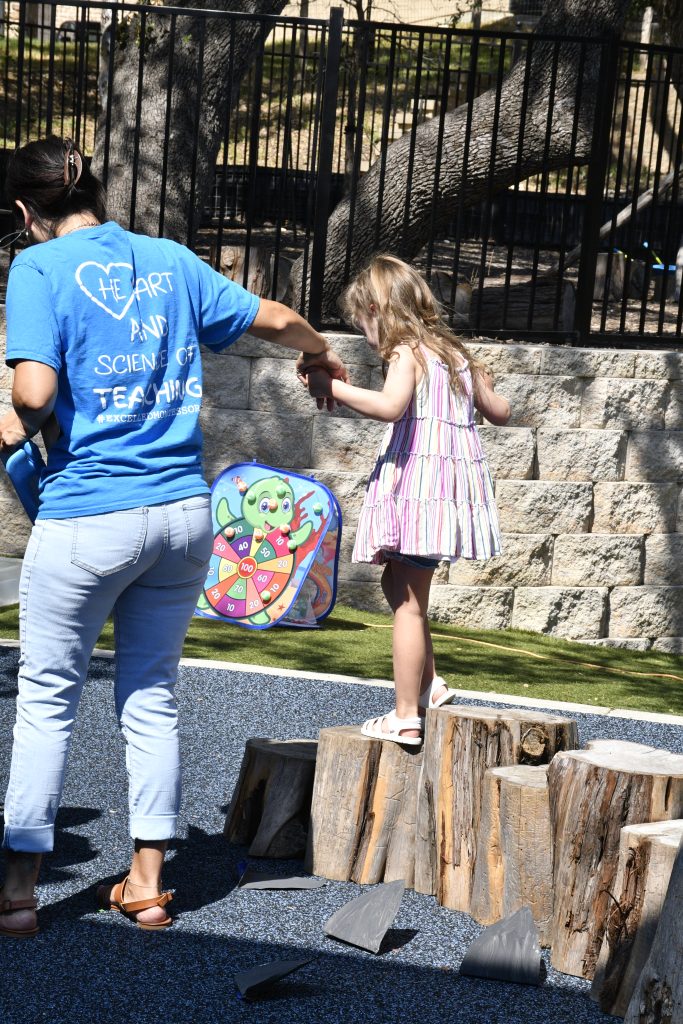
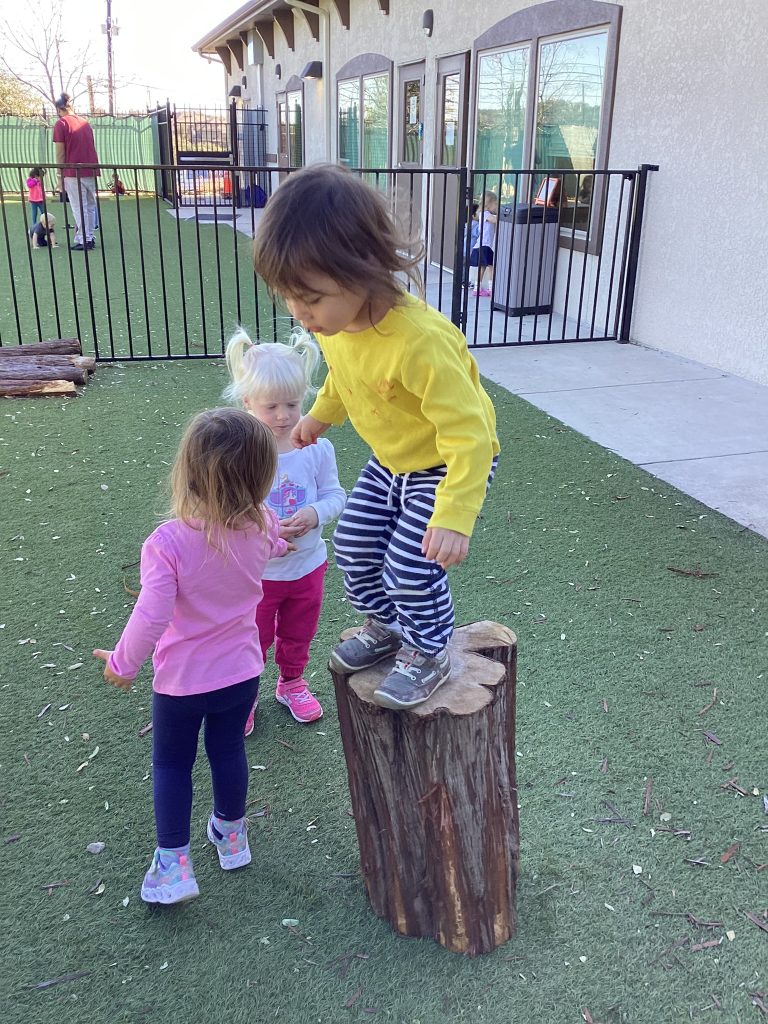
Inside, movement is often limited. Outside, children run, climb, balance, and explore freely. This isn’t just good for their bodies—motor skills development directly supports brain development, focus, and self-regulation. Fresh air fills their lungs. Movement is free and unrestricted.
Social Skills Flourish
Outdoor spaces encourage collaboration. Children work together to build, imagine, and problem-solve in ways structured indoor activities rarely allow. They negotiate who gets the shovel, figure out how to cross the “river” without touching the ground, and learn conflict resolution in real time.
Stress Melts Away
Research consistently shows that time in nature reduces cortisol levels in children. Fresh air, open space, and connection with the natural world help even the most active children find moments of calm.
It’s one reason we integrate mindfulness practices throughout our day—and outdoor time makes mindfulness feel natural rather than forced. Here’s a glimpse of outdoor yoga at one of our campuses:
Curiosity Deepens
A leaf isn’t just a leaf. It’s a lesson in biology (why is it green?), math (how many points does it have?), art (what happens when we press it with crayons?), and seasons (why did it change color?). Outdoor learning turns every walk into a science investigation.
How We Bring the Outside In (And the Inside Out)
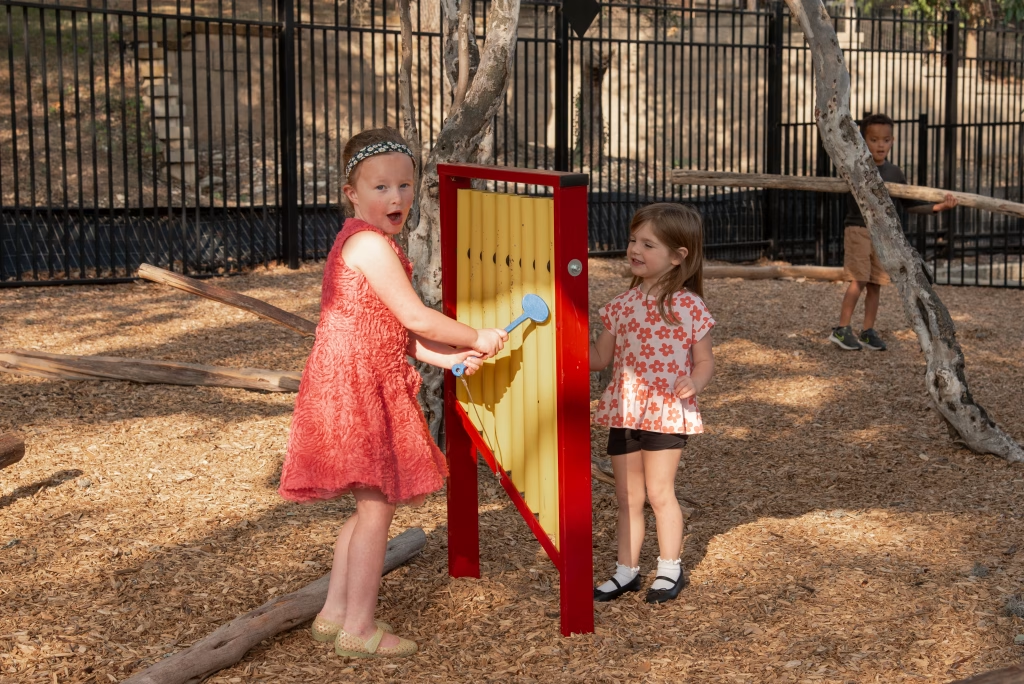
At Edquisitive Montessori, outdoor learning isn’t a special occasion—it’s woven into every day. Our campuses across San Antonio and Boerne feature dedicated outdoor learning spaces designed for exploration, discovery, and age-appropriate risk-taking.
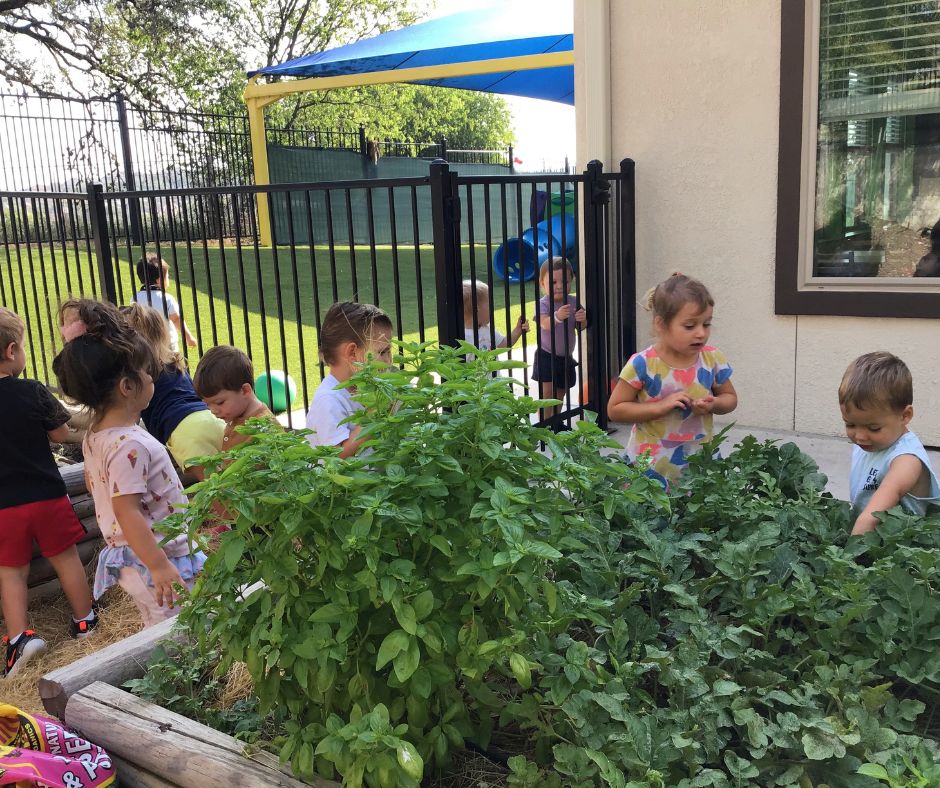
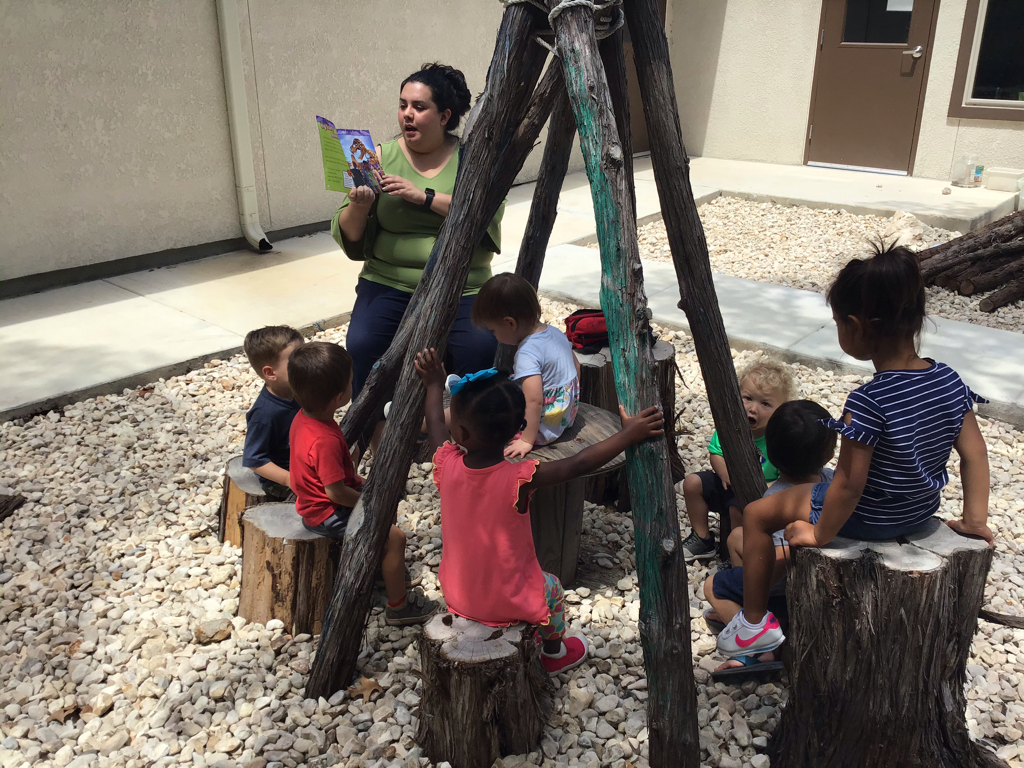
Our outdoor environments include sensory gardens where children experience different textures, smells, and sounds. We incorporate natural materials like logs, rocks, and sand that inspire open-ended play. We create spaces for both active exploration and quiet observation, with weather-appropriate activities that help children experience all seasons.
The magic of Montessori education is that it already values hands-on, experiential learning. Our approach is deeply rooted in educational philosophies that advocate for child-led learning and the environment as the “third teacher.” Outdoor classrooms simply extend that philosophy into nature’s infinite curriculum.
The Science Behind Nature-Based Learning
This isn’t just feel-good philosophy—decades of research support what teachers and parents observe every day.
Children who spend regular time in nature-based learning environments show improved concentration and attention span, stronger gross and fine motor development, enhanced creative thinking and problem-solving abilities, better emotional regulation and reduced anxiety, and stronger immune systems and overall physical health.
Vitamin D from sunlight supports bone development and immune function. Exposure to diverse outdoor environments builds resilience. And the confidence that comes from mastering physical challenges—climbing a little higher, balancing a little longer—transfers to academic confidence too. When children are allowed to take small risks outdoors, they develop problem-solving skills and adaptability that serve them throughout life.
Related reading: Why Risky Play is Important for Your Child’s Development
What This Means for Your Child
When you’re choosing a preschool or daycare, you’re choosing the environment where your child will spend thousands of hours during their most formative years.
Ask yourself: Do you want those hours spent primarily at desks, or do you want them balanced with time outside—running, exploring, questioning, discovering?
At Edquisitive Montessori, we believe children deserve both: the structure and guidance of excellent indoor classrooms and the freedom and wonder of learning without walls.
See Our Outdoor Learning Spaces for Yourself
We’d love to show you how outdoor learning comes to life at our campuses. During your tour, you’ll see our outdoor environments in action and learn how we balance structured learning with nature-based exploration.
Schedule a tour at any of our four San Antonio and Boerne locations to experience it yourself.
Because the best classroom might just be waiting right outside.


Frequently Asked Questions About Outdoor Learning
How much time do children spend outside each day?
Children at Edquisitive Montessori typically spend 1-2 hours outdoors daily, weather permitting. This includes both structured outdoor learning activities and free play time. We believe consistent daily outdoor exposure—not just occasional trips—builds the habits and benefits that matter most for development.
What happens when the weather is bad?
We follow the philosophy that there’s no bad weather, only inappropriate clothing—within reason. Light rain can be a wonderful learning opportunity with proper gear. On days with extreme heat, cold, or severe weather, we adjust schedules to go out during milder parts of the day or bring nature-based activities indoors with sensory materials, nature collections, and observation projects.
Is outdoor learning safe for infants and toddlers?
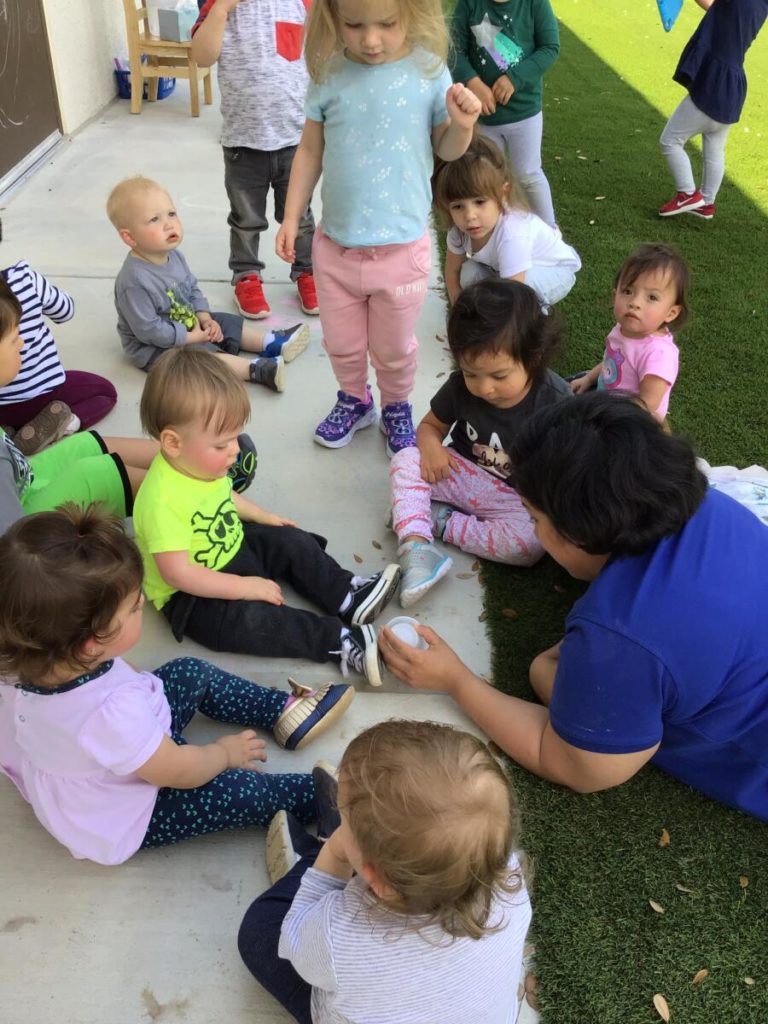
Absolutely. We design age-appropriate outdoor experiences for every stage. Infants enjoy supervised tummy time on blankets, feeling grass and leaves, and experiencing fresh air. Toddlers explore enclosed spaces with natural materials, sand, water, and simple climbing structures. Safety is always our first priority, but we also believe appropriate risk-taking is essential for development.
How is outdoor learning different from just recess?
Traditional recess is unstructured break time. Outdoor learning is intentional education that happens to take place outside. Our teachers guide children through nature observations, scientific inquiry, sensory exploration, and collaborative projects. Children are still learning—they’re just doing it surrounded by trees instead of walls. That said, we also value pure free play for its own developmental benefits.
What if my child doesn’t like being outside?
Some children need time to warm up to outdoor environments, especially if they haven’t had much exposure. Our teachers gently encourage participation without forcing it. Most hesitant children become outdoor enthusiasts once they discover activities they love—whether that’s digging in sand, collecting leaves, or watching bugs. We meet each child where they are.
Do you have shaded outdoor areas for hot Texas summers?
Yes. Our campuses include covered outdoor areas, shade structures, and mature trees. During summer months, we schedule outdoor time for cooler morning and late afternoon hours, ensure plenty of water breaks, and always have shaded spaces available. We take Texas heat seriously while still prioritizing outdoor learning.
How does outdoor learning support kindergarten readiness?
Outdoor learning builds the foundational skills kindergarten teachers look for: focus and attention span, ability to follow multi-step directions, social cooperation, physical coordination, curiosity and willingness to try new things, and emotional self-regulation. Children who learn through hands-on outdoor experiences often transition to kindergarten with stronger executive function skills than peers who spent preschool primarily at desks.
What’s the difference between play-based learning and nature play?
Play-based learning uses play as the primary method of teaching concepts—it can happen anywhere. Nature play specifically uses outdoor environments and natural materials as the context for exploration. At Edquisitive Montessori, we combine both: children learn through play, and much of that play happens in nature. The two approaches reinforce each other beautifully.
Video Transcript
The following is a transcript of the main video above, featuring Edquisitive Montessori founder Steve Wiewel discussing outdoor learning.
The classroom is a wonderful place for education. I’ve supervised school classrooms for the last 20 years and I’ve seen children achieve. But let’s be real—life does not happen in a bubble.
Some of the greatest learning takes place not when a child walks into the classroom, but rather when a child walks out of it.
There is an infinite amount of lessons outside just waiting to be discovered. Outside, we can capitalize on a child’s natural desire to learn. The simple statement, “Okay children, let’s go outside,” immediately stirs children to action and ignites their sense of exploration.
Outside, social skills are enhanced. Fresh air fills their lungs. Movement is free and unrestricted. Taking children outside to enhance their learning just makes sense.
And when it comes to comprehension, there’s a huge difference between being taught a lesson and actually experiencing it.
You see, when you’re taught to take care of animals because you read a story about it in your textbook, you understand that’s a good thing. But when you find an injured bird on the playground and you nurse it back to life, you know you made a difference. And you learned a lesson in biology and empathy that you will never forget.
Learning cannot be constrained in a textbook. Learning cannot be bound in a building. Not all classrooms have four walls.
Outdoor play has many benefits for children, including:
- Physical health: Playing outside allows children to engage in physical activity, which can help them develop strong bodies and improve overall fitness.
- Mental health: Being in nature has been shown to reduce stress and improve mood.
- Cognitive development: Outdoor play can also support cognitive development by allowing children to explore and engage with the natural world, which can help them develop problem-solving skills and creativity.
- Social development: Outdoor play often involves group activities, which can help children learn how to work together and develop social skills.
- Exposure to nature: spending time outside can help children develop an appreciation for nature and the environment, which can foster a sense of stewardship for the planet.
- Creativity and imagination: outside playgrounds and equipment can inspire children to use their imagination and creativity in play.
- Vitamin D: Sunlight exposure is essential for the body to produce Vitamin D, which is important for bone health and the immune system.
Programs offered at Edquisitive Montessori Plus include:
✔️Infants (10 Weeks – 18 Months)
✔️Toddlers (18 – 36 Months)
✔️Primary (3-6 Years)
✔️Kindergarten
✔️Mother’s Day Out
✔️Spanish Immersion / Dual Language
✔️After School Programs and Summer Camp (6 – 12 Years)
Music, Spanish, and Yoga are other programs included as part of the tuition.
Learn more about Inquiry-based Learning