Edquisitive Montessori was featured on Fox San Antonio’s “Daytime” in a segment about how young children learn to solve problems — and why the habit starts earlier than most parents expect. You can watch the full segment below, or read Daytime’s write-up here.
A child who asks “why” is already doing the work
Most early learning is measured by what a child can recite. Letters. Numbers. Colors. Those matter — but they are the easy part to teach and the easy part to test.
The harder thing, and the thing that actually predicts how a child handles kindergarten and everything after it, is what happens when they hit something they don’t already know. Do they stop and wait to be told? Or do they try something?
That difference is not a personality trait children are born with. It is a habit, and it is built or lost in the first five years.
[QUOTE 1 FROM SEGMENT — ideally the moment where curiosity or problem-solving is named directly]
[Speaker name, title]
What this looks like in a classroom
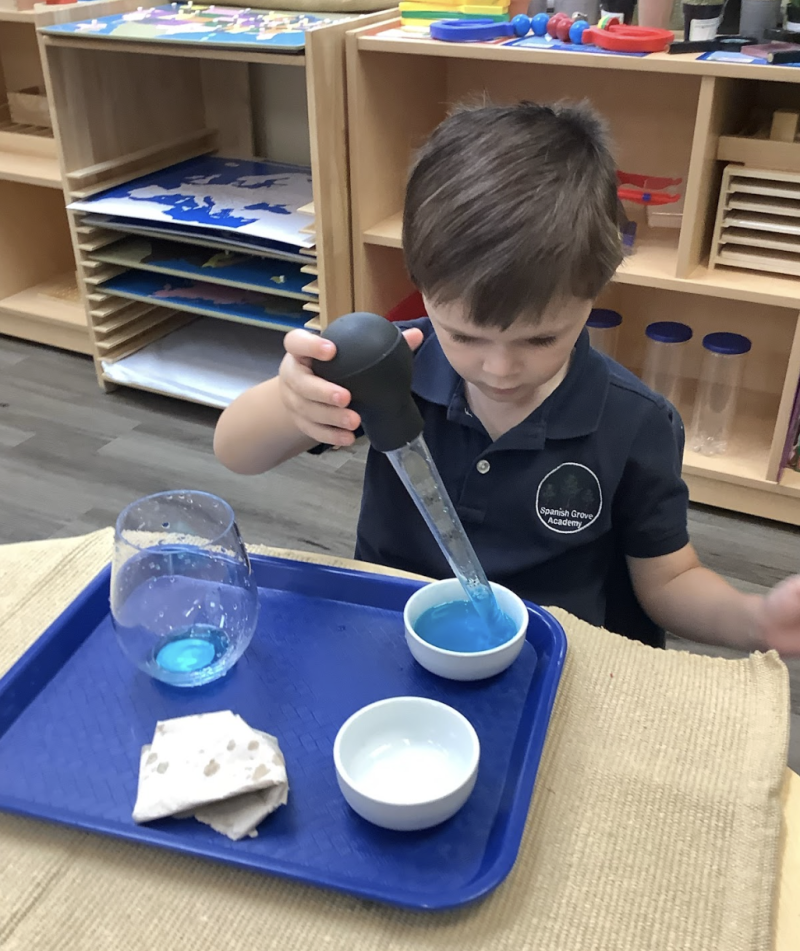
In a Montessori classroom, a child who cannot get a puzzle piece to fit is not handed the answer. The teacher waits. The child turns the piece, tries again, tries a different piece, and eventually gets it — and what they have learned is not the puzzle. It is that being stuck is temporary and that trying again works.
Repeat that a few hundred times across a school year, in pouring and sorting and building and cleaning up a spill, and it stops being something the child does and becomes something the child is.
Our teachers are trained to hold that pause. It is the least visible thing they do and the most important.
[QUOTE 2 FROM SEGMENT — ideally something concrete about how teachers work with children]
[Speaker name, title]
About Edquisitive Montessori
Edquisitive Montessori is a Cognia-accredited, Texas Rising Star 4-Star early childhood network serving infants through preschoolers across four campuses in San Antonio and Boerne: Fair Oaks in Boerne, Spanish Grove Academy in Stone Oak, NW Military in Shavano Park, and Little Red Caboose in the Medical Center.
We combine the Montessori method with inquiry-based STEM, because the two answer the same question from different directions: how does a child learn to think for themselves?
Come see a classroom
The segment is three minutes. A tour is thirty, and you will see the pause we described happen in front of you — a child stuck, a teacher waiting, and the moment it clicks.